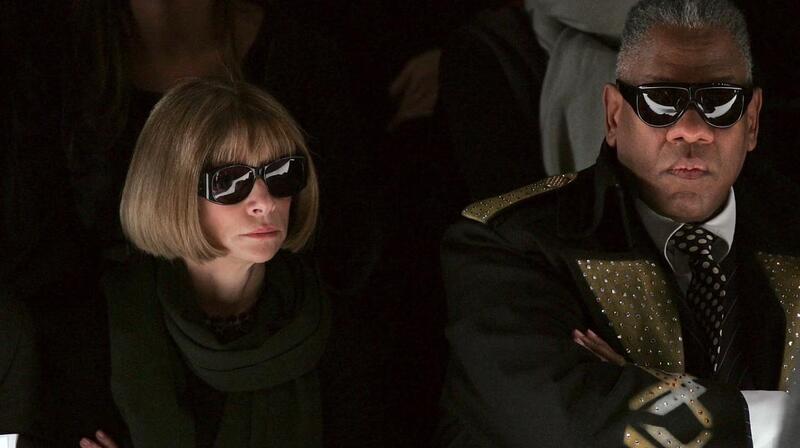
The Man Who Changed Fashion’s Front Row
Read Time:13 Minute, 7 Second
MOVIE REVIEW
André Leon Talley: Style is Forever
 –


Genre: Documentary, Biography
Year Released: 2025, 2026
Runtime: 1h 23m
Directors: Zach Stafford, Clayton H. Haskell
Where to Watch: available November 17, 2026. Pre-order your copy here: www.kinolorber.com or www.amazon.com
RAVING REVIEW: ANDRÉ LEON TALLEY: STYLE IS FOREVER is about a man who spent much of his life making sure he couldn't be ignored, even when the industry he loved wasn't particularly interested in making room for someone like him. André Leon Talley wasn't simply another recognizable personality in fashion. He helped shape how the industry presented itself, who received attention, and whose work deserved recognition. Directors Zach Stafford and Clay Haskell approach his life as a celebration of someone who changed an exclusive profession from the inside. There's plenty of history to appreciate, but the documentary also raises an interesting question. How can an industry celebrate someone without fully confronting how it treated him?
Talley's career covered nearly five decades, during which he became one of fashion's most influential editors and commentators. His association with Vogue made him recognizable far beyond the relatively small world of high-end fashion, but reducing his achievements to that magazine would overlook the knowledge and determination that brought him there. His professional life included working with Diana Vreeland at the Metropolitan Museum of Art's Costume Institute, contributing to Andy Warhol's Interview magazine, and becoming Paris bureau chief for Women's Wear Daily. These weren't simply positions on an increasingly impressive résumé. Each brought him into contact with people and institutions that would eventually help him become an authority in his own right.
His upbringing in Durham, North Carolina, provides essential context for understanding just how unlikely that professional journey once seemed. Raised primarily by his grandmother, Bennie Frances Davis, Talley grew up in the segregated South, far removed from the international fashion circles he would eventually influence. His grandmother worked as a custodian at Duke University, and the contrast between their circumstances and the world he later entered is considerable. Fashion offered Talley something beyond an interest in expensive clothing. It introduced him to art, history, literature, and possibilities that extended well outside the environment in which he was raised.
That early relationship with fashion matters because Talley's eventual public image could easily overshadow the intellectual curiosity behind it. He became famous for dramatic clothing, commanding appearances, and an unapologetic appreciation for extravagance. Those qualities made him immediately recognizable, but they weren't substitutes for professional expertise. He studied fashion history and understood the cultural influences behind designers' work. His ability to connect clothing with broader artistic traditions helped distinguish him in an industry where appearance could sometimes receive more attention than the ideas behind it.
The documentary's emphasis on his accomplishments makes sense, especially considering how frequently his appearance threatened to become the dominant subject whenever he entered a room. Talley was a large Black man working at the highest levels of an industry that historically celebrated a remarkably narrow definition of beauty and belonging. His visibility carried meaning whether he wanted that responsibility or not. Every professional advancement placed him in environments where people who looked like him were frequently absent, and being exceptionally talented didn't exempt him from the prejudices surrounding those spaces.
His appointment as Vogue's first Black male creative director in 1988 remains one of the defining achievements of his career. Anna Wintour had become the magazine's editor-in-chief, and Talley's appointment represented a significant moment for an institution with enormous influence over fashion and popular culture. The position gave him considerable authority, but it also placed him in a complicated situation. He helped determine which designers and creative voices received attention while working inside an establishment whose history reflected many of the exclusions he had personally experienced.
Representation is a central subject here, and Talley's contribution deserves to be understood beyond the symbolic importance of occupying a prestigious position. He advocated for designers and models of color, helping bring attention to people who deserved opportunities that were not always available to them. Having someone with his standing involved in editorial decisions could make an enormous difference. A magazine feature or professional introduction could build relationships and launch careers that otherwise struggled to gain recognition. His influence extended to the opportunities he helped create for others, even when those contributions weren't as publicly visible as his own achievements.
The documentary brings together an impressive collection of fashion personalities to discuss Talley's significance. Anna Wintour, Tom Ford, and Diane von Furstenberg are among the prominent contributors, with additional perspectives from figures including Vera Wang and Law Roach. Their involvement speaks to his professional reach and the respect he earned across different generations of the industry. These are people whose careers and reputations carry considerable weight, making their participation valuable for establishing the extent of his influence. Hearing from those who shared his professional circles also helps place his achievements within the industry he spent his life navigating.
An important distinction exists between celebrating someone's accomplishments and critically examining the environment in which those accomplishments occurred. A documentary built around tributes from established industry figures naturally offers a particular perspective. Many of the people discussing Talley's career also benefited from the systems of influence and exclusivity that defined high fashion. Their admiration can be genuine, but it may not fully capture the difficulties he faced. A more confrontational examination of those relationships could have introduced additional complexity to an already compelling life story.
That doesn't mean every documentary about an influential person needs to become an investigation into professional grievances. Talley deserves recognition for his contributions, and it has value to let the people who knew him describe his importance. The challenge comes from balancing that admiration with an acknowledgment that professional success doesn't erase discrimination or personal hardship. His achievements become even more significant when considered alongside the resistance he encountered. A celebratory approach can convey that history, but it also risks making the contradictions in his career seem easier to resolve than they were.
Talley's relationship with Wintour is especially interesting because their names became so closely associated. Both were powerful personalities, although their public presentations couldn't have been much more different. Wintour cultivated an image of controlled authority, while Talley embraced a more expressive, theatrical presence. Together, they represented an influential period at Vogue, with Talley contributing the historical expertise and creative perspective that helped establish his importance. Their eventual professional distance also reminds us that even relationships built over decades can become complicated when careers, institutional power, and personal expectations intersect.
His public personality presents another challenge for anyone attempting to document his life. Talley could be wonderfully outspoken, and the confidence he projected made him a natural subject for interviews and public appearances. His clothing choices were often extraordinary, but they also expressed someone who understood fashion as a way to communicate identity. The dramatic capes and elaborate ensembles weren't simply attempts to attract attention. They reflected his appreciation for designers' work and his refusal to make himself smaller to satisfy other people's expectations. The clothes became part of his identity without explaining everything about the person wearing them.
Including previously unseen footage also adds value to a documentary about someone whose public image became so familiar. Talley died in January 2022, leaving behind an enormous professional legacy and a personal history that extended beyond his association with famous designers. His own words remain important because they provide a counterpoint to colleagues' memories of him after his death. There is a difference between hearing people explain what someone meant to them and allowing that person to communicate what mattered in his own life. For a subject with such a recognizable voice and personality, preserving that perspective is especially worthwhile.
The Savannah College of Art and Design's involvement gives the documentary an additional connection to its subject. Talley maintained a relationship with SCAD for more than two decades, mentoring students, helping develop its fashion programming, and serving on its board of trustees. He also received the university's Lifetime Achievement Award in Fashion, which was later named after him. These weren't incidental associations. Education and mentorship were central to his professional life, allowing him to share the knowledge he'd accumulated with people preparing to enter an ever-changing industry.
SCAD's involvement also helps explain the documentary's commemorative approach. The institution produced the film as part of a larger effort to preserve Talley's legacy, which included an exhibition of clothing and personal items he left to its permanent collection. That relationship provides a strong foundation for understanding his contributions, especially his interest in encouraging future generations. At the same time, the project's institutional connection makes its celebratory perspective understandable. This is a tribute created by an organization that admired him and benefited from his involvement, rather than a documentary primarily interested in questioning every aspect of his professional relationships.
There's nothing inherently wrong with that distinction, although it's worth recognizing what it means for the finished work. ANDRÉ LEON TALLEY: STYLE IS FOREVER is concerned with preserving the significance of its subject more than challenging the established understanding of his career. For viewers unfamiliar with Talley, this offers an accessible introduction to an extraordinary personality. Those already familiar with his memoirs, interviews, or previous documentary appearances may approach the material with a greater awareness of the difficult experiences that existed alongside his professional accomplishments. The difference between these perspectives matters when considering how much ground an 83-minute documentary can reasonably cover.
It's also worth remembering that Talley's story has been explored on film before. THE GOSPEL ACCORDING TO ANDRÉ, released in 2018, examined his life while he was still alive, allowing him to participate in presenting his experiences. This later documentary serves a different purpose, considering the lasting significance of his career after his death. The existence of an earlier portrait doesn't make another examination unnecessary. People's contributions can be reassessed as cultural circumstances change, and Talley's influence on fashion representation remains relevant to conversations that continue well beyond his lifetime.
His personal struggles shouldn't be separated from the achievements being celebrated. Talley spoke publicly about experiences involving childhood abuse, loneliness, weight, and the emotional consequences of difficult relationships. These subjects complicate the image of a man who appeared so confident in public. Someone can hold enormous professional authority and still feel uncertain or rejected in private. The contrast deserves sensitivity because his physical appearance and personal circumstances were too often treated as subjects for public commentary, even by people who otherwise admired his work.
That history matters when discussing the appearance standards the fashion industry maintains. Talley helped promote beauty and creativity within a profession that could be exceptionally unforgiving toward people who didn't fit its preferred image. His own experiences with public scrutiny highlight an uncomfortable contradiction. An industry capable of celebrating individuality in its artistic work hasn't always extended the same generosity to the individuals working within it. Talley's presence challenged those limitations, but his prominence didn't automatically protect him from their consequences.
Presenting pioneers primarily as symbols of progress also carries a danger. It can make structural change seem like the accomplishment of one extraordinary individual. Talley undoubtedly helped open doors, but the barriers he confronted were maintained by institutions and attitudes much larger than any single person. Celebrating his achievements should encourage a broader understanding of why those barriers existed and how much work remained after he gained influence. His success mattered precisely because it happened in circumstances that made similar opportunities hard for so many others to get.
Outside the professional accomplishments, Talley's appreciation for fashion as an art form deserves attention. He understood designers as creative people whose work reflected history and cultural identity. His knowledge wasn't limited to knowing which garments were fashionable during a particular season. He could discuss influences, recognize historical references, and explain why certain creative decisions mattered. That distinction separates a thoughtful fashion critic from someone whose authority depends entirely on access to famous people. Talley had both the connections and the understanding to make something meaningful of them.
For anyone who doesn't closely follow fashion, the documentary's subject still matters. Talley's life speaks to the experience of finding a place within a profession that wasn't designed with someone like him in mind. His career also demonstrates how cultural institutions can change because individuals challenge their assumptions, sometimes from positions that require considerable personal compromise. These ideas aren't exclusive to fashion. Similar questions about recognition, professional access, and the treatment of outsiders exist throughout entertainment and other creative industries. Talley's circumstances were distinctive, but the broader issues surrounding his career are recognizable.
The documentary's greatest responsibility is making sure the personality doesn't become more important than the work. Talley's extravagant public image made him memorable, yet his contributions as an editor, writer, mentor, and cultural commentator explain why that memory deserves preservation. The famous names associated with him help communicate his professional standing, but the meaningful part of his legacy rests in what he actually contributed. He wasn't influential simply because influential people knew him. Those relationships developed because he brought expertise and a creative perspective that others valued.
ANDRÉ LEON TALLEY: STYLE IS FOREVER gives its subject an affectionate tribute supported by the people and institutions that understood his importance. Its commemorative purpose provides a clear direction, even if a more searching examination of the contradictions surrounding his career could have added another layer to the story. Talley spent decades insisting on a place in an industry that hadn't expected someone like him to become one of its leading authorities. He eventually became inseparable from its history, and that's an achievement worth remembering. His clothing may have made him recognizable from across a room, but his influence is the reason we're still talking about him.
Please visit https://linktr.ee/overlyhonestr for more reviews.
Follow me on Letterboxd, Instagram, Twitter, and YouTube. You can also find my social media accounts on most platforms by searching for 'Overly Honest Reviews'.
I’m always happy to hear from my readers; please don't hesitate to say hello or send me any movie questions.
[photo courtesy of KINO LORBER]
DISCLAIMER:
At Overly Honest Movie Reviews, we value honesty and transparency. Occasionally, we receive complimentary items for review, including DVDs, Blu-rays, CDs, Vinyl Records, Books, and more. We assure you these arrangements do not influence our reviews, as we are committed to unbiased, sincere evaluations. We aim to help you make informed entertainment choices regardless of our relationship with distributors or producers.
Amazon Affiliate Links:
This site also contains Amazon affiliate links. If you purchase through these links, we may receive a commission. This affiliate arrangement does not affect our commitment to honest reviews and helps support our site. We appreciate your trust and support as you navigate these links.


Happy
0 %

Sad
0 %

Excited
0 %

Sleepy
0 %

Angry
0 %

Surprise
0 %
 0
 0

Average Rating