The Hardest Person to Face Is Yourself
Read Time:14 Minute, 45 Second
MOVIE REVIEW
Gossamer
 –


Genre: Drama, Psychological Drama, Short
Year Released: 2026
Runtime: 21m
Director: Hamish Sturgeon
Writer: Hamish Sturgeon
Cast: Hamish Sturgeon, Natalie Mitchell, Angelle Brooks, Joseph Boutell, Sarah Kirby
Where to Watch: shown at the 2026 LA Shorts International Film Festival
RAVING REVIEW: How much of ourselves do we bury because we're afraid of what might happen if someone finally sees who we really are? GOSSAMER, the 21-minute short from writer, director, and star Hamish Sturgeon, explores that question through a deeply personal story about grief, isolation, and the identities people construct to survive. Set primarily inside a deteriorating Los Angeles home, the film follows a young man whose carefully protected existence is threatened by circumstances he can no longer avoid. What begins as an intimate domestic drama gradually becomes something more psychologically complicated, asking audiences to reconsider their understanding of the characters and the relationships connecting them. Sturgeon approaches difficult subject matter without turning his characters into examples designed to illustrate a lesson. There's an understanding here that accepting yourself can be considerably more frightening than accepting what someone else thinks of you.
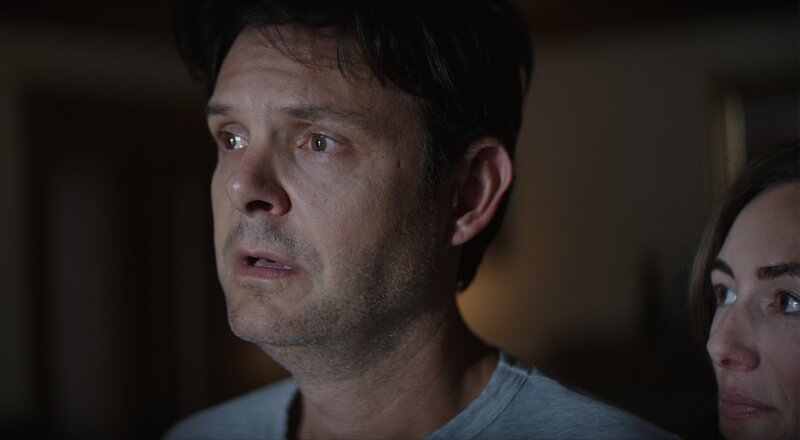
Sturgeon plays Jack, an agoraphobic recluse grieving the death of his grandmother while confronting the increasingly urgent possibility of losing his home. The property faces foreclosure, and the approaching eviction threatens the fragile security he has built around himself. For most people, losing a home would be devastating enough. For Jack, the situation carries another level of terror because the outside world represents something he has spent considerable energy trying to avoid. His confinement isn't simply a preference for solitude. It's tied to an overwhelming fear of exposure, judgment, and the uncertainty of letting other people into his life.
The house consequently becomes more than the setting for Jack's circumstances. It represents a physical boundary between the person he believes he can safely be and the identity he fears presenting to the world. Inside those walls, he retains some control over his environment. Outside, he would have to confront other people's expectations and the possibility that his private existence might not survive their scrutiny. The threat of foreclosure turns an internal conflict into an immediate practical crisis. Jack can't remain protected indefinitely, but the prospect of losing that protection creates its own paralysis.
Natalie Mitchell portrays Shirley, a glamorous feminine presence whose relationship to Jack forms the film's central mystery. Where Jack appears withdrawn and overwhelmed, Shirley has a more expressive personality, suggesting a life beyond the limitations he has imposed on himself. The contrast matters because Sturgeon doesn't treat identity as something that can be explained in a single conversation or easily categorized by an outside observer. Jack and Shirley occupy different emotional spaces within the narrative, and understanding their connection requires attention to the gap between what the film presents and what its characters are willing to acknowledge.
That uncertainty gives GOSSAMER a distinctive storytelling identity. Rather than beginning with a conventional explanation of Jack's circumstances and allowing the audience to observe how he responds, Sturgeon gradually provides information that changes the meaning of what has already been established. The approach requires trust in the viewer's willingness to participate. It also demands careful handling because withholding information can become frustrating when ambiguity exists primarily to manufacture a surprise. Here, the underlying purpose is more personal. The uncertainties surrounding Jack's world reflect the difficulty of understanding someone whose relationship with their own identity remains unresolved.
Grief is an important part of that experience, but the film doesn't reduce Jack's circumstances to the loss of his grandmother. Bereavement can shape how someone relates to familiar places, especially when those environments preserve memories of someone who is no longer there. Moving away may feel like abandoning a connection that has become inseparable from the physical surroundings. For Jack, the threatened loss of his home arrives alongside a much more complicated struggle involving his identity. These concerns overlap, making the prospect of change feel overwhelming even when staying in place has become increasingly destructive.
Sturgeon has spoken about his interest in the stories people create about themselves to feel accepted. That concern provides a useful foundation for GOSSAMER because Jack's retreat from the world isn't portrayed merely as a failure to participate in ordinary society. His isolation serves a protective purpose, even as the consequences become increasingly severe. A person can recognize that their circumstances are making them miserable and still find the alternative unbearable. Understanding that contradiction is essential to approaching the character with empathy rather than reducing his situation to a problem that could be solved through determination alone.
The film also raises questions about gender identity and the pressure to live up to expectations that may conflict with a person's private understanding of themselves. Sturgeon has identified gender dysphoria as part of Jack's internal struggle, giving the story a more specific foundation than its broader themes of loneliness might initially suggest. That distinction matters because the fear of being seen isn't an abstract concern for everyone. For some people, revealing their identity can involve serious questions about acceptance and the possibility of rejection from those closest to them. GOSSAMER places that anxiety within an intimate psychological drama, where the conflict is experienced through a character who has spent considerable time avoiding the circumstances that might force him to confront it.
Natalie Mitchell's involvement brings an established creative relationship to the production. She and Sturgeon previously worked together in a stage production of CLOSER, giving them a foundation of trust before approaching material that depends so heavily on their contrasting characters. Mitchell's theater background is especially relevant to a film that relies on presence and behavior rather than extensive explanation. Shirley is an unusual role because much of her significance exists in the relationship between how she's presented and what that presentation might mean to Jack. The character needs enough individuality to stay interesting without giving away everything the screenplay wants audiences to discover.
Sturgeon's responsibilities are equally demanding. Writing, directing, and starring in a short film leaves little separation between the person constructing the story and the performer responsible for communicating its emotional concerns. That arrangement can create a level of creative control that benefits intimate material, although it also requires the filmmaker to recognize when another perspective is necessary. Sturgeon has discussed surrounding himself with collaborators he could trust, allowing him to concentrate on acting when the production required it. His professional experience as an actor and acting instructor provides useful context for a project whose most important developments depend on understanding the characters' behavior.
Angelle Brooks plays Mary Angelo, a compassionate social worker whose involvement introduces a perspective beyond Jack's increasingly restricted domestic world. Her character represents the possibility of human assistance during circumstances that might otherwise feel impossible to overcome. Importantly, the presence of someone willing to help doesn't automatically eliminate the difficulties the person receiving that assistance faces. Support can create an opportunity for change, but accepting it requires trust that may be difficult for someone accustomed to protecting themselves through isolation.
Mary's role also connects Jack's internal experiences to the practical consequences developing around him. Foreclosure isn't an imaginary threat, and the decisions affecting the property won't disappear simply because Jack finds them emotionally unbearable. The social worker's involvement shows that others recognize his circumstances and that help exists outside the world he has created. The obstacle is therefore more complicated than a complete absence of available support. Jack must confront the possibility of allowing that support into a life built around keeping others at a distance.
The film makes an interesting distinction between its treatment of isolation and the more familiar cinematic depiction of loneliness. A lonely character is often shown searching unsuccessfully for companionship, with the narrative organized around eventually finding someone who can provide it. Jack's situation is more complicated because connection itself represents a potential threat. Wanting to be understood doesn't necessarily mean feeling prepared to reveal the information that would make understanding possible. GOSSAMER builds its psychological concerns around that contradiction, allowing the desire for acceptance to exist alongside a profound fear of exposure.
Jesse Aragon's cinematography is particularly appropriate to this kind of storytelling. Working within a single Los Angeles property, the production uses the confined environment to establish a close relationship between the characters and their surroundings. Sturgeon and Aragon discussed visual references during development, approaching the imagery through the emotional circumstances rather than attempting to disguise the limited locations with unnecessary visual complexity. The house becomes essential to the film's presentation because the same walls that give Jack familiarity also reinforce his separation from the outside world.
The widescreen 2.39:1 presentation is an interesting choice for a production built around such an intimate setting. A wider image doesn't necessarily create a sense of freedom, particularly when the environment restricts how characters can occupy that space. The framing keeps the domestic surroundings in the composition, making the relationship between a person and their environment central to how the story communicates confinement. Sturgeon has described wanting the camera to remain close without becoming intrusive, a distinction that suits material concerned with the discomfort of being observed.
The film's production circumstances are also worth recognizing. GOSSAMER was photographed independently over just three days, with the crew working inside a single house. These limitations demand careful planning, especially for a story that depends on small changes in character behavior. Sturgeon has explained that the compressed schedule forced the creative team to arrive prepared and make decisions that served the screenplay's emotional concerns. That's a useful example of how independent production methods can influence a film's identity without automatically determining its artistic value.
The limited location is especially appropriate because expanding the story into numerous environments could have weakened its central sense of containment. Jack's relationship with his home is essential to understanding his fear of leaving it. Keeping the characters within that physical environment keeps the threat of displacement significant throughout the narrative. The house isn't merely an inexpensive location selected to accommodate the budget. Its relationship to the story gives the production a clear reason to remain geographically restricted.
Editor Stephen Lambriodes faced a different challenge in determining how much information the audience needed at each stage. Sturgeon has described the editing process as an exercise in deciding which moments could be removed without weakening the emotional experience. That's particularly important when working with a screenplay that deliberately avoids explaining every connection as soon as it's introduced. The order in which information becomes available influences how viewers interpret the characters, and the editing must preserve enough uncertainty to encourage curiosity without making the narrative unnecessarily confusing.
The distinction between ambiguity and obscurity is especially relevant to GOSSAMER. An ambiguous film can provide meaningful information while allowing audiences to interpret its implications differently. An obscure film may simply withhold details necessary to understand its basic dramatic concerns. Sturgeon's approach favors the former, using the gradual development of Jack and Shirley's relationship to encourage reconsideration. Viewers who prefer clearly defined relationships and immediate explanations may still find parts of the story difficult to navigate. That uncertainty is also connected to the film's interest in identities that can't always be understood through straightforward external descriptions.
Music provides another important connection between the filmmaker's original inspiration and the completed production. Sturgeon has explained that Billie Eilish's WILDFLOWER became emotionally associated with the screenplay during the writing process. The production subsequently secured permission to use the song, allowing that initial creative reference to become part of the film itself. Rather than treating music as an incidental finishing touch, the selection connects the production's sound to the emotions that shaped its development.
That use of existing music also reflects how independent filmmakers can build a creative identity through carefully chosen collaborations. A small production may not have the resources of a large studio, but decisions about cinematography, editing, and sound remain essential to the finished work. GOSSAMER demonstrates the value of developing a consistent approach across those departments. Each contributes to a story in which ordinary domestic surroundings carry emotional significance beyond their immediate physical function.
The title itself deserves some consideration. Gossamer suggests something delicate and difficult to grasp, an appropriate description for a narrative concerned with the unstable boundaries between private identity and outward appearance. Sturgeon has also discussed the word's association with a spider's web, which can be beautiful while simultaneously serving as a trap. That dual meaning fits Jack's circumstances. The structures he has created to protect himself are connected to the conditions preventing him from moving forward. Something initially intended to provide safety can become restrictive when a person's needs change.
This symbolism also connects to the film's visual contrast between glamour and deterioration. Shirley's presence suggests an alternative to the circumstances defining Jack's immediate existence, while the threatened home represents a physical reality that can no longer be ignored. Those contrasting elements allow the screenplay to explore the distance between how someone lives and how they imagine living. The distinction isn't simply about wanting a more attractive appearance or a different lifestyle. It concerns the possibility of expressing an identity that has remained hidden because revealing it feels too dangerous.
GOSSAMER's substance comes from recognizing that self-acceptance isn't necessarily a single decision. People can understand something about themselves intellectually without feeling able to change their behavior to reflect that understanding. Grief can further complicate the process by weakening the relationships and routines that previously provided stability. Jack's circumstances bring these difficulties together, making ordinary practical decisions inseparable from larger questions about his identity.
The film's refusal to simplify that process is central to its creative identity. Jack isn't presented as someone who merely needs a motivational speech or a conveniently timed romantic relationship to overcome everything holding him back. The circumstances affecting him develop through personal history, and the screenplay gives those concerns enough weight to resist an easy solution. That approach also prevents the supporting characters from becoming magical answers to his problems. Human connection matters, but another person's willingness to help can't fully substitute for an individual's readiness to accept it.
GOSSAMER had its world premiere at the LA Shorts International Film Festival, an appropriate introduction for a work that depends on the storytelling possibilities of the short-film format. Its 21-minute length lets Sturgeon focus on a carefully defined emotional experience without expanding the premise into a conventional feature structure. A longer production might have allowed exploration of additional aspects of Jack's history, but the concentrated approach keeps attention on the circumstances threatening his carefully protected existence.
The result is a thoughtful psychological drama that approaches complicated personal concerns through a distinctive relationship between character and setting. Sturgeon has created a story about someone confronting the possibility that the identity protecting him may also be preventing him from living as he wants. The film's restrained approach gives its audience room to consider those circumstances without prescribing a single emotional response, and its performances and visual presentation serve a story built around deeply personal questions.
There's something especially appropriate about telling this story inside a house on the verge of being taken away. Jack has constructed his life around walls that promise security, but those walls can't protect him from every consequence of remaining hidden. GOSSAMER understands that being seen can be frightening when you've spent so long imagining what other people might think. It also recognizes that survival and living aren't always the same thing. The film leaves room for uncertainty, but its central concern remains clear. The hardest door to open may be the one separating the person you've allowed yourself to become from the person you've never felt safe enough to be.
Please visit https://linktr.ee/overlyhonestr for more reviews.
Follow me on Letterboxd, Instagram, Twitter, and YouTube. You can also find my social media accounts on most platforms by searching for 'Overly Honest Reviews'.
I’m always happy to hear from my readers; please don't hesitate to say hello or send me any movie questions.
[photo courtesy of KEEVE PRODUCTIONS]
DISCLAIMER:
At Overly Honest Movie Reviews, we value honesty and transparency. Occasionally, we receive complimentary items for review, including DVDs, Blu-rays, CDs, Vinyl Records, Books, and more. We assure you these arrangements do not influence our reviews, as we are committed to unbiased, sincere evaluations. We aim to help you make informed entertainment choices regardless of our relationship with distributors or producers.
Amazon Affiliate Links:
This site also contains Amazon affiliate links. If you purchase through these links, we may receive a commission. This affiliate arrangement does not affect our commitment to honest reviews and helps support our site. We appreciate your trust and support as you navigate these links.


Happy
0 %

Sad
0 %

Excited
0 %

Sleepy
0 %

Angry
0 %

Surprise
0 %
 0
 0


Average Rating