A Film Torn Between Grace and Rage
Read Time:6 Minute, 7 Second
MOVIE REVIEW
Marie Madeleine (Maria Magdalena)
 –
– 

Genre: Drama, Romance
Year Released: 2026
Runtime: 1h 44m
Director(s): Gessica Généus
Writer(s): Gessica Généus
Cast: Gessica Généus, Béonard Monteau, Edouard Baptiste, Mélissa Mildort
Where to Watch: shown at the 2026 Cannes Film Festival
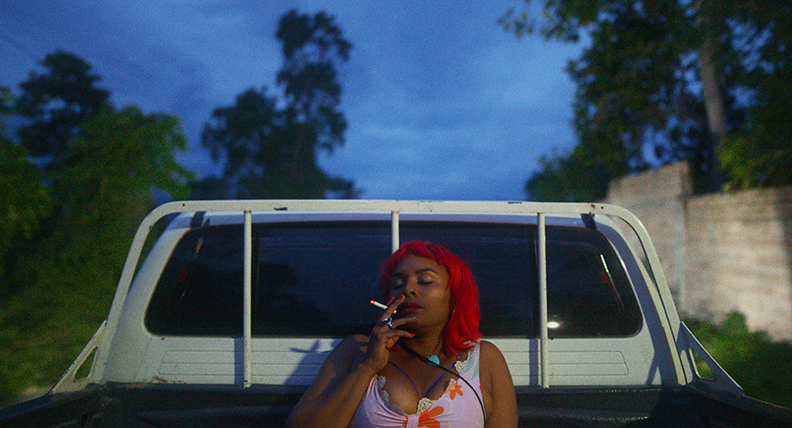
RAVING REVIEW: The first thing MARIE MADELEINE explores is contradiction, not as a theme to gesture toward, but as the emotional and spiritual condition of everyday life. Writer/director/star Gessica Généus builds the entire film around opposing forces constantly colliding like religion and sexuality, freedom and fear, tenderness and violence, survival and self-destruction. Even the city itself feels divided between devotion and desperation. Jacmel, Haiti, becomes a place where churches, spirits, radios, brothels, grief, music, and memory all occupy the same physical and emotional space at once. That tension gives the film a pulse that never settles.
What’s remarkable is how alive the film feels despite the weight of its subject. Généus doesn’t direct MARIE MADELEINE like a tragedy marching toward inevitable suffering. The film certainly contains pain, rage, shame, and emotional exhaustion, but it also features humor, sensuality, warmth, music, and moments of unplanned strangeness. You can feel the director actively resisting the idea that hardship should erase vitality. That resistance becomes one of the film’s defining strengths.
Marie Madeleine herself is written with an unusual degree of complexity. She isn’t framed as a martyr, cautionary tale, or symbol of purity hidden beneath prostitution. Généus refuses those simplifications almost immediately. Marie Madeleine drinks heavily, weaponizes her body when necessary, lashes out, is all over emotionally, and often carries herself with the idea of someone trying to outrun her own collapse. At the same time, there’s intelligence and emotional instinct beneath her volatility that make her impossible to reduce to a stereotype. She feels bruised by life without ever being diminished by the film itself.
Généus gives a fearless performance in the role. There’s an intimacy to the performance that likely only comes from directing and inhabiting the character simultaneously. She allows Marie Madeleine to look disheveled, impulsive, exhausted, angry, sensual, and emotionally unstable without smoothing anything over for the audience's comfort. Even scenes of vulnerability carry traces of defensiveness underneath them, as though Marie Madeleine never trusts the safety of any emotional connection.
The relationship between Marie Madeleine and Joseph works largely because the film avoids turning it into a simplistic “forbidden romance.” Joseph isn’t merely tempted by sex or rebellion. He’s suffocating inside a structure that has left little room for emotional truth. Béonard Monteau plays him with restraint that slowly cracks over time. There’s a quietness to him that initially reads as devotion, but gradually starts feeling more like fear and emotional confinement. His camera becomes a protective barrier between himself and the world, allowing him to observe life from a distance before he’s eventually forced to engage.
That shift gives the romance an unusually tender quality. The attraction between them isn’t built around explosive passion so much as recognition. Marie Madeleine initially struggles to understand Joseph’s interest because he approaches her without the transactional expectations she’s grown accustomed to. That confusion becomes fascinating because it forces both characters into unfamiliar territory. He sees her as a person before he sees her as a body, while she exposes him to a version of life that exists outside doctrine and punishment.
Religion hangs over nearly every scene in the film, but MARIE MADELEINE never approaches faith in simplistic terms. Churches, rituals, sermons, and memory all coexist here without the film insisting one cancels out the other. That layering gives the movie a density that separates it from more straightforward dramas.
Edouard Baptiste’s Jacques embodies the film’s most aggressive form of religious control. He’s terrifying less because of outright villainy and more because of absolute certainty. The film understands how dangerous conviction becomes when paired with influence and emotional repression. Jacques genuinely believes he’s saving souls, yet his obsession with controlling others reveals how fear and rage often hide beneath public righteousness. The character feels disturbingly real because the film understands how often cruelty disguises itself as moral protection.
One of the most striking aspects of the film is its sensorycape. Music, sound, color, and movement constantly shape the atmosphere. The streets buzz with motorcycles, voices barely heard, the nightlife, and the ocean air. Musical passages emerge naturally from the emotion rather than feeling artificially inserted. There are sequences involving dance and movement that almost drift into dream logic without ever losing their humanity.
Nicolas Canniccioni’s cinematography gives the movie warmth and texture that often recalls older character-driven cinema. The use of color especially stands out. Reds, oranges, deep blues, and intriguing lighting create an atmosphere that feels intimate and tactile rather than overly stylized. The film constantly pulls the audience close to its characters, making even quieter moments feel emotional.
It’s a love story, a conflict, a portrait of survival, and a reflection on Haiti itself. The film repeatedly connects Marie Madeleine’s emotional instability to the instability of the country, but it never reduces Haiti into a symbol of suffering for outsiders to consume. The nation is portrayed as complicated, resilient, volatile, creative, wounded, and spiritually layered. That perspective gives the film an authenticity that many internationally positioned dramas lack.
MARIE MADELEINE ends up being so compelling because it feels. The film carries the energy of something deeper than intellectually constructed from a distance. Généus isn’t examining Haiti like an outsider trying to decode it. She’s wrestling with its contradictions through bodies, memory, spirituality, violence, sexuality, and survival. The result is a film that feels raw without losing control. It’s sensual, angry, compassionate, fragile, and alive all at once.
Please visit https://linktr.ee/overlyhonestr for more reviews.
You can follow me on Letterboxd, Instagram, Twitter, and YouTube. My social media accounts can also be found on most platforms by searching for 'Overly Honest Reviews'.
I’m always happy to hear from my readers; please don't hesitate to say hello or send me any questions about movies.
[photo courtesy of PYRAMIDE, THE PR FACTORY]
DISCLAIMER:
At Overly Honest Movie Reviews, we value honesty and transparency. Occasionally, we receive complimentary items for review, including DVDs, Blu-rays, CDs, Vinyl Records, Books, and more. We assure you that these arrangements do not influence our reviews, as we are committed to providing unbiased and sincere evaluations. We aim to help you make informed entertainment choices regardless of our relationship with distributors or producers.
Amazon Affiliate Links:
Additionally, this site contains Amazon affiliate links. If you purchase through these links, we may receive a commission. This affiliate arrangement does not affect our commitment to honest reviews and helps support our site. We appreciate your trust and support as you navigate these links.


Happy
0 %

Sad
0 %

Excited
0 %

Sleepy
0 %

Angry
0 %

Surprise
0 %
 0
0
 0
0

Average Rating