A Near-Future Story About Letting Go
Read Time:5 Minute, 27 Second
MOVIE REVIEWS
Heartworm
 –
– 


Genre: Sci-Fi, Drama
Year Released: 2026
Runtime: 1h 46m
Director(s): Miriam Louise Arens, Mitchell Arens
Writer(s): Miriam Louise Arens, Mitchell Arens
Cast: Amber Gray, Juan Riedinger, Lillias White, Ellie Reine, Derrick Baskin
Where to Watch: shown at Cinequest Film & Creativity Festival 2026
RAVING REVIEW: Some science-fiction films chase extravaganza. Others chase ideas. HEARTWORM does something on a far more unsettling level. It chases the emotion that exists between memory and acceptance, asking a question many people would rather avoid, by asking if technology gave us a way to recreate the people we’ve lost, would we actually want to move forward?
Set in a near future shaped by artificial intelligence, HEARTWORM centers on Avena and Mark, a couple struggling to survive the unimaginable loss of their child. The world they inhabit offers an escape from this tragedy. A digital ecosystem called NeuraLife allows users to recreate memories with precision, generating simulations so advanced that voice, personality, and presence blur the boundary between memory and reality.
For Mark, that technology becomes a lifeline. The artificial space offers something grief has denied him in the real world, the proximity to what he lost. For Avena, however, the experience raises an entirely different question. At what point does comfort become a trap?
The film gradually explores these ideas as a psychological tug-of-war between those two responses to loss. Mark drifts deeper into NeuraLife’s synthetic world, while Avena confronts the painful reality that grief can’t be solved by technology. The tension between those two paths becomes the film’s focus.
Amber Gray anchors the entire story with a performance that carries both strength and vulnerability. Avena is not portrayed as immune to the system's allure. Instead, Gray captures the complicated landscape of someone who understands how dangerous that illusion can be precisely because she feels its pull herself. Her performance operates on subtle levels. The character’s pain rarely explodes into melodrama. Instead, Gray plays Avena with restraint, allowing the grief to surface in small gestures, exhausted silences, and moments of visible internal conflict.
Juan Riedinger provides an effective counterbalance as Mark. His portrayal of a father retreating into nostalgia never feels villainous. Instead, it reflects the human instinct to cling to anything that seems to offer relief from overwhelming loss. That emotional complexity keeps the film grounded even as it explores speculative technology. HEARTWORM understands that the science-fiction elements are ultimately just tools to examine something universal. Technology may evolve, but grief remains stubbornly human.
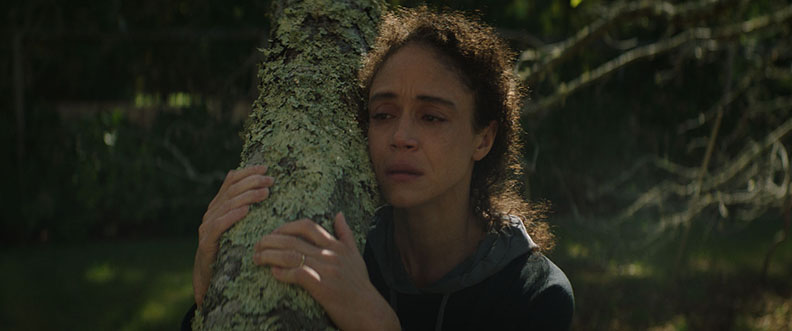
The film establishes a deliberate contrast between physical reality and digital space. The natural environments surrounding the characters carry a tactile warmth. Sunlight filters through trees, interiors feel grounded and lived-in, and the camera often lingers on landscapes that emphasize stillness. The digital environments within NeuraLife operate differently. They shimmer with beauty, offering images that feel almost too perfect. That aesthetic difference creates an unsettling tension. The artificial world feels alluring, yet the audience instinctively senses that something essential is missing.
What ultimately makes HEARTWORM so compelling is its refusal to offer answers. The film doesn’t demonize technology outright. After all, NeuraLife exists because people want relief from pain. That desire is understandable. Instead, the film asks whether remembering becomes dangerous when memory becomes fake. The more convincing the illusion becomes, the harder it may be for someone to return to reality.
That theme resonates within contemporary conversations about artificial intelligence. Modern tech already allows people to reconstruct voices, generate digital likenesses, and simulate conversation patterns. HEARTWORM pushes that further, examining the emotional consequences. The film is careful to never turn into a lecture about technology. The story remains rooted in the characters’ journeys. The conflict between Avena and Mark evolves naturally from their shared loss rather than from abstract philosophical arguments.
The screenplay builds its momentum through small revelations. Memories resurface, past tensions reveal themselves, and the audience gradually understands that the tragedy affecting the family may hold deeper layers than initially expected. Those revelations deepen the question. If technology allows people to revisit their memories, does that process preserve love or freeze the grief in place?
Throughout the film, HEARTWORM maintains a contemplative pace that encourages reflection rather than spectacle. The narrative rarely rushes. Instead, it allows each emotional beat to settle before moving forward. That approach may surprise viewers expecting a traditional science-fiction thriller. The film’s power comes not from technology but from the intimate emotional consequences of its premise.
At its core, HEARTWORM explores the complicated relationship between memory and identity. Our memories shape who we are, yet they also hold the power to trap us in moments we cannot change. Technology, in this context, becomes both a miracle and a temptation. The ability to recreate the past may feel like progress, but the film suggests that healing sometimes requires something far more difficult: letting the past remain the past.
HEARTWORM transforms from speculative science fiction into something far more personal. It becomes a meditation on how people carry loss, how love persists even after tragedy, and how the future may challenge our understanding of both. In an era where artificial intelligence is advancing at a dizzying pace, HEARTWORM reminds viewers that the most complicated questions will never belong to technology. They belong to the human heart.
Please visit https://linktr.ee/overlyhonestr for more reviews.
You can follow me on Letterboxd, Instagram, Twitter, and YouTube. My social media accounts can also be found on most platforms by searching for 'Overly Honest Reviews'.
I’m always happy to hear from my readers; please don't hesitate to say hello or send me any questions about movies.
[photo courtesy of NORMANDIE FILMS]
DISCLAIMER:
At Overly Honest Movie Reviews, we value honesty and transparency. Occasionally, we receive complimentary items for review, including DVDs, Blu-rays, CDs, Vinyl Records, Books, and more. We assure you that these arrangements do not influence our reviews, as we are committed to providing unbiased and sincere evaluations. We aim to help you make informed entertainment choices regardless of our relationship with distributors or producers.
Amazon Affiliate Links:
Additionally, this site contains Amazon affiliate links. If you purchase through these links, we may receive a commission. This affiliate arrangement does not affect our commitment to honest reviews and helps support our site. We appreciate your trust and support as you navigate these links.


Happy
100 %

Sad
0 %

Excited
0 %

Sleepy
0 %

Angry
0 %

Surprise
0 %
 0
0
 0
0

Average Rating