A Photograph That Refuses to Fade
Read Time:5 Minute, 1 Second
MOVIE REVIEW
Stork of Hope
 –
– 

Genre: Drama, War
Year Released: 2025
Runtime: 1h 48m
Director(s): Alexander Franskevich-Leie
Writer(s): Marina Cheblakova, Alexander Franskevich-Leie, Denis Nupreichik
Cast: Aleksandr Abramovich, Yosef Ash, Sergey Belyakovich, Jean-Marc Birkholz, Tatyana Garkusha
Where to Watch: available on digital January 5, 2026
RAVING REVIEW: STORK OF HOPE carries an enormous emotional burden, one shared by countless World War II dramas before it. What distinguishes it, and what ultimately limits it, is its determination to frame unimaginable trauma through gentleness rather than confrontation. This is a film driven by memory and moral clarity, one that prioritizes accessibility over historical abrasion, sometimes to its benefit and sometimes to its detriment.
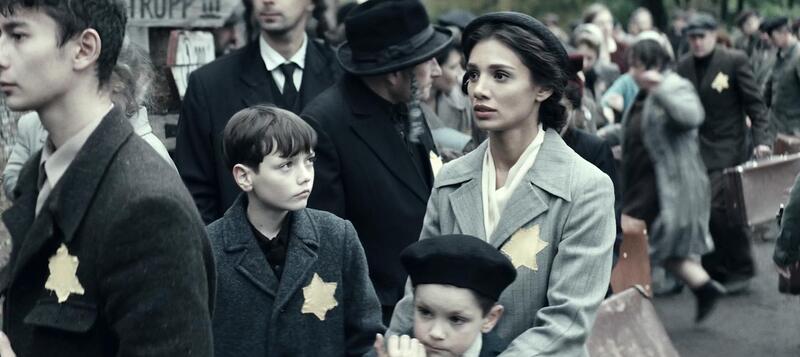
Set during the earliest days of the Nazi invasion of Belarus, the film follows brothers Ilya and Sasha as their family is dismantled by war. Their parents are gone almost immediately, leaving behind a single piece of stability: a family photograph torn in half before the boys are separated. That image becomes the film’s spine, resurfacing across decades as a symbol of endurance, identity, and unresolved grief.
Alexander Franskevich-Leie directs the film with restraint. His approach is deliberate and respectful, avoiding sensationalism even when depicting extreme circumstances. The violence that reshapes these lives is often implied rather than shown, with the emphasis placed on the psychological consequences rather than the brutality itself. This restraint makes the film approachable for a wide audience, though it also risks softening the edges of a reality that was anything but.
The heart of the story lies in Ilya’s survival under a new identity. Taken in by Ganna and Vasily, a couple who risk execution to protect him, the boy is renamed “Stasik” and absorbed into a life that requires silence, compliance, and constant vigilance. The performances anchoring this section of the film are sincere and grounded. Tatyana Garkusha, in particular, brings resolve to Ganna, portraying a woman whose courage manifests not through grand gestures but through daily acts of defiance disguised as routine care.
The film handles this transformation with sensitivity, emphasizing the cost of survival rather than treating concealment as a simple story device. Ilya’s safety is contingent upon erasing himself, a theme the film returns to repeatedly. His new name keeps him alive, but it fractures his sense of self. This conflict is one of the film’s strongest elements, illustrating how survival during genocide often demanded unbearable compromises.
Where STORK OF HOPE becomes more cautious is in its broader depiction of the surrounding world. The film presents danger as omnipresent but generalized, focusing more on looming threat than systemic cruelty. Nazi figures are present and menacing, but they remain largely symbolic, functioning as forces rather than fully realized embodiments of ideology. This choice aligns with the film’s emotionally driven perspective, but it also limits the depth.
Sasha’s absence is felt throughout the film, not through parallel storytelling, but through memory and longing. His half of the photograph becomes a quiet obsession, a promise deferred rather than abandoned. This choice keeps the story intimate, but it also narrows its scope. By staying so closely aligned with Ilya’s experience, the film forgoes opportunities to explore the broader dispersion of trauma unfolding around him.
The film believes deeply in the restorative power of reunion, perhaps more than history allows. While the ending honors resilience and survival, it also risks implying emotional completeness where, realistically, scars would remain. This doesn’t invalidate the story being told, but it does frame it through a lens of healing that may feel too gentle for viewers seeking a more uncompromising portrayal of wartime trauma.
Production design and costuming effectively ground the story in its period without drawing attention to themselves. The score supports the emotion without overwhelming it, favoring melancholy over grandeur. Cinematography maintains a muted palette that reinforces the story’s somber tone, though it rarely challenges the audience visually.
As a historical drama, STORK OF HOPE functions best as a story of courage and endurance rather than as a searing examination of genocide. It prioritizes accessibility, empathy, and remembrance, making it suitable for audiences seeking an emotionally guided entry point into this history.
STORK OF HOPE is a sincere, carefully constructed film that honors survival without questioning it too harshly. Its strengths lie in performance, clarity, and a commitment to honoring real lives affected by war. Its limitations stem from a reluctance to fully engage with the uglier, more destabilizing truths beneath its narrative.
It is a film that chooses reverence over confrontation, memory over rupture, and hope over devastation. Whether that balance resonates will depend on what a viewer seeks from a World War II story. As a human drama, it is effective and heartfelt. As a historical reckoning, it remains measured, cautious, and emotionally guided rather than uncompromising.
Please visit https://linktr.ee/overlyhonestr for more reviews.
You can follow me on Letterboxd, Instagram, Twitter, and YouTube. My social media accounts can also be found on most platforms by searching for 'Overly Honest Reviews'.
I’m always happy to hear from my readers; please don't hesitate to say hello or send me any questions about movies.
[photo courtesy of MIRACLE MEDIA]
DISCLAIMER:
At Overly Honest Movie Reviews, we value honesty and transparency. Occasionally, we receive complimentary items for review, including DVDs, Blu-rays, CDs, Vinyl Records, Books, and more. We assure you that these arrangements do not influence our reviews, as we are committed to providing unbiased and sincere evaluations. We aim to help you make informed entertainment choices regardless of our relationship with distributors or producers.
Amazon Affiliate Links:
Additionally, this site contains Amazon affiliate links. If you purchase through these links, we may receive a commission. This affiliate arrangement does not affect our commitment to honest reviews and helps support our site. We appreciate your trust and support in navigating these links.


Happy
0 %

Sad
0 %

Excited
0 %

Sleepy
0 %

Angry
0 %

Surprise
0 %
 0
0
 0
0

Average Rating