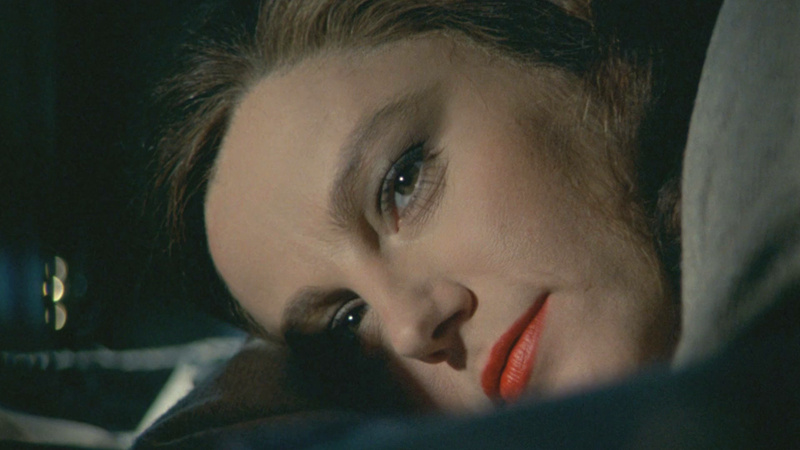
Erotic Confessions Hidden in Plain Sight
Read Time:6 Minute, 38 Second
MOVIE REVIEW
The Key (La chiave) (2 Disc Edition)
 –
– 


Genre: Drama, Erotic, Romance
Year Released: 1983, Cult Epics 4K 2026
Runtime: 1h 56m
Director(s): Tinto Brass
Writer(s): Tinto Brass, Jun’ichirō Tanizaki
Cast: Stefania Sandrelli, Frank Finlay, Franco Branciaroli, Barbara Cupisti
Where to Watch: available now, order your copy here: www.cultepics.com, www.mvdshop.com, or www.amazon.com
RAVING REVIEW: Few filmmakers have sparked as much debate about erotic cinema as Tinto Brass. His films often provoke strong reactions because they refuse to hide behind metaphor or suggestion when examining sexuality. THE KEY was released at a fascinating point in the director’s career, balancing elements of arthouse with the curiosity that would define much of his later work. While the film is remembered primarily for its explicit content, reducing it to that alone misses the more complicated psychological story unfolding beneath the surface.
Set in Venice during the early years of World War II, the film follows art professor Nino Rolfe and his younger wife Teresa. After two decades of marriage, their relationship has reached a stalemate. The passion that once defined their connection has faded into routine, leaving both of them searching for a way to rediscover something meaningful. Rather than confronting the issue directly, Nino develops an unusual solution. He begins writing down his sexual fantasies in a diary and intentionally leaves the key to the drawer where they’re hidden out in the open. His hope is simple, dangerous, and direct; he wants Teresa to find it.
From that moment forward, THE KEY becomes a story about curiosity, voyeurism, and the complicated ways people communicate their desires. Instead of direct conversation, the characters begin interacting through implication, secrets, and observation. Nino’s diary entries serve both as confession and manipulation, allowing him to orchestrate situations while pretending they occur naturally. Teresa, meanwhile, gradually steps into a more liberated version of herself as she begins exploring the possibilities suggested within those pages.
Frank Finlay delivers a layered performance as Nino, a man who believes he can control the emotional and sexual dynamics of his marriage through careful planning. Finlay plays him with a mixture of confidence and insecurity. Nino may present himself as a detached observer of human behavior, but as the film progresses, it becomes clearer that his experiment is driven by fear as much as curiosity. The character wants to reignite passion without risking rejection, and that tension fuels many of the film’s most interesting moments.
Stefania Sandrelli delivers the film’s most captivating performance as Teresa. The role requires a delicate balance between innocence and self-awareness, and Sandrelli navigates that line with confidence. Teresa begins the story feeling constrained by expectations and the routines of married life. As she discovers Nino’s diary and the fantasies hidden within it, her sense of identity begins to shift. Sandrelli portrays that transformation gradually, allowing Teresa to evolve from a passive participant to someone who begins making her own choices about what she wants.
Franco Branciaroli’s Laszlo adds an interesting twist to the story. As the fiancé of Nino and Teresa’s daughter, his presence introduces both temptation and danger into the narrative. Branciaroli plays the role with a confidence that makes him a believable catalyst for the emotional and sexual conflicts unfolding around him. His interactions with Teresa become central to the film’s exploration of desire and control, forcing both characters to confront feelings that were previously left unspoken.
Venice provides an atmospheric backdrop filled with narrow streets, canals, and historic architecture that reinforces the film’s themes of secrecy and hidden desires. Brass uses the city not simply as scenery but as an extension of the characters’ emotional world. The winding alleyways and secluded courtyards mirror the story’s sense of voyeurism, creating an environment where private moments feel constantly on the verge of being discovered.
Ennio Morricone's musical score sets the film’s tone. Known for his ability to shape a film’s emotional landscape through music, Morricone delivers a score that blends sensuality with melancholy. The compositions reinforce the film’s tension between longing and restraint, elevating scenes that might otherwise rely solely on visual provocation.
Of course, it would be impossible to discuss THE KEY without acknowledging its imagery's explicit nature. Brass has never been shy about presenting sexuality, and this film features numerous scenes that leave little to the imagination. However, what makes THE KEY somewhat different from many other erotic films is the way those moments are tied directly to character psychology. Rather than existing purely for shock value, the explicit scenes often serve as extensions of the characters’ emotional journeys.
There are also moments when the film’s exploration of desire leans heavily into the male gaze. Nino’s role as the orchestrator of events can occasionally make Teresa’s journey feel framed through his imagination rather than her own. While Sandrelli’s performance helps counterbalance this dynamic, the film sometimes struggles to escape the voyeuristic lens that defines much of Brass’ work.
Even with those criticisms, THE KEY remains an intriguing entry in the history of European erotic cinema. It blends sensual imagery with psychological curiosity in a way that feels distinctly reflective of its era. The film captures a moment when filmmakers were pushing the boundaries of what could be depicted onscreen while still attempting to anchor those explorations within narrative drama. For viewers approaching the film today, the experience may feel both provocative and strangely reflective. Beneath its scandalous reputation lies a story about communication, trust, and the unpredictable consequences of turning fantasies into reality. Brass presents sexuality not as something shocking but as a complicated part of human relationships that can inspire both connection and conflict.
Decades after its release, THE KEY continues to spark conversation precisely because it refuses to offer the answers many would ask for. The film suggests that desire, once unlocked, rarely behaves the way people expect. Sometimes curiosity brings people closer together. Other times, it reveals truths that cannot easily be ignored.
Bonus Materials:
4K Transfer and Restoration from the original camera negative
Audio Commentary by film historians Eugenio Ercolani & Marcus Stiglegger
Brass’ Talisman: An Interview with Actor Franco Branciaroli
Keyhole Venice: A look at the Venetian locations of the film
Sensuous Morricone: A special on Ennio Morricone and Tinto Brass
Isolated Score by Ennio Morricone
Archival Interview with Tinto Brass (2001)
Outtakes of The Key: Venice
The Key Poster Gallery
Tinto Brass Photo Gallery
Tinto Brass 4K Trailers
Dual-layered Disc
Slipcase
Reversible Sleeve w/Original Italian Poster Art
20-Page illustrated Booklet w/Essay by Eugenio Ercolani
Please visit https://linktr.ee/overlyhonestr for more reviews.
You can follow me on Letterboxd, Instagram, Twitter, and YouTube. My social media accounts can also be found on most platforms by searching for 'Overly Honest Reviews'.
I’m always happy to hear from my readers; please don't hesitate to say hello or send me any questions about movies.
[photo courtesy of CULT EPICS, MVD ENTERTAINMENT]
DISCLAIMER:
At Overly Honest Movie Reviews, we value honesty and transparency. Occasionally, we receive complimentary items for review, including DVDs, Blu-rays, CDs, Vinyl Records, Books, and more. We assure you that these arrangements do not influence our reviews, as we are committed to providing unbiased and sincere evaluations. We aim to help you make informed entertainment choices regardless of our relationship with distributors or producers.
Amazon Affiliate Links:
Additionally, this site contains Amazon affiliate links. If you purchase through these links, we may receive a commission. This affiliate arrangement does not affect our commitment to honest reviews and helps support our site. We appreciate your trust and support as you navigate these links.


Happy
0 %

Sad
0 %

Excited
0 %

Sleepy
0 %

Angry
0 %

Surprise
100 %
 1
1
 0
0

Average Rating