
Growing up Means Leaving Something Behind
Read Time:4 Minute, 57 Second
MOVIE REVIEWS
The River Train (El Tren Fluvial)
 –
– 

Genre: Drama
Year Released: 2026
Runtime: 1h 15m
Director(s): Lorenzo Ferro, Lucas A. Vignale
Writer(s): Lorenzo Ferro, Lucas A. Vignale
Cast: Milo Barria, Rita Pauls, Mariano Barria, Fabián Casas, Lucrecia Pazos
Where to Watch: shown at the 2026 Berlin International Film Festival
RAVING REVIEW: What happens when a child’s dream is quieter than rebellion, but heavier than duty? THE RIVER TRAIN has that question deeply embedded in every frame, and it never pushes to answer it. Instead, this debut feature from Lorenzo Ferro and Lucas A. Vignale settles into the emotional landscape of childhood restraint, where desire exists long before the language to express it.
Milo is nine years old, already burdened by expectations that feel inherited rather than acquired over a lifetime. His life in a remote Argentinian village is structured around responsibility, tradition, and repetition. Malambo dance (a high-energy, traditional Argentine folk dance originating from 17th-century gauchos (cowboys) in the Pampas), with its physical intensity and cultural weight, isn’t framed as a gift or a calling, but as an obligation. Milo performs, but his excellence doesn’t translate into fulfillment. The film is clear about this distinction, and it never romanticizes discipline for its own sake.
What Milo wants is deceptively simple. He wants to ride a train. He wants Buenos Aires. He wants movement, anonymity, and possibility. The city exists for him as an imagined space built from movies and television, a place where identity feels optional rather than assigned. Ferro and Vignale treat this longing with urgency, understanding that for a child, wanting something different can feel as destabilizing as any overt trauma.
Milo Barria’s performance is central to the film’s success. He carries the role without signaling or emotional shorthand. Milo observes more than he reacts, absorbs more than he expresses. Small hesitations and silences do the work here. The film trusts his stillness, allowing scenes to breathe without forcing emotional impact; the moment hits because of what isn’t said. That confidence is rare, especially in debut features centered on childhood.
The supporting cast reinforces the film’s grounded tone. Rita Pauls brings authority as a professor figure, someone who represents both encouragement and constraint. Mariano Barria and Lucrecia Pazos embody family without caricature, their expectations communicated through routine rather than confrontation. Fabián Casas’ appearance adds structure, offering a worldview shaped by resignation rather than aspiration, a possible future Milo senses without fully understanding.
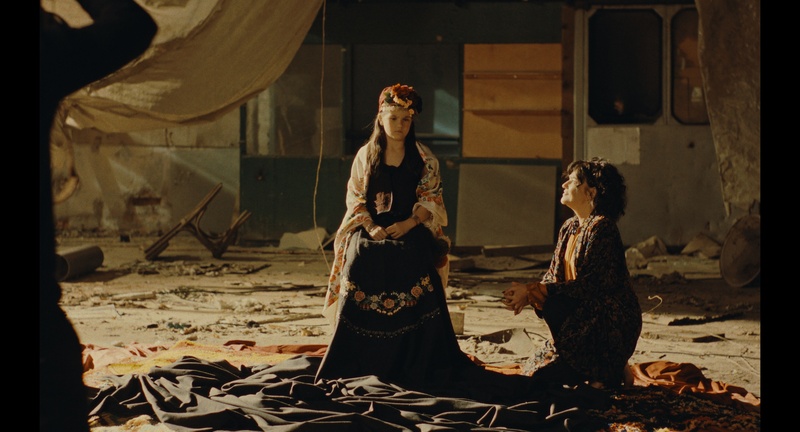
THE RIVER TRAIN adopts a restrained approach that mirrors Milo’s state. The alternation between color and black-and-white isn’t just cosmetic. It reflects shifts in perception, moments where the world feels either immediate or distant. Cinematographer Thomas Gringberg frames landscapes not as picturesque escapes, but as spaces that quietly envelop. Even open environments carry weight here, reinforcing the idea that freedom is not guaranteed by geography.
The film’s pacing is intentional, but not sluggish. Ferro and Vignale understand that childhood unfolds unevenly, marked by long stretches of routine punctuated by brief, defining decisions. When Milo finally approaches the threshold of his dream, the moment lands with clarity precisely because the film hasn’t been pushing toward it. The choice feels earned, not engineered.
One of the film’s most thoughtful elements is its treatment of solitude. Leaving isn’t presented as a triumph. The unknown carries risk, fear, and loss alongside possibility. The film refuses to frame escape as a solution, instead positioning it as a beginning that demands resilience. This balance keeps THE RIVER TRAIN from drifting into sentimentality or false uplift.
As a debut, the film shows remarkable control. Ferro and Vignale resist the urge to overstate themes or underline meaning. Trust in observation replaces exposition. The result is a coming-of-age story that respects its audience's intelligence and the complexity of its subject.
If there’s a limitation, it’s that the film’s restraint may challenge viewers looking for intense narratives or more fast-paced arcs. The film is intentionally paced, and that focus works in its favor. The drama here is internal, cumulative, and subtle, and that’s a choice that aligns with the story being told. Childhood is often filled with quiet decisions made before anyone else notices.
THE RIVER TRAIN doesn’t ask to be seen as a symbolic allegory or social thesis. It works because it stays specific, grounded in one boy’s perspective, and honest about the cost of wanting more than what you’ve been given. It’s a confident, emotionally precise debut that understands how much weight a single dream can carry.
Please visit https://linktr.ee/overlyhonestr for more reviews.
You can follow me on Letterboxd, Instagram, Twitter, and YouTube. My social media accounts can also be found on most platforms by searching for 'Overly Honest Reviews'.
I’m always happy to hear from my readers; please don't hesitate to say hello or send me any questions about movies.
[photo courtesy of CINCO RAYOS, LUXBOX, THE PR FACTORY]
DISCLAIMER:
At Overly Honest Movie Reviews, we value honesty and transparency. Occasionally, we receive complimentary items for review, including DVDs, Blu-rays, CDs, Vinyl Records, Books, and more. We assure you that these arrangements do not influence our reviews, as we are committed to providing unbiased and sincere evaluations. We aim to help you make informed entertainment choices regardless of our relationship with distributors or producers.
Amazon Affiliate Links:
Additionally, this site contains Amazon affiliate links. If you purchase through these links, we may receive a commission. This affiliate arrangement does not affect our commitment to honest reviews and helps support our site. We appreciate your trust and support as you navigate these links.


Happy
0 %

Sad
0 %

Excited
0 %

Sleepy
0 %

Angry
0 %

Surprise
0 %
 0
0
 0
0


Average Rating