
Humanity in the Shadow of the Undead
Read Time:6 Minute, 47 Second
MOVIE REVIEW
We Bury the Dead
 –
– 


Genre: Horror, Thriller, Drama
Year Released: 2026
Runtime: 1h 34m
Director(s): Zak Hilditch
Writer(s): Zak Hilditch
Cast: Daisy Ridley, Brenton Thwaites, Mark Coles Smith, Matt Whelan
Where to Watch: in select theaters January 2, 2026
RAVING REVIEW: A world-ending disaster usually brings along chaos, cities crashing into rubble, and a camera shouting over the noise. WE BURY THE DEAD works in the opposite direction. The catastrophe has already happened. It’s quiet now. Ash settles, bodies lie where they fell, and the survivors are left to clean up the pieces without answers or time to process. The film is built around a simple idea: when the dead refuse to stay buried, grief doesn’t disappear; it intensifies. Zak Hilditch approaches the premise with restraint, focusing less on gore and more on the fallout of a world that suddenly made no sense.
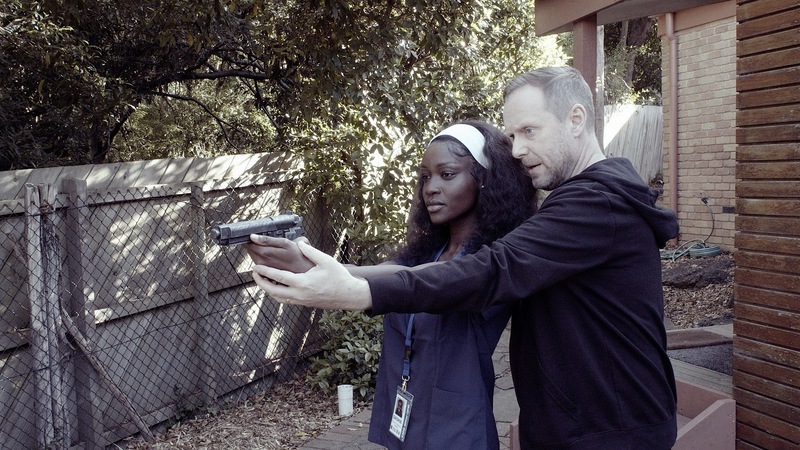
The story follows Ava, played by Daisy Ridley, whose raw center grounds everything around her. Instead of portraying an action hero, Ridley steps into the world as someone who still believes her missing husband might be alive in the disaster zone. That hope pulls her into a military-run effort to recover bodies. It’s work built on sorrow: identifying remains, transporting corpses, and giving closure to families who never got to say goodbye. It’s also the kind of job that erases boundaries between duty and personal pain, because Ava isn’t there for strangers; she’s searching for one person she can’t stop thinking about.
Hilditch chooses not to frame the undead as instantly terrifying monsters. At first, they are described as slow and mostly harmless, a mistake in government reassurances that creates tension between what the military claims and what Ava begins to experience firsthand. When the undead rise, it’s not to chase, but to wander. The fear comes from unpredictability. Each hour brings change. Something dormant becomes aggressive, as if the rules of death have begun shifting without anyone understanding how or why. That evolving threat gives the film urgency without relying on constant attacks.
Brenton Thwaites plays Clay, a partner assigned to Ava during recovery missions. Clay is abrasive, sarcastic, and deliberately disruptive, almost daring Ava to hate him. His presence adds an unexpected layer: where Ava holds onto hope, Clay embraces chaos as if it helps him avoid his own losses. Their partnership feels mismatched in a way that becomes strangely believable. They do not bond through the usual survival tropes. Instead, they argue, disagree, and occasionally let vulnerability show during long stretches of road, smoke-filled air, and the ambient dread of a world where the impossible has already happened.
The landscapes define the mood. Western Australia stands in for a devastated Tasmania, where the streets are empty, plane wreckage sits rusting on beaches, and abandoned cars litter roads like markers of stories cut short. The production design doesn’t shout for attention. It creates atmosphere through absence. Silence becomes threatening, as if the world has been waiting for the living to accept the new reality. The burning city on the horizon feels more symbolic than literal, a constant reminder that people died without explanation or justice.
What makes WE BURY THE DEAD distinct is its refusal to treat the undead as the main attraction. They are present, frightening, and increasingly dangerous, but the narrative centers on Ava’s denial. Many of the film's survivors want closure, not survival. They need to see bodies, to confirm names, to remove uncertainty that would haunt them long after the world tries to recover. Ava’s mission isn’t driven by logic. It’s driven by love. Even when every sign points to tragedy, she presses forward.
The film occasionally leans sentimental, especially in its final act, but that tone feels earned. The journey is defined by loss and the unwillingness to accept it. Most zombie narratives focus on humanity breaking under pressure. This one suggests that humanity survives through the insistence that life mattered, even after death. Each body recovered becomes a statement: the world can fall apart, but memories should not be abandoned in the rubble.
Hilditch has explored apocalyptic storytelling before, and that experience shows in the film’s pacing. He takes his time, allowing quiet moments to sit in uncomfortable silence. Some audiences might want more action, but the slower rhythm draws attention to what the characters feel rather than how they escape. When violence does erupt, it hits harder because the story has been building emotional weight rather than stacking set pieces. There are scenes where Ava stands in silence, surrounded by empty homes or improvised graves, and Ridley plays those moments without dramatic gesture. She lets the stillness speak.
The concept of the undead evolves in ways that challenge assumptions. They begin slowly and confused, eventually shifting toward aggression with no clear pattern. Instead of presenting a scientific explanation, the film uses uncertainty as a form of horror. The soldiers do not understand what they’re fighting. Civilians rely on rumors. Government statements contradict reality. That disconnect makes the film feel relevant beyond its genre. Information breaks down faster than infrastructure, creating a climate of fear where the truth is contested at every level.
Mark Coles Smith adds tension in scenes where morality clashes with protocol. His character, a soldier hardened by experience, is forced to confront Ava and Clay’s refusal to let procedure override personal needs. That conflict drives some of the film’s strongest questions: how far should someone go to say goodbye? When does hope become denial? The film doesn’t give answers, but it portrays those dilemmas with an understanding that grief is messy and irrational.
The ending invites conversation. Some viewers will see it as a statement about acceptance, while others may read it as a refusal to accept a cruel world. It’s ambiguous in a way that respects the emotional core rather than tying events into a neat conclusion. By the time credits roll, the undead serve less as villains and more as shadows of unfinished stories.
WE BURY THE DEAD succeeds because it focuses on a single, intimate journey instead of a global spectacle. It’s not concerned with saving humanity. It explores why individuals cling to the possibility of reunion, even when logic collapses. The horror is present, but grief drives the narrative. The result is a film that feels more personal than expected, led by a performance from Ridley that carries exhaustion, hope, and desperation without exaggeration. There are scares, tension, and unsettling discoveries, but the film’s most striking quality is its belief that the end of the world doesn’t erase love—it makes it harder to let go.
#WeBuryTheDead
Please visit https://linktr.ee/overlyhonestr for more reviews.
You can follow me on Letterboxd, Instagram, Twitter, and YouTube. My social media accounts can also be found on most platforms by searching for 'Overly Honest Reviews'.
I’m always happy to hear from my readers; please don't hesitate to say hello or send me any questions about movies.
[photo courtesy of VERTICAL ENTERTAINMENT, NEON, THE PENGUIN EMPIRE, CAMPFIRE STUDIOS, GIANT LEAP MEDIA, GRAMERCY PARK MEDIA, LB ENTERTAINMENT, SCREEN AUSTRALIA, VACANCY FILMS]
DISCLAIMER:
At Overly Honest Movie Reviews, we value honesty and transparency. Occasionally, we receive complimentary items for review, including DVDs, Blu-rays, CDs, Vinyl Records, Books, and more. We assure you that these arrangements do not influence our reviews, as we are committed to providing unbiased and sincere evaluations. We aim to help you make informed entertainment choices regardless of our relationship with distributors or producers.
Amazon Affiliate Links:
Additionally, this site contains Amazon affiliate links. If you purchase through these links, we may receive a commission. This affiliate arrangement does not affect our commitment to honest reviews and helps support our site. We appreciate your trust and support as you navigate these links.


Happy
100 %

Sad
0 %

Excited
0 %

Sleepy
0 %

Angry
0 %

Surprise
0 %
 0
0
 0
0


Average Rating