Living Through What Others Still Debate
Read Time:5 Minute, 30 Second
MOVIE REVIEW
We Have to Survive
 –
– 


Genre: Documentary
Year Released: 2026
Runtime: 1h 42m
Director(s): Tomáš Krupa
Where to Watch: shown at the 2026 Thessaloniki International Documentary Festival
RAVING REVIEW: There’s a noticeable shift happening in documentaries about climate change, and WE HAVE TO SURVIVE leans into it. Instead of asking what might happen, it focuses on what has and continues to happen. That distinction shapes everything about how the film operates, grounding it in lived experience rather than distant warnings or abstract data.
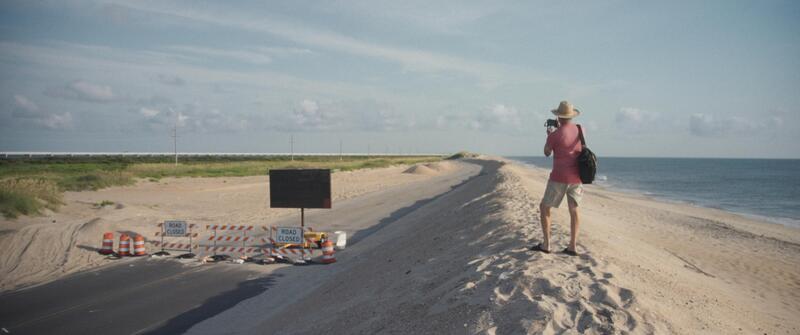
Tomáš Krupa structures the film around four distinct locations, each representing a different consequence of environmental change. From the coastal instability of North Carolina’s Outer Banks to the extreme heat of Australia’s Coober Pedy, the encroaching desert in Mongolia, and the thawing coastlines of Greenland, the film builds a global perspective through localized stories. These aren’t framed as isolated cases but as interconnected realities, each reflecting a different version of the same larger problem.
The film centers its storytelling on people rather than policy. There’s no heavy-handed narration guiding the audience toward a specific conclusion. Instead, it observes, allowing the experiences of these communities to speak for themselves. Families planting trees to hold back desert expansion, residents building a life underground to escape rising temperatures, and communities watching their homes disappear as water levels rise all become part of a broader portrait of adaptation.
That approach gives the film a grounded emotion. These aren’t dramatic set pieces designed for shock value. They’re everyday realities, shown with a level of patience that emphasizes how normalized these conditions have become for the people living through them. The absence of overt urgency is a deliberate choice, but it creates a subtle tension that lingers throughout. Ironically, the film interviews people still trying to deny the realities around them because they won’t see the larger picture.
At its core, the film is less about climate change as a concept and more about what it means for life. Krupa’s own perspective, as outlined in the press materials, reinforces that intention. The film isn’t trying to explain the science behind global warming but rather to explore how it reshapes the way people live, adapt, and survive. That keeps the narrative accessible, even when the subject matter carries so much on its shoulders.
The visuals play a major role in maintaining engagement. Moving between vastly different environments gives the film a sense of scale, reminding the audience that this isn’t a localized issue. The contrast between icy coastlines, barren deserts, and collapsing shorelines reinforces the idea that no region is untouched. At the same time, the cinematography avoids turning these locations into pageantry. The emphasis stays on the people within these environments rather than the environments themselves.
There’s a noticeable restraint in how the film presents its central argument. By avoiding overt commentary, it creates space for interpretation, but that same restraint can limit its impact. For some viewers, the lack of a more direct stance may feel like a missed opportunity to push the conversation further. The film presents reality clearly, but it doesn’t always challenge the audience to engage beyond observation. At the same time, that restraint is part of what makes the film feel distinct. It doesn’t rely on urgency or fear to hold attention. Instead, it builds its message through repetition and accumulation, showing how these stories, when viewed together, create a broader understanding of what’s already happening.
The most compelling moments come from the individuals at the center of each story. Their perspectives bring a level of authenticity that can’t be replicated through statistics or expert commentary. Whether it’s someone acknowledging that nature won’t adapt to humanity, or families finding new ways to live within changing conditions, those insights carry more weight because they come from experience rather than external analysis.
The film’s message becomes clear without being stated outright. This isn’t about preventing what’s coming. It’s about learning how to live with what’s already here. That shift in perspective is what ultimately defines the film, separating it from others in the same space. I’m intrigued by the idea here; it goes against the grain because we still have to fix the core issues, but understandably, we also have to figure out how to live within the broken world we’ve created.
WE HAVE TO SURVIVE’s quiet approach may not resonate with everyone looking for something more direct or urgent. But it succeeds in capturing a version of reality that feels immediate and grounded. It’s not trying to overwhelm the audience, and in doing so, it finds a different kind of impact.
This is a vital documentary that will stick with you not only because of its dramatic moments, but also because of the normalization it presents. The idea that adaptation is no longer optional, but necessary, sits at the center of everything. And while the film doesn’t push that idea as aggressively as you might expect, it doesn’t need to. The reality it presents is already doing that work on its own.
Please visit https://linktr.ee/overlyhonestr for more reviews.
You can follow me on Letterboxd, Instagram, Twitter, and YouTube. My social media accounts can also be found on most platforms by searching for 'Overly Honest Reviews'.
I’m always happy to hear from my readers; please don't hesitate to say hello or send me any questions about movies.
[photo courtesy of HAILSTONE, ARTE, GOLDEN GIRLS FILMPRODUKTION, PULS 4, RADIO AND TELEVISION OF SLOVAKIA, YUZU PRODUCTIONS]
DISCLAIMER:
At Overly Honest Movie Reviews, we value honesty and transparency. Occasionally, we receive complimentary items for review, including DVDs, Blu-rays, CDs, Vinyl Records, Books, and more. We assure you that these arrangements do not influence our reviews, as we are committed to providing unbiased and sincere evaluations. We aim to help you make informed entertainment choices regardless of our relationship with distributors or producers.
Amazon Affiliate Links:
Additionally, this site contains Amazon affiliate links. If you purchase through these links, we may receive a commission. This affiliate arrangement does not affect our commitment to honest reviews and helps support our site. We appreciate your trust and support as you navigate these links.


Happy
0 %

Sad
0 %

Excited
0 %

Sleepy
0 %

Angry
0 %

Surprise
0 %
 0
0
 0
0


Average Rating