Nostalgia As Reckoning, Not Comfort
Read Time:5 Minute, 33 Second
MOVIE REVIEW
Nostalgie
 –
– 


Genre: Drama, Short
Year Released: 2025, 2026
Runtime: 19m
Director(s): Kathryn Ferguson
Writer(s): Stacey Gregg, Wendy Erskine
Cast: Aidan Gillen, Sean Kearns, Jessica Reynolds, Michael Smiley
Where to Watch: shown at the 2025 BFI London Film Festival
RAVING REVIEW: What happens when something you made to escape becomes something others used to survive, or worse, to justify harm? That question hangs over NOSTALGIE from its opening, shaping the film not as a tale of faded fame but as a quiet, devastating examination of authorship, complicity, and the myths artists tell themselves to stay afloat. At just nineteen minutes, Kathryn Ferguson’s BAFTA-nominated short manages to feel both intimate and expansive, never rushing its ideas yet never overcomplicating its message.
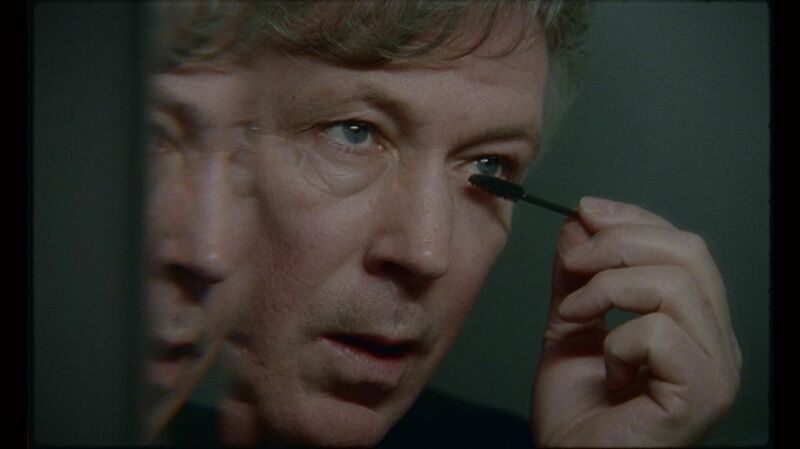
Aidan Gillen plays Drew Lord Haig, a former 1980s pop star whose career stalled decades ago, leaving him cushioned by financial success in tech but emotionally stranded somewhere between relevance and irrelevance. When he’s invited to perform at a celebration in Northern Ireland, the request gives him both validation and temptation. Drew doesn’t need the money, but he needs the feeling. The invitation promises something nostalgia always does, a chance to feel younger without having to reckon with why time moved on in the first place.
Ferguson understands nostalgia as a dangerous substance, not a sentimental one. She stages Drew’s return to the stage with restraint, letting the initial performance play out in discomfort rather than triumph. His hit single falls flat, met with polite indifference. It’s only when he stumbles into a long-forgotten B-side that the room changes. The crowd erupts, singing every word with fervor that borders on a ritualistic ceremony. In that moment, the film takes a turn, not through a plot twist but through emotional dislocation. Drew realizes the song no longer belongs to him, if it ever did to begin with.
The revelation that follows is handled with remarkable discipline. The adoption of Drew’s song during the Troubles (an ethno-nationalist conflict in Northern Ireland that lasted for about 30 years from the late 1960s to 1998), repurposing it as a rallying cry for covert and brutal operations, reframes everything we’ve seen. What Drew once understood as nihilistic rebellion has lived on as a soundtrack to violence. The film refuses binaries here. It doesn’t accuse Drew of intent, but it also doesn’t absolve him of responsibility. Instead, it asks a harder question: whether intention matters once art enters the world and begins to accrue meaning on its own terms.
Gillen’s performance is the film’s center. He plays Drew not as a monster or a fool, but as a man whose self-mythology has become something else, something brittle. There’s a quiet arrogance in how Drew assumes his work was misunderstood, and a deeper terror when he realizes it was understood all too well, just not by him. Gillen communicates this shift almost entirely through posture and silence, letting the weight settle in rather than showing it.
Music is not just a device here; it’s the film’s morality. Original songs and score by Dan Smith convincingly evoke the texture of 1980s pop while carrying a darker undercurrent that mirrors Drew’s dawning awareness. The melodies are catchy enough to explain their longevity, but hollow enough to feel unsettling once stripped of context. The film never lets you forget that songs are vessels, and what they carry depends on who’s holding them.
Ferguson’s background in documentary filmmaking is evident in the film's observation rather than editorializing. Having previously explored the intersection of music, power, and identity in her work on Sinéad O’Connor, she brings that same sensitivity here, particularly in how Northern Ireland itself is framed. Belfast is not presented as a backdrop or symbol, but as a place where history is lived daily, where memory isn’t abstract, and where art does not float above consequence.
Michael Smiley brings an unsettling casualness to Jimmy, embodying the way ideology often hides behind friendliness. Jessica Reynolds grounds the film’s emotional counterweight, offering a presence that feels contemporary and alert, someone not burdened by nostalgia but still forced to inherit its consequences. The predominantly Northern Irish cast lends authenticity without turning the film into a thesis statement about place.
Robbie Ryan’s cinematography gives NOSTALGIE a muted quality. The camera doesn’t glamorize performance or dramatize revelation. Instead, it observes Drew as someone increasingly out of sync with the spaces he occupies. Some viewers may want more time with Drew after his reckoning, more fallout, more articulation of what this realization means beyond his private guilt. NOSTALGIE isn’t interested in redemption arcs or public apologies. It’s interesting in the quieter, lonelier moment when someone realizes they can’t undo what they made, only decide how to live with it.
By the time Drew returns home, the film has stripped nostalgia of its romance entirely. What remains is something heavier and more honest, the understanding that art doesn’t disappear when its creator moves on. It lingers, mutates, and sometimes hurts. Ferguson doesn’t offer comfort here, but she does offer clarity. In doing so, NOSTALGIE becomes less about the past and more about accountability in the present.
Please visit https://linktr.ee/overlyhonestr for more reviews.
You can follow me on Letterboxd, Instagram, Twitter, and YouTube. My social media accounts can also be found on most platforms by searching for 'Overly Honest Reviews'.
I’m always happy to hear from my readers; please don't hesitate to say hello or send me any questions about movies.
[photo courtesy of FILM4, STILLE PRODUCTIONS, TARA FILMS, IE: ENTERTAINMENT]
DISCLAIMER:
At Overly Honest Movie Reviews, we value honesty and transparency. Occasionally, we receive complimentary items for review, including DVDs, Blu-rays, CDs, Vinyl Records, Books, and more. We assure you that these arrangements do not influence our reviews, as we are committed to providing unbiased and sincere evaluations. We aim to help you make informed entertainment choices regardless of our relationship with distributors or producers.
Amazon Affiliate Links:
Additionally, this site contains Amazon affiliate links. If you purchase through these links, we may receive a commission. This affiliate arrangement does not affect our commitment to honest reviews and helps support our site. We appreciate your trust and support as you navigate these links.


Happy
0 %

Sad
0 %

Excited
0 %

Sleepy
0 %

Angry
0 %

Surprise
0 %
 0
0
 0
0


Average Rating