Sometimes Going Back Isn’t Healing
Read Time:5 Minute, 4 Second
MOVIE REVIEWS
Nina Roza (Fleur bleue)
 –
– 


Genre: Drama
Year Released: 2026
Runtime: 1h 43m
Director(s): Geneviève Dulude-De Celles
Writer(s): Geneviève Dulude-De Celles
Cast: Galin Stoev, Sofia Stanina, Ekaterina Stanina, Michelle Tzontchev, Chiara Caselli
Where to Watch: shown at the 2026 Berlin International Film Festival
RAVING REVIEW: What happens when returning home feels more like meddling than staying away? NINA ROZA builds tension around that question throughout, crafting a restrained, deeply reflective drama about displacement, authorship, and the ethics adults impose on children in the name of art. Geneviève Dulude-De Celles follows her acclaimed debut, UNE COLONIE, with a film that feels more expansive yet more inwardly focused, less concerned with revelation than with reckoning.
The story centers on Mihail, a Bulgarian immigrant who fled his homeland in the 1990s after the death of his wife, raising his daughter Roza alone in Montreal. Decades later, his carefully constructed life as a specialist in French and contemporary art is disrupted when he’s commissioned to authenticate Nina's work, an eight-year-old Bulgarian painter whose viral fame has sparked both fascination and suspicion. Mihail’s reluctance to return to Bulgaria is tangible, not because of fear, but because of unresolved emotions. Agreeing to the trip means analyzing a version of himself he’s long tried to contain.
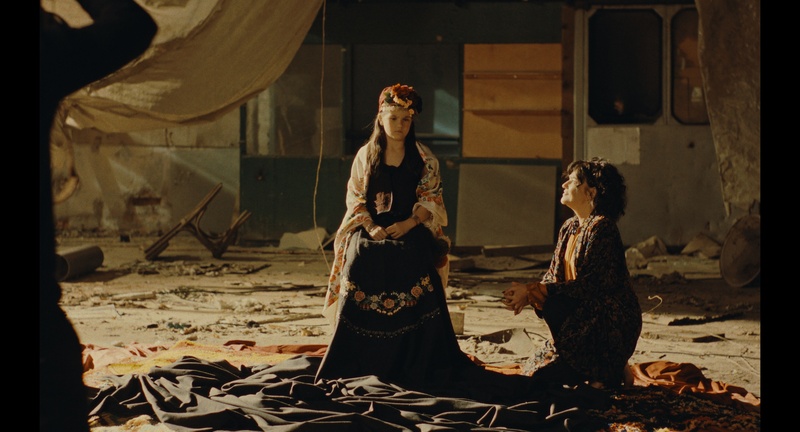
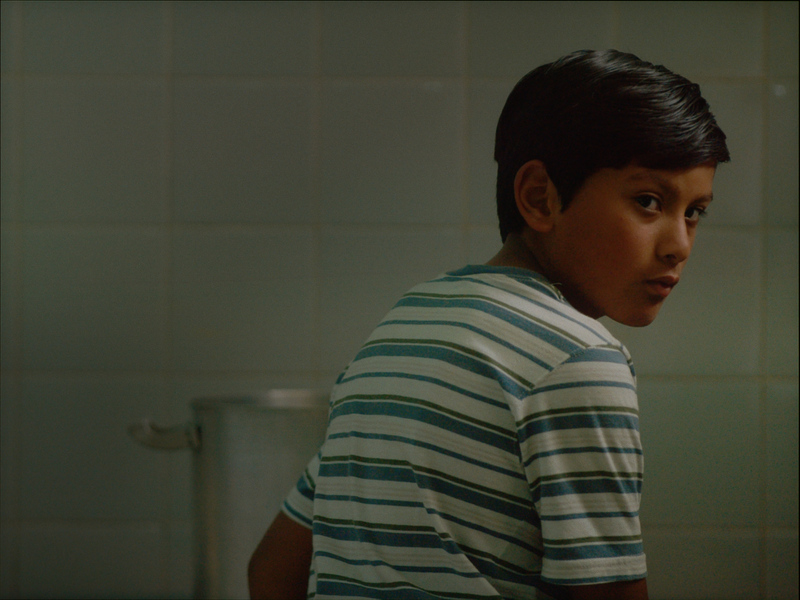
Dulude-De Celles structures the film as a journey that resists momentum. The authentication assignment provides a concrete objective, but the film is far more interested in what that task unsettles. Mihail’s encounter with Nina, portrayed with striking fidelity by twins Sofia and Ekaterina Stanina, becomes less about verifying talent and more about confronting memory. Nina’s maturity, her confidence, and her uninhibited relationship to creation unsettle Mihail precisely because they echo what he’s lost with Roza, not just time, but involvement shaped by shared origin.
The film’s most fascinating moments lie in its refusal to simplify Nina’s situation. NINA ROZA never frames the child as an exploited prodigy or a pure artistic miracle. Instead, it questions the adult desire to define, own, and monetize creativity. The questions Mihail asks himself become increasingly uncomfortable. Does he have the right to disrupt Nina’s life in pursuit of the truth? Does authenticity matter more than preservation? And if Nina truly is gifted, is intervention an opportunity or an act of violence?
Galin Stoev delivers a measured, intrinsic performance that anchors the film. Mihail is not expressive in obvious ways; his life is carried in hesitation, posture, and silence. Dulude-De Celles trusts the audience to read these subtleties, allowing scenes to breathe without explanatory dialogue. Michelle Tzontchev, as Roza, adds another layer to the film’s exploration of inheritance and distance. Her presence reminds us that migration doesn’t end with relocation; it echoes forward, shaping relationships long after the move itself.
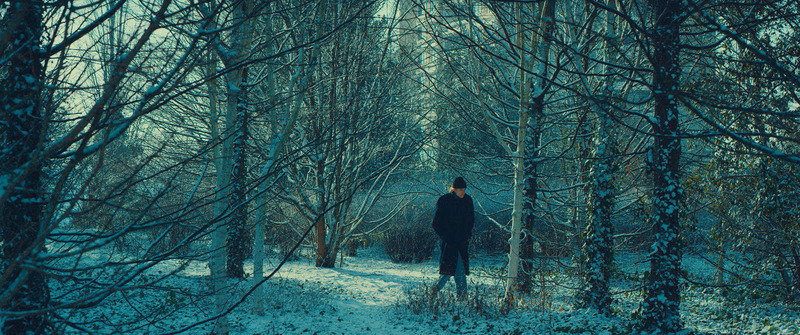
The film favors an impressionistic realism. Cinematographer Alexandre Nour Desjardins avoids overt stylization, instead allowing light, landscape, and stillness to convey Mihail’s internal state. Bulgaria isn’t romanticized as a lost homeland, nor is Montreal framed as a refuge. Both exist as lived spaces, shaped by memory rather than nostalgia. The film’s sound design and score remain understated, reinforcing its contemplative tone without signaling emotional beats too aggressively.
One of the film’s greatest strengths is its engagement with the art world as a system rather than a symbol. Dulude-De Celles draws on real-world processes of authentication, speculation, and market value, grounding the story in tangible ethical concerns. Art isn’t presented as transcendent salvation, but as something vulnerable to distortion once it enters economic circulation. This perspective gives the film a quiet but pointed critical edge.
Where NINA ROZA may challenge some viewers is in its deliberate refusal to offer the expected resolutions that many have come to expect. The film resists definitive answers about Nina’s provenance, Mihail’s redemption, or the morality of intervention. Instead, it sitswith its uncertainty, suggesting that some questions lose their urgency once they’re understood. This approach aligns with Dulude-De Celles’ broader thematic interest in identity as something fractured and evolving rather than resolved. The journey matters more than the destination, not as a cliche, but as an acceptance of incompleteness.
NINA ROZA is confident without being declarative and passionately rich without manipulation. It asks its audience to sit with discomfort, to recognize how easily good intentions slide into control, and how memory complicates even the most rational decisions.
NINA ROZA is a thoughtful, quietly powerful drama that examines art, migration, and responsibility with patience and moral clarity. Its restraint may not appeal to viewers seeking catharsis, but its emotional honesty and ethical depth linger long after the final frame.
Please visit https://linktr.ee/overlyhonestr for more reviews.
You can follow me on Letterboxd, Instagram, Twitter, and YouTube. My social media accounts can also be found on most platforms by searching for 'Overly Honest Reviews'.
I’m always happy to hear from my readers; please don't hesitate to say hello or send me any questions about movies.
[photo courtesy of COLONELLE FILMS, PREMIERSTUDIO, ECHO BRAVO, GINGER LIGHT, UMI FILMS, BEST FRIEND FOREVER, THE PR FACTORY]
DISCLAIMER:
At Overly Honest Movie Reviews, we value honesty and transparency. Occasionally, we receive complimentary items for review, including DVDs, Blu-rays, CDs, Vinyl Records, Books, and more. We assure you that these arrangements do not influence our reviews, as we are committed to providing unbiased and sincere evaluations. We aim to help you make informed entertainment choices regardless of our relationship with distributors or producers.
Amazon Affiliate Links:
Additionally, this site contains Amazon affiliate links. If you purchase through these links, we may receive a commission. This affiliate arrangement does not affect our commitment to honest reviews and helps support our site. We appreciate your trust and support as you navigate these links.


Happy
0 %

Sad
0 %

Excited
0 %

Sleepy
0 %

Angry
0 %

Surprise
0 %
 0
0
 0
0

Average Rating