
The Grey Space Before Collapse
Read Time:5 Minute, 35 Second
MOVIE REVIEWS
Clovers
 –
– 

Genre: Documentary
Year Released: 2026
Runtime: 1h 36m
Director(s): Jacob Hatley, Tom Vickers
Where to Watch: shown at the 2026 Slamdance Film Festival
RAVING REVIEW: What does a dying town look like when nobody’s performing for the camera? CLOVERS answers that question by refusing pageantry. There are no sweeping drone shots of abandoned factories, no heavy-handed narration declaring economic ruin. Instead, the film plants itself in a quasi-legal strip mall casino in Asheboro, North Carolina, and lets time do the storytelling.
Directed over a multi-year period by Jacob Hatley and Tom Vickers, CLOVERS is less a portrait of decline and more a study of endurance. The town may have once been labeled the fastest-dying city in America, but the people inside this film aren’t moving like they’ve accepted that diagnosis. They’re restless, frustrated, searching, sometimes self-destructive, and always clinging to the possibility that the next day might change something.
At the center is Jenny, who loses her job at the Randolph County Jail and ends up managing Clover’s, a strip mall video casino operating in that murky space between legality and inevitability. Jennifer Paschal isn’t performing for the documentary. She’s surviving it. Her presence anchors the film without turning her into a hero or a cautionary tale. She’s practical, guarded, and visibly tired, yet she maintains a stubborn sense of responsibility to the people who live and die by the lights of the machines.
JD Cranford and Sharon McNeill round out a cast of regulars who feel less like subjects and more like fixtures in the story. The film doesn’t introduce them with statistics or tragic backstories. It lets you sit beside them, watch their rituals, and absorb the repetition of their lives. The machines hum while their bills come due. Hopes rise and collapse in seconds. The space itself becomes a character, with fluorescent lights and a suspended, almost-perpetual quality.
CLOVERS thrives on its verité approach. Hatley and Vickers shot, directed, produced, and edited the film themselves, and that hands-on approach shows. There’s no distance between the camera and the subject. Conversations happen in half-sentences. Arguments flare up and dissolve like they never happened.
The 2016 election hangs over the film less as a political argument than as a reality in a moment of upheaval, something that shapes the emotion of the people living inside it. That tension comes into focus through the contrast between JD and Sharon, longtime friends whose life paths left them with very different instincts. Sharon, approaches Trump with an optimism rooted in belief, seeing him as a disruptive force and extending the benefit of the doubt again and again to preserve that vision. JD, shaped by a far rougher life in a different way, isn’t able to engage in that kind of unseen faith. He recognizes performance when he sees it, and his resistance isn’t ideological so much as experiential. Where Sharon looks for intention, JD sees patterns. The film doesn’t condemn either perspective; it simply shows how belief and skepticism are often products of what people have had to survive.
The most compelling aspect of CLOVERS is its refusal to romanticize desperation. Addiction is present. Economic decay is present. Unemployment is there. But the film resists the temptation to frame these realities as either moral failures or poetic tragedies. It understands that boredom, loneliness, and financial instability create ecosystems. Clover’s is one of those ecosystems. It’s not glamorous. It’s not hellish. It’s simply where people land when other structures collapse.
The film’s pacing is deliberate. At ninety-six minutes, it allows scenes to breathe, letting you understand who these people are. That patience is its strength, where repetition becomes the point. Still, the slow accumulation of detail is what gives the ending its weight. And that ending lands. Without spoiling specifics, CLOVERS moves toward a conclusion that reframes everything that came before it. The film never tips its hand. It trusts the viewer to stay engaged long enough for the shift to register. When it arrives, it doesn’t feel manufactured. It feels inevitable.
There’s no attempt to beautify the strip mall or stylize the ongoing decay. The cinematography feels present rather than cultivated. That choice reinforces the film’s stance. These people aren’t aesthetic objects. They are participants in a reality that doesn’t need embellishment.
What lingers after CLOVERS ends isn’t despair, but tension. The tension between hope and resignation. Between legal and illegal. Between safety and danger. Between hope for the future and the resignation that a conman may not be able to back his promises. The casino exists in a grey zone, and so do the lives within it. That grey space becomes the film’s thematic backbone. It’s the space just before the slot machine stops spinning, where possibility and inevitability blur.
CLOVERS stands out because it doesn’t chase trends or concepts. It commits to observation. It lets the town speak through behavior rather than commentary. In doing so, it captures something uncomfortably recognizable about contemporary America. Not the headline version, but the small-town rural version. This documentary neither demands sympathy nor offers condemnation. It simply stays. And by staying, it reveals more than most films are willing to summarize.
Please visit https://linktr.ee/overlyhonestr for more reviews.
You can follow me on Letterboxd, Instagram, Twitter, and YouTube. My social media accounts can also be found on most platforms by searching for 'Overly Honest Reviews'.
I’m always happy to hear from my readers; please don't hesitate to say hello or send me any questions about movies.
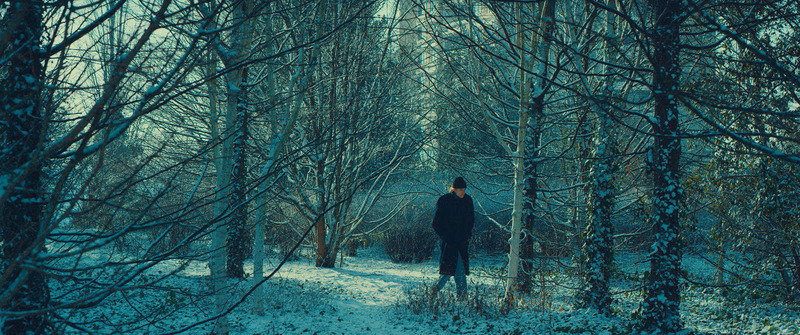
[photo courtesy of PIONEERS OF THE NEW WEST]
DISCLAIMER:
At Overly Honest Movie Reviews, we value honesty and transparency. Occasionally, we receive complimentary items for review, including DVDs, Blu-rays, CDs, Vinyl Records, Books, and more. We assure you that these arrangements do not influence our reviews, as we are committed to providing unbiased and sincere evaluations. We aim to help you make informed entertainment choices regardless of our relationship with distributors or producers.
Amazon Affiliate Links:
Additionally, this site contains Amazon affiliate links. If you purchase through these links, we may receive a commission. This affiliate arrangement does not affect our commitment to honest reviews and helps support our site. We appreciate your trust and support as you navigate these links.


Happy
0 %

Sad
0 %

Excited
0 %

Sleepy
0 %

Angry
0 %

Surprise
0 %
 1
1
 0
0


Average Rating