The League That Changed the Game Then Disappeared
Read Time:5 Minute, 34 Second
TV SERIES REVIEW
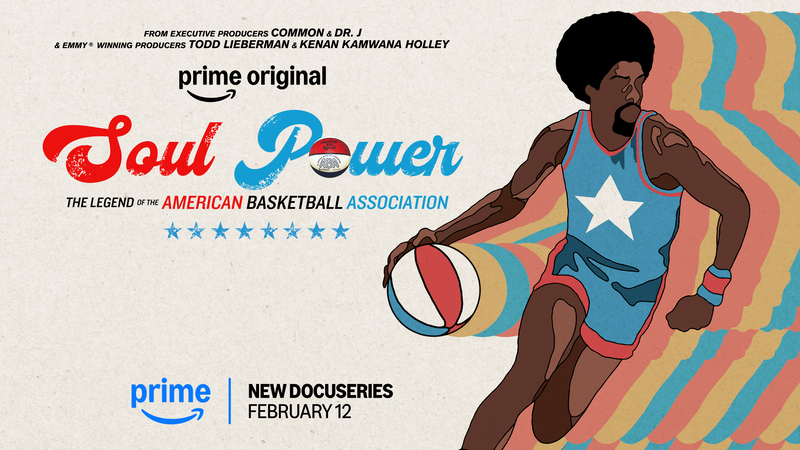
Soul Power: The Legend of the American Basketball Association
 –
– 


Genre: Documentary, Sports, History
Year Released: 2026
Runtime: 4 x 1h episodes
Director(s): Kenan Kamwana Holley
Where to Watch: available on Prime Video February 12, 2026
RAVING REVIEW: What gets remembered in American sports history, and who decides when innovation becomes acceptable only after it’s been stripped of its original authorship? SOUL POWER: THE LEGEND OF THE AMERICAN BASKETBALL ASSOCIATION frames its entire four-part structure around that question, and it’s at its strongest when it refuses to reduce the ABA to a novelty act or a footnote to NBA dominance.
This series doesn’t pretend that the ABA was stable, polished, or responsibly managed. It was chaotic, underfunded, and often one step away from collapse. What SOUL POWER understands, though, is that instability was inseparable from its cultural impact. The ABA existed in a moment when American institutions were being challenged across the board, and the league reflected that unrest in both style and substance. It was louder, flashier, more player-forward, and less interested in respectability. That refusal to conform is treated here not as recklessness, but as necessity.
Kenan Kamwana Holley’s direction keeps the series grounded in testimony rather than mythology. This isn’t some slick highlight reel masquerading as history. It’s an oral record shaped by players, coaches, journalists, and cultural historians who were either present or directly impacted. Common’s narration is restrained and deliberate, avoiding the urge to hype moments that already speak for themselves. The result is a tone that feels measured rather than celebratory, allowing the series to interrogate legacy rather than canonize it.
The early episodes do smart work contextualizing the ABA’s formation, not just as a rival league but as a business experiment born out of exclusion. The NBA’s rigidity at the time is never exaggerated, but it’s clearly positioned as a gatekeeper. The ABA didn’t just offer an alternative style of play; it provided access. Players who didn’t fit the NBA’s preferred mold found opportunity, visibility, and leverage. The introduction of the three-point line and the slam dunk contest aren’t framed as gimmicks here, but as expressions of a different philosophy, one that valued creativity and spectacle as legitimate forms of excellence.
The American Basketball Association’s story is inseparable from the conditions that allowed it to exist at all. Founded in 1967 by a loose coalition of owners shut out of NBA expansion, the ABA was born less from idealism than necessity, an attempt to force entry into a closed system by building something louder. From the start, the league leaned into spectacle as leverage, embracing the red, white, and blue ball and a faster, more expressive style of play as ways to differentiate itself from the NBA’s conservatism. That creativity, however, was constantly undercut by financial instability, ownership struggles, and a lack of long-term infrastructure. Franchises folded or relocated with alarming frequency, player salaries were often delayed, and survival depended as much on charisma and improvisation as business acumen. By the mid-seventies, the ABA’s influence on the sport was undeniable, but its economic footing wasn’t. The 1976 merger with the NBA preserved select teams and ideas while abandoning others, effectively ending the league’s existence even as its innovations became permanent fixtures of the game.
Where the series really shines is in its attention to player empowerment. Figures like Julius Erving, Rick Barry, and George Gervin aren’t presented as inevitable legends. They’re shown navigating a system that was improvising in real time, sometimes to their benefit, sometimes at their expense. The ABA’s willingness to center personality and individuality is linked directly to how modern basketball markets its stars. SOUL POWER makes a convincing case that today’s player-driven narratives didn’t emerge organically; they were inherited.
That said, the series occasionally plays it safe when it could dig deeper. Financial mismanagement, failures, and long-term consequences for players who didn’t make the merger cut are addressed, but not always questioned with the same rigor as the league’s stylistic triumphs. The involvement of the Dropping Dimes Foundation adds an emotional dimension, especially when discussing retired players’ health and financial struggles. Still, those moments sometimes feel isolated rather than fully integrated into the broader argument about institutional absorption and abandonment.
The final episodes do meaningful work reframing the NBA-ABA merger not as a happy ending, but as a selective preservation. The franchises that survived did so by adapting, while much of the league’s culture was absorbed without credit. SOUL POWER doesn’t argue that the ABA was perfect or sustainable. It argues that it was necessary, and that its disappearance doesn’t negate its influence.
This isn’t just about basketball mechanics or rule changes. It’s about how American systems respond to disruption, how creativity is tolerated only after it proves profitable, and how history often gets written by the institutions that outlast the people who challenged them. SOUL POWER succeeds not because it crowns the ABA as superior, but because it treats it as foundational. Modern basketball doesn’t just resemble the ABA aesthetically. It carries its DNA, even if it rarely acknowledges the source.
Please visit https://linktr.ee/overlyhonestr for more reviews.
You can follow me on Letterboxd, Instagram, Twitter, and YouTube. My social media accounts can also be found on most platforms by searching for 'Overly Honest Reviews'.
I’m always happy to hear from my readers; please don't hesitate to say hello or send me any questions about movies.
[photo courtesy of PRIME VIDEO, HIDDEN PICTURES, HOLLEY FILMS, TRUTH+MEDIA]
DISCLAIMER:
At Overly Honest Movie Reviews, we value honesty and transparency. Occasionally, we receive complimentary items for review, including DVDs, Blu-rays, CDs, Vinyl Records, Books, and more. We assure you that these arrangements do not influence our reviews, as we are committed to providing unbiased and sincere evaluations. We aim to help you make informed entertainment choices regardless of our relationship with distributors or producers.
Amazon Affiliate Links:
Additionally, this site contains Amazon affiliate links. If you purchase through these links, we may receive a commission. This affiliate arrangement does not affect our commitment to honest reviews and helps support our site. We appreciate your trust and support as you navigate these links.


Happy
0 %

Sad
0 %

Excited
0 %

Sleepy
0 %

Angry
0 %

Surprise
0 %
 0
0
 0
0



Average Rating