The Power of Letting Silence Speak
Read Time:5 Minute, 18 Second
MOVIE REVIEW
Been Here Stay Here
 –
– 

Genre: Documentary
Year Released: 2024, 2026
Runtime: 1h 26m
Director(s): David Usui
Where to Watch: opens TBD (March), in New York City’s Quad Cinema
RAVING REVIEW: There’s a confidence to BEEN HERE STAY HERE that shows itself almost immediately. Not through urgency, not through performance, and certainly not through the familiar checklist of talking points that dominate so much climate-focused nonfiction. Instead, the film settles in, measured and observant, and asks something far more radical of its audience: to listen without preparing a rebuttal. (trust me, that’s harder than I thought!)
Directed by David Usui, a filmmaker rooted in vérité tradition, BEEN HERE STAY HERE situates itself on Tangier Island, a Chesapeake Bay community that’s often reduced to shorthand in media. It’s been called a climate casualty, a symbol of denial, a political talking point. Usui rejects all of that. His film doesn’t argue against those narratives so much as it renders them irrelevant by refusing to engage with them. What matters here isn’t the debate; it’s the people.
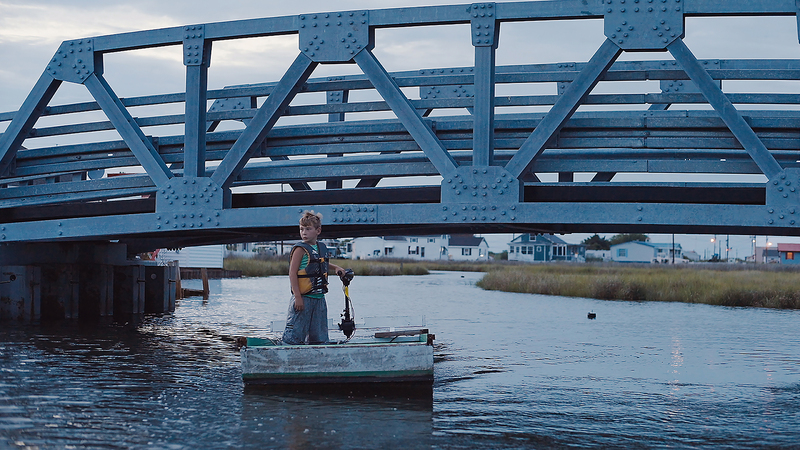
What makes the film so effective is its restraint. No experts are explaining what the audience should think. No graphics translating loss into numbers. No narrator guiding interpretation. That absence isn’t a story device; it’s the film’s entire philosophy. Usui’s camera observes fishermen, pastors, children, and families as they move through their routines shaped by faith, tradition, and an unshakable attachment to place. The erosion of the island is present in nearly every frame, but it’s never treated as an exhibition. It’s simply part of life, as constant and unremarkable as the tide that’s washing it away.
BEEN HERE STAY HERE doesn’t feel designed to convince anyone of anything. Instead, it builds trust with both its subjects and its audience. That trust is earned through time. You feel the years Usui spent returning without a camera, listening before filming, letting relationships form before images were ever captured. The result is a sense of intimacy that can’t be rushed or manufactured.
Faith plays a central role here, but it’s handled with care. The film doesn’t frame belief as a contradiction or obstacle. It treats faith as a living language through which this community understands responsibility, stewardship, and belonging. That choice is crucial. Rather than flattening Tangier’s residents into ideological archetypes, the film allows their worldview to exist on its own terms. You don’t have to share their beliefs to understand their values!
One of the film’s most striking qualities is how it reframes the idea of staying. In many climate narratives, leaving is presented as the rational or inevitable choice. BEEN HERE STAY HERE challenges that assumption without romanticizing the consequences. Staying isn’t portrayed as denial or stubbornness; it’s shown as a moral decision shaped by history, family, and faith. The question isn’t whether staying is logical. It’s whether logic alone should dictate how people live and die in the places they love.
The film’s editing plays a major role in sustaining its tone. The sequencing never pushes toward a specific climax. Instead, it mirrors the cycles of island life, cyclical and patient. This choice reinforces the film’s central thesis: that understanding doesn’t come from urgency alone, but from presence.
By refusing to frame Tangier Island as a cautionary tale or moral failure, BEEN HERE STAY HERE exposes how often climate conversations collapse into judgment. The film doesn’t excuse inaction, but it complicates the narrative of blame. It asks what gets lost when people are reduced to contradictions rather than understood as whole human beings. That question lingers long after the film ends.
Importantly, the film never pretends that faith-based framing is a magic solution. It doesn’t suggest that shared values automatically resolve structural problems or policy failures. What it offers instead is a starting point, one rooted in empathy rather than persuasion. That distinction matters. The film isn’t naive about the scale of the crisis; it’s deliberate about how conversations begin.
If there’s a critique to be made, it’s that the film’s restraint may frustrate viewers conditioned to expect more direct answers or calls to action. Some may wish for more explicit engagement with solutions, infrastructure, or accountability. But that absence feels intentional, not evasive. BEEN HERE STAY HERE isn’t interested in closing the conversation. It’s interested in reopening it, especially with audiences who’ve long felt excluded from it.
Ultimately, what makes BEEN HERE STAY HERE resonate is its refusal to weaponize empathy. It doesn’t use compassion as a tool. It practices it. In doing so, the film accomplishes something rare: it creates a space where ideological defenses soften, not because they’re challenged, but because they’re no longer being targeted.
This is a documentary that understands that real change rarely begins with argument. It starts with attention. By slowing down, listening carefully, and allowing its subjects to define themselves, BEEN HERE STAY HERE becomes more than a climate documentary. It becomes a study in how storytelling itself can act as a bridge, not by erasing differences, but by honoring them.
Please visit https://linktr.ee/overlyhonestr for more reviews.
You can follow me on Letterboxd, Instagram, Twitter, and YouTube. My social media accounts can also be found on most platforms by searching for ‘Overly Honest Reviews’.
I’m always happy to hear from my readers; please don’t hesitate to say hello or send me any questions about movies.
[photo courtesy of LOST AND FOUND FILMS, RBL FILMS, GRASSHOPPER FILM]
DISCLAIMER:
At Overly Honest Movie Reviews, we value honesty and transparency. Occasionally, we receive complimentary items for review, including DVDs, Blu-rays, CDs, Vinyl Records, Books, and more. We assure you that these arrangements do not influence our reviews, as we are committed to providing unbiased and sincere evaluations. We aim to help you make informed entertainment choices regardless of our relationship with distributors or producers.
Amazon Affiliate Links:
Additionally, this site contains Amazon affiliate links. If you purchase through these links, we may receive a commission. This affiliate arrangement does not affect our commitment to honest reviews and helps support our site. We appreciate your trust and support in navigating these links.


Happy
0 %

Sad
0 %

Excited
0 %

Sleepy
0 %

Angry
0 %

Surprise
0 %
 0
0
 0
0



Average Rating