The Quiet Radicalism of Showing Up
Read Time:5 Minute, 32 Second
MOVIE REVIEWS
Beam Me Up, Sulu
 –
– 

Genre: Documentary
Year Released: 2025, 2026
Runtime: 1h 30m
Director(s): Timour Gregory, Sasha Schneider
Where to Watch: released on digital on February 17, 2026, on Apple TV, Amazon, Fandango at Home, Google Play, DirecTV/AT&T, Kanopy
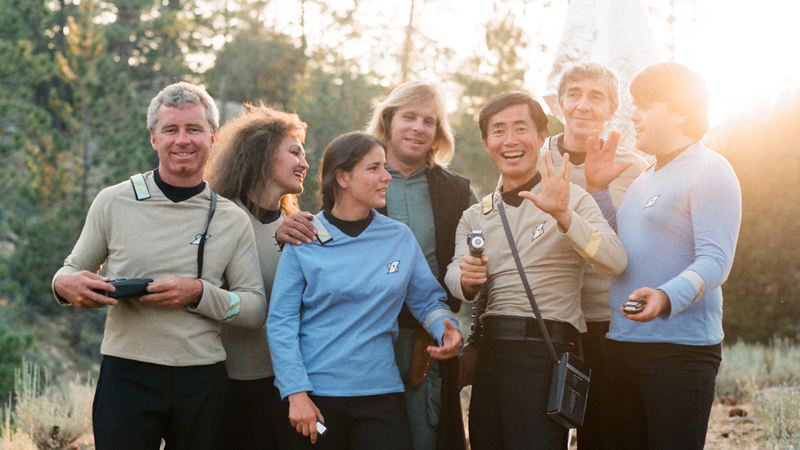
RAVING REVIEW: What does it mean when a piece of pop culture not only ages well, but explains the present better than the moment that produced it? BEAM ME UP, SULU is introduced as a story based on a "lost" 1985 Star Trek fan film made in a California forest by students who never got to show their work. But as the film progresses, we realize that the project was much bigger, a discovery of how representation, good intentions, and community were important then and remain important today.
Timour Gregory and Sasha Schneider, the film's directors, frame the search for the lost footage in a straightforward way. They treat the lost student project YORKTOWN: A TIME TO HEAL not as a mystery to sensationalize, nor as an opportunity to make a big deal out of finding the footage. Instead, the film uses the lost project as an entry point into discussions about access, visibility, and how fandom provides a space for people that the entertainment industry doesn’t. One of the best things about the film is its restraint in addressing these issues. BEAM ME UP, SULU recognizes that the value of the footage isn’t in its uniqueness, but in the context in which it’s viewed.
George Takei's role in the film serves as the focal point, but he never detracts from the rest of the film. He’s treated as someone willing to say yes, not as a great man who has done a favor by allowing the filmmakers to use the lost footage. In 1985, Takei agreed to participate in a student-produced fan film after being asked by the film's director, Stan Woo, at a political fundraiser. The film treats that decision as the emotional core.
The film is careful not to mythologize Takei's decision. Takei himself resists it. The film highlights Takei's consistent message of standing up for what he believes in. He has been a lifelong activist, a person who has experienced the injustice of a Japanese American internment camp during World War II, and an advocate for the rights of LGBTQIA2S+ individuals. His life and career have been defined by activism and by using his platform to stand up for others. The film doesn’t portray his involvement in the fan film as unusual; it describes him as consistently acting throughout his life.
A major strength of the film is its ability to define fandom not as nostalgia, but as the heart and soul. The film features interviews with actors, writers, historians, and fans. It frames Star Trek fans as a form of cultural infrastructure that has historically provided a community, a safe space, and an imaginative outlet for people who did not see themselves represented in other forms of popular culture. The film draws a clear line between the casting decisions the producers of Star Trek made in the 1960s and 1980s and the fans' internalization of those images. In particular, the film focuses on Asian American fans of Star Trek, who had few opportunities to see themselves portrayed as leaders, explorers, or equals in mainstream media.
The film explores this history and lineage without reducing it to any simplistic conclusion. The film acknowledges that Star Trek didn’t represent all marginalized groups and does not pretend the franchise was immune to its own blind spots. However, the film argues pretty convincingly that intention counts. When the producers of Star Trek cast actors like Takei, Nichelle Nichols, and others in subsequent generations, they were making a deliberate statement about the kinds of characters who would appear in the series. They were trusting the audience to imagine a future of cooperation and equality.
The discovery of the lost footage functions as much as a reckoning as it does as a climactic curtain call. George Takei revisiting his performance decades later is so powerful because the film doesn’t retroactively try to assign importance to the images. Instead, the film allows the footage to stand as evidence of something that is already true: that fans have always been co-creators of Star Trek's meanings, even if the entertainment industry hasn’t recognized them as such.
The film isn’t saying that science fiction has solved everything; it’s saying something more specific: that stories shape our expectations, and our expectations shape our behavior. The film defines fandom as a living entity, one that preserves values even when institutions do not. In an era when cynicism often passes for insight, there is something revolutionary about a documentary that still believes sincerity matters.
When BEAM ME UP, SULU concludes, the lost fan film is largely a secondary concern. What remains is a portrait of how generosity, whether creative, cultural, or personal, ripples forward in ways that cannot be measured. The film is a reminder that representation is not a fad and that progress isn’t always linear. Sometimes it’s a single "yes" spoken at the right moment that will reverberate for decades. This documentary understands legacy as something built collaboratively, imperfectly, and intentionally.
Please visit https://linktr.ee/overlyhonestr for more reviews.
You can follow me on Letterboxd, Instagram, Twitter, and YouTube. My social media accounts can also be found on most platforms by searching for 'Overly Honest Reviews'.
I’m always happy to hear from my readers; please don't hesitate to say hello or send me any questions about movies.
[photo courtesy of HIGHWAY CHILD, INFINITE COMBINATIONS, RODDENBERRY ENTERTAINMENT, TRIBECA FILMS, GIANT FILMS]
DISCLAIMER:
At Overly Honest Movie Reviews, we value honesty and transparency. Occasionally, we receive complimentary items for review, including DVDs, Blu-rays, CDs, Vinyl Records, Books, and more. We assure you that these arrangements do not influence our reviews, as we are committed to providing unbiased and sincere evaluations. We aim to help you make informed entertainment choices regardless of our relationship with distributors or producers.
Amazon Affiliate Links:
Additionally, this site contains Amazon affiliate links. If you purchase through these links, we may receive a commission. This affiliate arrangement does not affect our commitment to honest reviews and helps support our site. We appreciate your trust and support as you navigate these links.


Happy
100 %

Sad
0 %

Excited
0 %

Sleepy
0 %

Angry
0 %

Surprise
0 %
 1
1
 0
0


Average Rating