Vampirism Stripped of Power Fantasy
Read Time:5 Minute, 47 Second
MOVIE REVIEW
Nadja
 –
– 


Genre: Horror, Drama
Year Released: 1994, 4K Restoration, Director’s Cut 2026
Runtime: 1h 33m
Director(s): Michael Almereyda
Writer(s): Michael Almereyda, Bram Stoker
Cast: Elina Löwensohn, Peter Fonda, Jared Harris, Galaxy Craze, Martin Donovan
Where to Watch: opens in New York City on February 6, 2026, at BAM
RAVING REVIEW: What does immortality look like when it no longer feels like power? NADJA opens inside that question and never allows the audience to escape it. Michael Almereyda’s 1994 vampire film doesn’t treat eternal life as myth, but as a condition shaped by boredom, longing, and misdirected need. Seen now in its newly restored Director’s Cut, the film feels less like an artifact and more like a transmission from a moment when American independent cinema briefly allowed genre to fracture into something personal.
Set in contemporary New York rather than gothic Europe, NADJA relocates vampirism into clubs, apartments, alleys, and hospitals. There have been other films that have done the same, but few, if any, that have done it with this level of authenticity. This is a city that never sleeps because it can’t. Almereyda uses that restlessness as the film’s baseline. The death of Dracula, Nadja’s father, isn’t treated as liberation so much as the removal of structure. What follows is an uncertainty in where she belongs. Nadja wanders through the city not hunting, but searching, often without knowing what for.
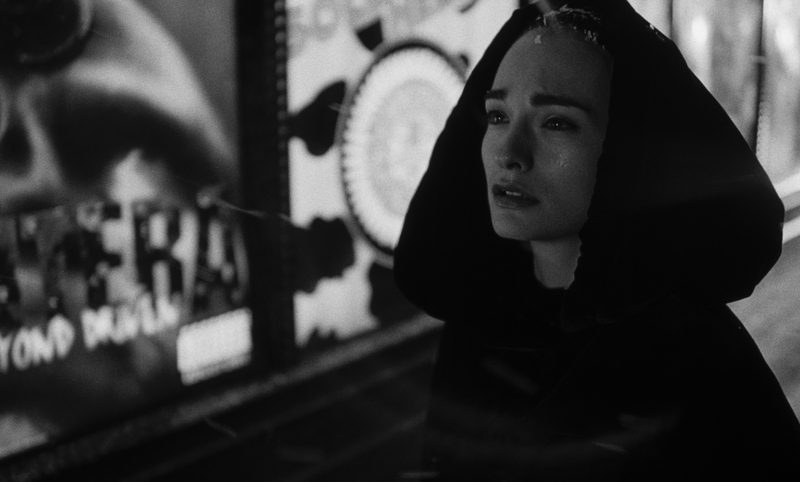
Elina Löwensohn’s performance is one of the film’s greatest triumphs. She doesn’t play Nadja as seductive in the orthodox sense. Her magnetism comes from distance. Löwensohn gives Nadja a gaze that feels permanently turned inward, as if desire itself has become exhausting. She moves through scenes like someone already mourning herself, and the film wisely refuses to translate that feeling into exposition. Nadja’s obsession with her twin brother Edgar isn’t framed as shock, but as stagnation. He represents history, origin, and the last place where she felt understood.
Jared Harris brings an agitated solemnity to Edgar, a figure caught between care and collapse. His presence anchors the film’s tension, particularly as Dr. Van Helsing closes in. Peter Fonda’s Van Helsing is a deliberate inversion of the archetype. Paranoid, erratic, and deeply unhinged, he feels less like a righteous hunter than a man desperate to impose meaning through violence. Fonda plays him with an edge that borders on absurd, but the absurdity feels well placed. This Van Helsing isn’t a savior; he’s another broken person projecting his obsession outward.
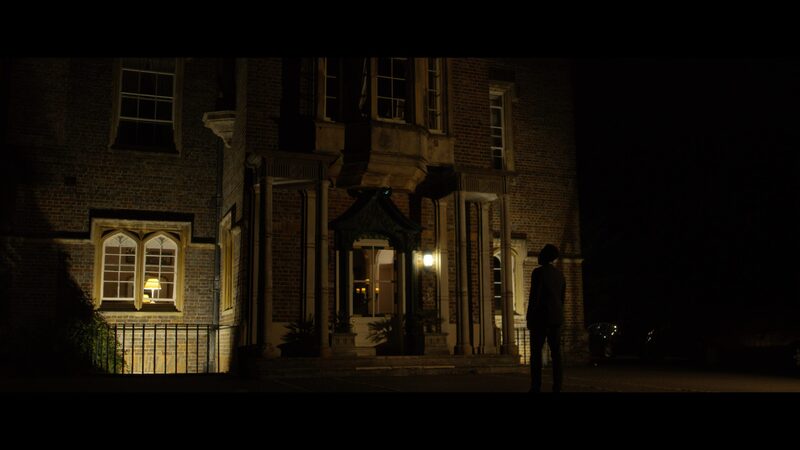
Shot primarily in black-and-white 35mm, NADJA leans into shadow not as dressing, but as texture. Darkness here isn’t threatening; it’s familiar. The city becomes a place where Nadja blends in because it’s already nighttime. The intermittent use of Pixelvision video, captured on a toy camera, further fractures the visual structure. These moments don’t aim for coherence. They register as intrusive thoughts, brief ruptures in which emotion overwhelms clarity.
Music plays a crucial role in shaping the film. Simon Fisher Turner’s score, paired with 1990s alternative tracks, grounds the film in its era without dating it beyond usefulness. Songs drift through scenes rather than punctuating them, reinforcing the sense that time in NADJA doesn’t move forward so much as sideways.
NADJA borrows freely from Bram Stoker and DRACULA’S DAUGHTER, but Almereyda treats these sources as ingredients rather than instructions. The film is less concerned with plot mechanics than with emotional misalignment. Characters want each other, but rarely in the same direction. Nadja longs for Edgar. Lucy yearns for Nadja. Jim and Cassandra are already in a marriage hollowed out by dissatisfaction. Desire flows through the film like static, connecting everyone briefly before dissipating.
NADJA doesn’t traditionally reward patience with payoff. Certain key aspects are left unresolved, even abandoned. But that feels coordinated with the film’s worldview. Immortality here isn’t about accumulation; it’s about erosion. Connections form, weaken, and vanish, leaving only traces.
The restoration and return of the original Director’s Cut matter because NADJA is a film about texture as much as it is about story. According to the restoration notes, the 4K version was rebuilt from the only surviving 35mm answer print, restoring the version that premiered in 1994 and runs slightly longer than the commercial release. The added minutes don’t radically reshape the film, but they allow moments to add depth, particularly in transitions and silences. The result feels less compressed, more willing to let discomfort sit uncorrected.
David Lynch’s involvement as executive producer and cameo presence looms over the film, but NADJA never feels derivative. If anything, it shares Lynch’s interest in mood over logic and emotional truth over explanation. Where Lynch often externalizes dread, Almereyda internalizes it. NADJA remains distinct in its refusal to romanticize its melancholy. There’s beauty here, but it’s brittle. Seduction exists, but it’s often lonely.
NADJA doesn’t ask to be loved instantly. Seen now, in restored form, its strangeness feels intentional rather than indulgent. It’s a film that understands that genre can be a container for emotion, not just expectation. That understanding is what allows it to endure. This isn’t a vampire movie for everyone, and it never was. NADJA remains gentle, singular, a nocturnal film that never wanted to be woken.
Please visit https://linktr.ee/overlyhonestr for more reviews.
You can follow me on Letterboxd, Instagram, Twitter, and YouTube. My social media accounts can also be found on most platforms by searching for 'Overly Honest Reviews'.
I’m always happy to hear from my readers; please don't hesitate to say hello or send me any questions about movies.
[photo courtesy of ARBELOS, GRASSHOPPER FILM, KINO LINK COMPANY, OCTOBER FILMS, EVERGREEN ENTERTAINMENT, IMAGE ENTERTAINMENT, PIONEER ENTERTAINMENT, PLATINUM DISC, ECHO BRIDGE HOME ENTERTAINMENT, RENAISSANCE CONTENT GROUP]
DISCLAIMER:
At Overly Honest Movie Reviews, we value honesty and transparency. Occasionally, we receive complimentary items for review, including DVDs, Blu-rays, CDs, Vinyl Records, Books, and more. We assure you that these arrangements do not influence our reviews, as we are committed to providing unbiased and sincere evaluations. We aim to help you make informed entertainment choices regardless of our relationship with distributors or producers.
Amazon Affiliate Links:
Additionally, this site contains Amazon affiliate links. If you purchase through these links, we may receive a commission. This affiliate arrangement does not affect our commitment to honest reviews and helps support our site. We appreciate your trust and support as you navigate these links.


Happy
0 %

Sad
0 %

Excited
0 %

Sleepy
0 %

Angry
0 %

Surprise
0 %
 0
0
 0
0

Average Rating