When Belonging Becomes the Most Dangerous Desire
Read Time:5 Minute, 30 Second
MOVIE REVIEW
Familia
 –
– 


Genre: Drama
Year Released: 2024, 2025
Runtime: 2h
Director(s): Francesco Costabile
Writer(s): Francesco Costabile, Vittorio Moroni, Adriano Chiarelli
Cast: Francesco Gheghi, Barbara Ronchi, Francesco Di Leva, Marco Cicalese
Where to Watch: shown at the Venice Film Festival
RAVING REVIEW: FAMILIA feels like a memory that refuses to fade, touching every part of the story, no matter how hard its characters try to cover it up. Francesco Costabile’s film approaches violence and generational trauma with unflinching realism, never leaning on sensationalism but instead embracing a grounded, emotional tone that makes every choice feel weighted. It’s a film that builds pressure quietly, allowing its characters to sit in the lingering aftermath of choices made long before the opening scenes. The kind of drama that proves more compelling in reflection, particularly because of the precision of its performances and the layers Costabile threads through the narrative.
The story centers on Luigi, known as Gigi, played with vulnerability by Francesco Gheghi. Costabile’s approach never turns him into a cautionary tale or a simplistic embodiment of extremism; instead, he becomes a portrait of someone trapped by circumstances and memory, struggling to find direction. Costabile set out to depict the emotional architecture of violence — not merely the physical acts, but the psychological cages they create. This framework is painted in every scene Gigi occupies, particularly in the early portions of the film, where his anger simmers beneath an exterior that’s often quiet enough to be unsettling.
Gigi’s attraction to a group of far-right extremists is presented without excuses, yet also without judgment in their world. Costabile focuses on the heartbeat beneath the ideological shell, exploring how such groups exploit longing, fear, and a craving for belonging. These elements don’t justify Gigi’s choices, but they contextualize them, spotlighting vulnerability rather than ideology. It’s a sophisticated handling that avoids the clichés of “lost youth turned radical” storytelling, leaning instead into the vacuum created by childhood trauma.
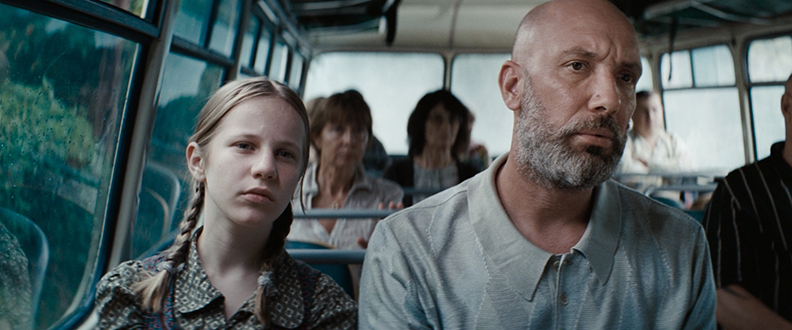
That trauma is rooted almost entirely in his father, Franco, played by Francesco Di Leva. His presence is like a storm cloud that the family cannot escape. When he returns from prison, the film doesn’t erupt into the explosive confrontations one might expect; instead, it tightens around the characters, choking them with dread as the past becomes impossible to avoid. With Franco oscillating between affection and cruelty, that duality is crucial to the film's psychological exploration.
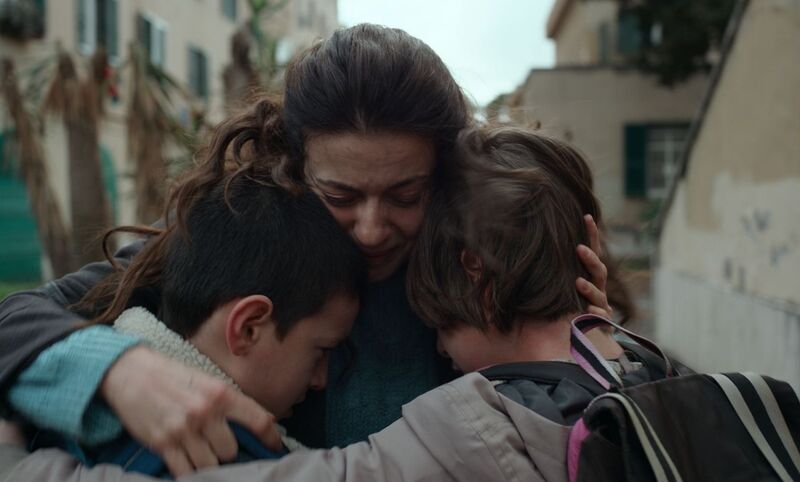
Barbara Ronchi delivers a striking performance as Licia, the family’s matriarch, whose resilience masks loneliness and exhaustion. She becomes the core of the film, even as she repeatedly finds herself drawn back into patterns shaped by a system that has failed her. The director’s notes highlight institutional abandonment as an intentional theme, and it becomes one of the film’s strongest elements—a reminder that violence does not occur in a vacuum and that societal indifference frequently deepens its wounds.
The film’s pacing is deliberate but never stationary, building tension through the accumulation of small moments rather than bursts. Costabile shapes the movie like a pressure cooker, with the audience placed in proximity to Gigi’s emotions. Scenes often linger just a second longer than comfortable, emphasizing the claustrophobic reality he inhabits. This design choice is reinforced by Giuseppe Maio’s cinematography, which is visually compressed and intentionally mirrors the psychological confinement the characters endure. Rome becomes a symbolic prison — a place defined by structures, frames, and an overwhelming sense of containment.
As the narrative progresses, Gigi’s internal tug-of-war becomes the central focus. The psychological ties between him and Franco give the film its most emotionally charged material, and Costabile wisely keeps these scenes intimate. The film is at its strongest when exploring the confusing mix of admiration, fear, loyalty, and hatred that defines their relationship. It’s not presented as a simple father-son dynamic; instead, it operates as a cautionary map of inherited trauma, where unresolved wounds morph into destructive forces that swallow entire families.
FAMILIA is intentionally draining. Its bleakness is unrelenting, and some viewers may find it difficult to stay engaged for the full runtime. That said, this heaviness is part of its purpose — the film refuses to sanitize or soften realities that often get minimized in discussions of abuse or radicalization. Costabile aims for a more personal truth, rooted in experiences many never see directly, and the film succeeds in giving them shape without exploiting them.
By the time the story concludes, FAMILIA leaves a heavier impression than its structure suggests. It doesn’t aim for catharsis, nor does it wrap its themes in hopeful messaging. Instead, it presents the cyclical nature of violence with honesty, exploring how children carry the shadows of their parents long after the physical damage has ended. Its strength lies in its refusal to offer simple answers. FAMILIA may not be the easiest watch, but it succeeds because it treats its narrative with intelligence. Sometimes haunting, but ultimately restrained, prioritizing authenticity over any dramatic flourish. It’s the kind of film that becomes more impactful the longer you sit with it, especially as its quieter details begin to reveal their weight.
Please visit https://linktr.ee/overlyhonestr for more reviews.
You can follow me on Letterboxd, Instagram, Twitter, and YouTube. My social media accounts can also be found on most platforms by searching for 'Overly Honest Reviews'.
I’m always happy to hear from my readers; please don't hesitate to say hello or send me any questions about movies.
[photo courtesy of BREAKING GLASS PICTURES, TRAMP, INDIGO FILM, O' GROOVE, MEDUSA FILM, PRIME VIDEO, MINISTERO DELLA CULTURA (MIC)]
DISCLAIMER:
At Overly Honest Movie Reviews, we value honesty and transparency. Occasionally, we receive complimentary items for review, including DVDs, Blu-rays, CDs, Vinyl Records, Books, and more. We assure you that these arrangements do not influence our reviews, as we are committed to providing unbiased and sincere evaluations. We aim to help you make informed entertainment choices regardless of our relationship with distributors or producers.
Amazon Affiliate Links:
Additionally, this site contains Amazon affiliate links. If you purchase through these links, we may receive a commission. This affiliate arrangement does not affect our commitment to honest reviews and helps support our site. We appreciate your trust and support as you navigate these links.


Happy
0 %

Sad
0 %

Excited
0 %

Sleepy
0 %

Angry
0 %

Surprise
0 %
 0
0
 0
0


Average Rating