When Hurt Becomes a Habit
Read Time:7 Minute, 25 Second
MOVIE REVIEWS
Bleeder
 –
– 


Genre: Drama
Year Released: 2026
Runtime: 17m
Director: Jeremy Max
Writer: Jeremy Max
Cast: John Duddy, Natalie Roy, Dave Bobb, Joel DeCandio, Casey Sullivan, Thomas Vorsteg
Where to Watch: shown at the 2026 HollyShorts Film Festival
RAVING REVIEW: BLEEDER shows us a man who gets paid to take a beating, and writer/director Jeremy Max wastes very little of the film’s 17 minutes explaining why anyone would willingly live like that. The money matters, but the punishment does too. Physical pain gives Bleeder something to concentrate on, something easier to understand than the grief waiting for him when his body gets a chance to recover. What initially sounds like an extreme way to make a living gradually reveals itself as a carefully maintained form of avoidance.
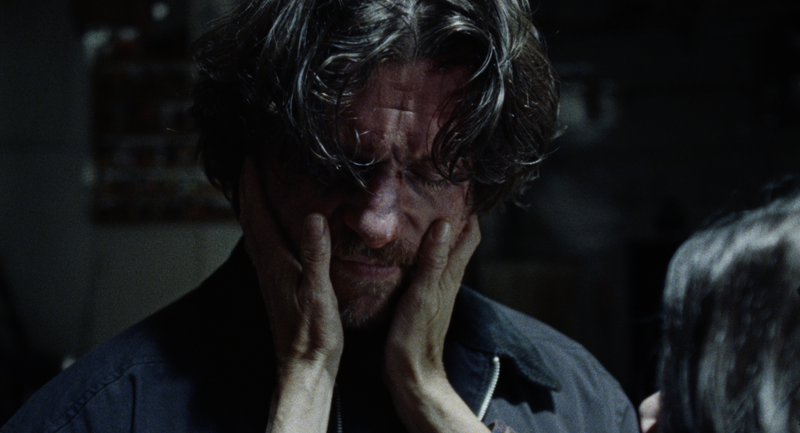
Casting former professional boxer John Duddy gives the film an immediate physical credibility. Duddy doesn’t need to convince us that this body has absorbed deep levels of punishment. The more important part of the performance comes afterward, when strength stops offering any sort of advantage. He plays Bleeder as a man far more comfortable bracing for impact than explaining himself, and the difference keeps the short from becoming an exercise in watching an actor get knocked around. The violence matters because Bleeder understands it. Everything outside that violence is where he begins to lose control.
Duddy’s past also adds an interesting layer without Max turning it into just a gimmick. He spent years as a professional middleweight before leaving boxing and pursuing acting, so there would have been an easy temptation to lean on the novelty of having a genuine fighter in the role. BLEEDER instead uses what Duddy knows and asks him to play against it emotionally. Being capable of taking a hit doesn’t make Bleeder equipped to deal with the reason he keeps volunteering for another one.
That’s also where the short can feel somewhat constrained by its length. The basic psychology is understandable, but understanding the behavior isn’t quite the same as understanding the man. Max withholds enough to avoid burying the film under explanatory dialogue, which is the right instinct. A few emotional developments arrive before Bleeder’s past has taken on enough shape. Seventeen minutes provides time to recognize the pattern and watch it begin to crack. They don’t always provide enough room to understand how long he has been trapped inside it.
Natalie Roy becomes particularly important because Mel presents a form of intimacy that Bleeder can’t reduce to a transaction. Their connection gives the short somewhere to go beyond escalating physical abuse, and Roy brings an unforced warmth that keeps those scenes from becoming sentimental, just a story about a rescue. Mel isn’t valuable only because she can love a damaged man back into good health. What matters is that being seen by another person requires something from Bleeder that getting hit never could.
The distinction is essential. Physical pain lets him remain passive. Someone else causes the pain; he absorbs it; money changes hands; and the experience ends. Emotional honesty demands participation. He has to speak, listen, admit what he wants, and risk hearing something he can’t control. BLEEDER is strongest when it recognizes that his behavior isn’t only punishment. It’s an arrangement that allows him to avoid uncertainty.
Max approaches masculinity from that angle rather than treating Bleeder as a generic man who refuses to discuss his feelings. The character has built an entire system around endurance. The ability to withstand suffering has become inseparable from his sense of worth, leaving him without a response when endurance itself becomes the problem. There’s something particularly bleak about earning money from the same thing that’s hollowing him out. What looks like toughness from the outside has become a method of disappearing.
David Foy’s cinematography keeps the film close to that deterioration. The emphasis is less on turning the beatings into exhibition than on what remains on Bleeder afterward. His bruised face becomes part of the character rather than a badge of toughness, and the intimacy of the presentation makes it difficult to separate damage from the quieter emotional exhaustion underneath it. The short understands that violence loses much of its glamour when the image isn’t the punch but the person who has to keep living after it.
That restraint helps because the premise could easily become heavy-handed. A man literally paying his bills by being beaten as an expression of unresolved emotional pain isn’t exactly subtle. BLEEDER makes it work by refusing to spend every scene explaining the metaphor. Duddy’s performance carries much of the meaning through discomfort, hesitation, and the contrast between his physical certainty and personal unease. A few moments press harder on the intended emotional takeaway than necessary. The film clearly believes human connection offers Bleeder an alternative to self-punishment. That occasionally edges toward a form of redemption that the rest doesn't support. Trauma developed over years doesn’t dissolve because someone finally reaches the person carrying it. Max avoids pretending otherwise, though the short format naturally pushes him toward resolution faster than a story this bruised might.
Knowing BLEEDER is intended as a proof of concept for a feature makes sense after watching it. There’s considerably more territory available in the premise. Who pays Bleeder, how he entered this world, what he believes he deserves, how his relationships deteriorated, and what happens when his body can’t do this anymore. The short establishes those possibilities without feeling like a trailer for an unfinished movie. It has its own emotion, even if some of the questions it raises are more interesting than the answers it currently has room to provide.
The supporting characters operate within that limited space, providing pieces of Bleeder’s world without pulling the focus away from Duddy and Roy. That concentration is useful. A 17-minute film that tries to build an elaborate network around its protagonist would weaken the intimacy Max is after. The tradeoff is that Bleeder’s life beyond the crisis sometimes feels more like a suggestion, one of several areas where the feature version could deepen the story, rather than just extending it.
What stays with you after watching BLEEDER isn’t the brutality alone. Plenty of movies have used battered bodies as shorthand for damaged men, and the connection between fighting and emotional repression is hardly unexplored territory. Max finds something more specific in the idea of pain as a choice because chosen pain comes with rules. Bleeder knows when it begins. He knows what he’s being paid. He knows what he has to survive. Grief, guilt, shame, and affection refuse those terms.
Duddy makes that realization believable because he never needs to scream about it. His presence gets the film through the door, but vulnerability is what ultimately carries it. Roy provides the necessary counterbalance without softening the story into a romance. Together, they give Max enough substance to move beyond the attention-grabbing premise.
BLEEDER could go further, particularly in giving its protagonist’s history more definition and allowing the relationship at its center additional breathing room. As a short, though, it knows what part of this man’s life it wants to capture. He’s spent so long proving that he can take whatever someone does to him that he’s stopped asking why he keeps showing up for another beating. The first meaningful change isn’t learning how to hurt less. It’s recognizing that pain has been the easier choice.
Please visit https://linktr.ee/overlyhonestr for more reviews.
You can follow me on Letterboxd, Instagram, Twitter, and YouTube. My social media accounts can also be found on most platforms by searching for 'Overly Honest Reviews'.
I’m always happy to hear from my readers; please don't hesitate to say hello or send me any questions about movies.
DISCLAIMER:
At Overly Honest Movie Reviews, we value honesty and transparency. Occasionally, we receive complimentary items for review, including DVDs, Blu-rays, CDs, Vinyl Records, Books, and more. We assure you that these arrangements do not influence our reviews, as we are committed to providing unbiased and sincere evaluations. We aim to help you make informed entertainment choices regardless of our relationship with distributors or producers.
Amazon Affiliate Links:
Additionally, this site contains Amazon affiliate links. If you purchase through these links, we may receive a commission. This affiliate arrangement does not affect our commitment to honest reviews and helps support our site. We appreciate your trust and support as you navigate these links.


Happy
0 %

Sad
0 %

Excited
0 %

Sleepy
0 %

Angry
0 %

Surprise
0 %
 0
0
 0
0

Average Rating