
Summer Camp Isn’t What It Seems
Read Time:8 Minute, 42 Second
MOVIE REVIEWS
Marshmallow
 –
– 

Genre: Horror, Science Fiction, Coming-of-Age
Year Released: 2025, 2026 Blu-ray
Runtime: 1h 33m
Director: Daniel DelPurgatorio
Writer: Andy Greskoviak
Cast: Kue Lawrence, Kai Cech, Giorgia Whigham, Corbin Bernsen, Pierson Fodé, Paul Soter, Alysia Reiner, Miya Cech
Where to Watch: available September 15, 2026, pre-order your copy here: www.toyrobotvideo.com, www.mvdshop.com, or www.amazon.com
RAVING REVIEW: For much of MARSHMALLOW, I kept wondering how much of its familiar summer-camp horror language was deliberate. Camp Almar has the campfire story, the kids testing one another, the intimidating woods, the counselors who may know more than they’re saying, and the possibility that something dangerous is waiting outside the cabins. Daniel DelPurgatorio knows exactly what those pieces suggest, though, and his feature debut gradually makes it clear that simply delivering another variation on a camp slasher was never the goal. There’s a much stranger movie hiding inside this one, and my biggest frustration is that I wanted considerably more time with it.
Morgan, played by Kue Lawrence, gives the story the perspective it needs. He arrives at camp carrying enough fear and uncertainty before anyone starts telling scary stories, and Lawrence never turns him into the exaggerated frightened kid these movies sometimes use as an easy audience surrogate. Morgan is quiet without disappearing, vulnerable without being helpless, and observant enough that his suspicion of the people around him feels earned. The movie depends heavily on Lawrence because nearly everything becomes more interesting once we understand how Morgan is processing it, and he handles that responsibility remarkably well.
The other young actors help MARSHMALLOW avoid one of the easiest mistakes in a story like this. These kids actually feel like kids rather than adult horror characters rewritten with younger ages. They annoy each other, swear when they think they can get away with it, form quick friendships, show off, get embarrassed, and occasionally have no idea what to do with another person’s feelings. Kai Cech is especially good as Pilar, giving Morgan someone who can pull him out of his shell without the relationship feeling manufactured simply because the screenplay needs him to make a friend. The group dynamics give the camp sections an authenticity that becomes important once things start getting considerably less normal.
DelPurgatorio also understands the value of the location. Camp Almar feels isolated enough that the woods can become threatening without the movie constantly reminding us that everyone is far from home. The visual approach doesn't overcomplicate things, and there’s an appropriately uneasy quality to the nighttime sequences that lets ordinary camp spaces become just unfamiliar enough after dark. MARSHMALLOW isn't interested in overwhelming the screen with gore, either. Despite borrowing the language of summer-camp slashers, it often plays closer to the kind of horror that younger viewers might discover as their bridge into something darker, even as the material eventually heads into ideas that are considerably stranger.
That patience becomes a mixed blessing. MARSHMALLOW spends much of its 93 minutes establishing a version of the story that horror audiences already understand, including bullying, camp traditions, ominous warnings, suspicious adults, nightmares, and a legend about a frightening doctor. Those scenes aren't wasted, because some take on different meaning later. Still, the movie occasionally becomes so committed to protecting its secrets that it keeps its most interesting qualities at a distance. The mystery requires withholding information; it doesn't require every character surrounding Morgan to remain equally difficult to read.
That particularly affects the adult cast. Corbin Bernsen, Giorgia Whigham, Paul Soter, Pierson Fodé, and Alysia Reiner give the film several recognizable faces. Still, MARSHMALLOW deliberately keeps much of their purpose hidden while Morgan tries to understand what is happening around him. It makes sense structurally, though it also means several potentially interesting characters spend more time functioning as pieces of a question than as people. Soter brings some welcome personality to camp director Collins, and Bernsen can create unease simply by letting us wonder what lies beneath an apparently ordinary interaction. Still, I wanted the screenplay to give these performers more room. Then MARSHMALLOW finally begins showing its hand, and that’s where it had me.
Without touching the specifics of the reveal, Andy Greskoviak's screenplay takes the assumptions created by the summer-camp setting. It moves into science fiction, existential horror, and questions about how much of our understanding of ourselves depends on what other people have chosen to tell us. Earlier moments suddenly have another possible interpretation. Morgan's fears become connected to something larger than a scary story told around a fire, and the adults' behavior begins to raise questions about the difference between protecting children and controlling what they're allowed to know. It’s an ambitious change in direction because it doesn't merely add a twist to the slasher story. It changes the reason that story exists. I just wish MARSHMALLOW made that turn sooner.
The reveal introduces material interesting enough to support a much larger portion of the movie, but the credits aren't that far away once we finally understand what Greskoviak and DelPurgatorio have been building toward. New questions arrive faster than the story can meaningfully engage with them, and concepts that could have taken the movie somewhere genuinely unsettling remain closer to possibilities. I didn't need MARSHMALLOW to be longer. I wanted its 93 minutes distributed differently, with less time spent convincing me that I understood the movie and more time spent exploring why I didn't.
That also leaves the horror caught between two identities. Anyone coming specifically for another bloody summer-camp slasher may find the body count and violence lighter than expected. At the same time, viewers drawn to the stranger science-fiction elements have to wait for the movie to embrace them fully. That awkward space is clearly intentional, and I respect the decision far more than I would have respected another straightforward masked-killer exercise. The execution simply never becomes as satisfying as the idea behind it.
There are enough details throughout the earlier sections to make the eventual shift feel planned rather than dropped into the movie for shock value. Dreams, fears, strange behavior, and Morgan's uncertainty are all doing narrative work, even when their purpose isn't yet obvious. A second viewing would probably make some of those choices easier to appreciate, although a good reveal also has to work within the experience of that first viewing. MARSHMALLOW manages the first half of that equation better than the second: it changes how you think about what you've already watched, then gives you comparatively little time to live inside that new understanding.
Toy Robot Video's Blu-ray gives the film an impressively substantial physical-media debut. Along with a 5.1 surround presentation and Region 0 compatibility, the disc includes an audio commentary with DelPurgatorio, Lawrence, and Cech, a deleted scene, a feature on filming the dream sequence, video podcast interviews, storyboards, behind-the-scenes stills, and script pages. The inclusion of DelPurgatorio's earlier shorts OTHER and BODY(S) is especially worthwhile, allowing viewers to see more of the filmmaker's work rather than treating the bonus section as a handful of promotional leftovers.
That makes the Blu-ray easier to recommend than a bare-bones release of the movie would have been, especially for anyone who responds more strongly to MARSHMALLOW's big swing than I did. There’s enough included here to dig further into how the film was constructed, and a movie built around hiding its intentions is exactly the sort of thing that benefits from a commentary and production material after the first viewing. Toy Robot Video hasn't simply put the movie on a disc and called it finished.
The frustrating thing about MARSHMALLOW is that its biggest problem comes directly from something I genuinely liked about it. DelPurgatorio and Greskoviak aren't satisfied making the obvious movie. Once they finally reveal the story they were interested in telling, I wanted to follow them much farther down that road. Lawrence gives all those increasingly strange ideas an emotional entry point, while the young cast makes Camp Almar feel believable enough that the later shift matters.
MARSHMALLOW lands somewhere between an interesting experiment and the movie I think it could have become. I admire it for taking the risk, and I'd rather watch a horror film reach for an unusual idea and come up a little short than watch another summer-camp story go through every expected motion. The real disappointment isn't that MARSHMALLOW runs out of ideas. It's that the best ones arrive just as I'm ready for the movie to really start exploring them.
Bonus Materials:
Audio commentary with director Daniel DelPurgatorio and actors Kue Lawrence and Kai Cech
Deleted Scene
Filming the Dream Sequence
Two short films directed by Daniel DelPurgatorio: Other (2012, 15 mins); Body(s) (2015, 18 mins)
Video Podcast interviews
Storyboards
Behind-the-scenes stills gallery
Script Pages
Please visit https://linktr.ee/overlyhonestr for more reviews.
You can follow me on Letterboxd, Instagram, Twitter, and YouTube. My social media accounts can also be found on most platforms by searching for 'Overly Honest Reviews'.
I’m always happy to hear from my readers; please don't hesitate to say hello or send me any questions about movies.
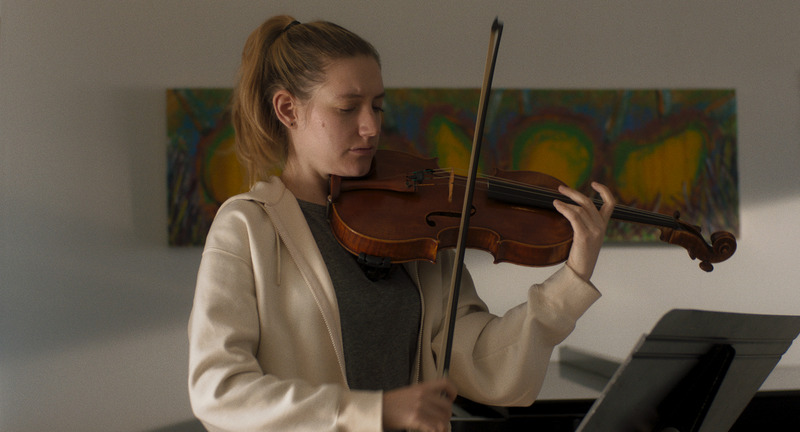
[photo courtesy of TOY ROBOT VIDEO, MVD ENTERTAINMENT]
DISCLAIMER:
At Overly Honest Movie Reviews, we value honesty and transparency. Occasionally, we receive complimentary items for review, including DVDs, Blu-rays, CDs, Vinyl Records, Books, and more. We assure you that these arrangements do not influence our reviews, as we are committed to providing unbiased and sincere evaluations. We aim to help you make informed entertainment choices regardless of our relationship with distributors or producers.
Amazon Affiliate Links:
Additionally, this site contains Amazon affiliate links. If you purchase through these links, we may receive a commission. This affiliate arrangement does not affect our commitment to honest reviews and helps support our site. We appreciate your trust and support as you navigate these links.


Happy
0 %

Sad
0 %

Excited
0 %

Sleepy
0 %

Angry
0 %

Surprise
0 %
 0
0
 0
0


Average Rating