The Magic Was Never Just in the Movies
Read Time:11 Minute, 1 Second
MOVIE REVIEW
The Return of the Projectionist (Kinomexanikin Qayidisi)
 –


Genre: Documentary, Biography, World Cinema
Year: 2024, 2026
Runtime: 1h 27m
Director: Orkhan Aghazadeh
Where to Watch: premieres exclusively on IndiePix Unlimited on November 6, 2026
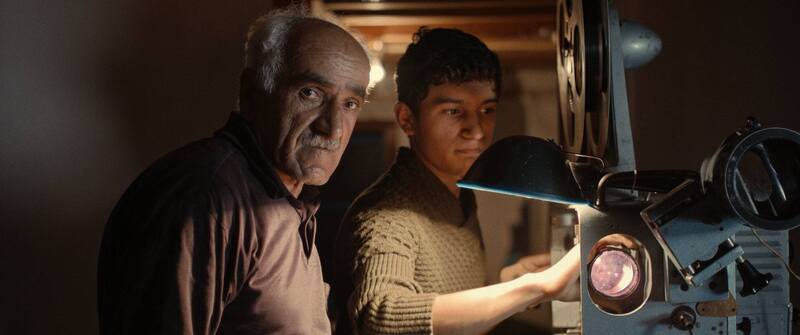
RAVING REVIEW: An old movie projector sitting in someone's basement might look like outdated equipment to most people, but to Samid, it's a piece of a life he desperately wants to experience again. Orkhan Aghazadeh's THE RETURN OF THE PROJECTIONIST follows an older man in the remote mountains of Azerbaijan who decides to revive his village's long-abandoned cinema, despite having almost none of the equipment, resources, or assistance necessary to make it happen. What begins as an unlikely restoration project gradually becomes an affectionate examination of grief, friendship, changing technology, and the extraordinary amount of effort people will put into something they genuinely love. For anyone who has ever considered movies an important part of their life, this documentary has a pretty good chance of finding its way into your heart.
Samidullah Idrisov once ran the cinema in Sym, a small village in Azerbaijan's Talysh Mountains, when going to the movies was a key communal experience. Those days are gone, and Samid now spends his time repairing televisions and radios while his old Soviet-era projector gathers dust. The equipment might no longer serve a practical purpose, but his affection for what it represents hasn't diminished. He wants to bring movies back to his community, even if that seemingly simple goal requires far more determination than anyone initially expects.
His circumstances also carry a much heavier emotional burden. Having lost his son in a workplace accident, Samid is living with a grief that gives his desire to restore the cinema additional significance. The documentary doesn't treat that tragedy as a convenient emotional device or suggest that fixing a projector will somehow repair everything that's happened in his life. Instead, it allows his personal loss to exist alongside his enthusiasm for a craft that once gave him purpose. His determination to organize another screening becomes an opportunity to reconnect with people while finding something meaningful to work toward.
And he'll need a fair amount of determination, because practically nothing about this project is easy.
The projector needs a replacement bulb, which isn't something Samid can pick up on a quick trip to the local hardware store. There's no proper screen, other equipment needs attention, and getting the necessary supplies into a remote mountain village adds challenges. Even getting an internet connection becomes an adventure, with the surrounding landscape forcing Samid to put far more effort into ordering one essential component than most of us spend buying practically anything online.
Those practical difficulties provide some of the documentary's most entertaining moments. Watching people work around missing equipment, unreliable technology, and limited resources creates an amusing contrast with the enormous convenience we've come to expect from modern entertainment. Most of us can access thousands of movies within seconds. Samid is trying to organize a single screening, and even getting enough light through the projector requires an expedition.
His unexpected partner in this undertaking is Ayaz Khaligov, a sixteen-year-old whose interest in filmmaking provides a wonderful connection between two generations separated by roughly fifty years. Ayaz approaches moving images through the technology available to him, experimenting with animation and filmmaking using his smartphone. Samid, meanwhile, comes from an era when presenting a film required mechanical knowledge, physical materials, patience, and an understanding of equipment that younger audiences might never have encountered. Their friendship becomes the film's greatest strength.
Neither approaches the other as someone who needs to abandon his understanding of cinema. Samid has decades of practical experience, while Ayaz brings enthusiasm and a willingness to experiment with contemporary technology. Their shared interest gives them something to build together, even when their individual relationships with filmmaking couldn't be more different. It's refreshing to see a documentary explore generational differences without turning them into another tiresome argument about how everything was supposedly better in the past.
I love the contrast between these two approaches because both have something worth preserving. Physical projection has an undeniable appeal, from the mechanical operation of the equipment to the shared anticipation of watching a screen light up in a darkened room. There's also considerable creative freedom in putting filmmaking tools in the hands of someone like Ayaz, who doesn't need access to an expensive camera or an established production company to start exploring his imagination.
The documentary recognizes that technological progress doesn't automatically erase the value of older methods. Samid's expertise remains important, and Ayaz's enthusiasm shows that younger people haven't lost the ability to appreciate movies simply because they were introduced to the medium through a different kind of screen. Their friendship offers a far more appealing perspective than treating digital technology as the enemy of traditional cinema.
Aghazadeh also understands that the location deserves attention beyond functioning as an unusual backdrop. Daniel Guliyev's cinematography captures the mountains, changing seasons, village surroundings, and extraordinary natural landscapes with an appreciation for the environment in which these people live. The imagery is beautiful, but the film doesn't lose sight of the practical realities accompanying that beauty. The same geography that creates such striking scenery also makes it much harder to access supplies and modern services.
The landscape establishes the community's isolation without presenting its residents as helpless people waiting for someone from the outside world to improve their lives. Samid and Ayaz aren't participating in a charitable project organized by visiting filmmakers. They're pursuing something meaningful to them, bringing their own skills, opinions, and determination to the undertaking. The villagers also help with preparations, including creating a suitable projection screen.
Not everyone immediately understands why reviving the cinema deserves so much attention, either. Questions surrounding the project, practical disagreements, and skepticism provide a necessary contrast to the enthusiasm driving Samid forward. These details make the documentary more interesting than a straightforward celebration of an older man accomplishing an inspirational objective. Bringing people together requires cooperation, and cooperation can become complicated when individuals have different priorities.
Its treatment of grief matters just as much. Samid's loss informs our understanding of his determination, but the documentary never reduces him to his tragedy. He's resourceful, occasionally amusing, stubborn, and deeply invested in restoring something that once mattered to his village. His personality extends beyond being a bereaved father, and Ayaz deserves recognition as a young filmmaker rather than simply as someone whose presence helps an older man feel better.
Their relationship also gives the project a significance extending beyond whether the equipment eventually works. Samid has knowledge worth passing on, while Ayaz has his own ideas about what moving images can accomplish. Their time together creates an opportunity for both to participate in something neither could approach quite the same way alone. It's a wonderful example of how a common interest can connect people who might otherwise have little reason to spend time together.
That common interest is also why the documentary's subject struck such a chord with me. Movies have become extraordinarily accessible, which is fantastic in many respects, but that convenience can make it easy to overlook the experiences surrounding them. Finding a film, waiting for a screening, discussing what you've watched, or discovering something through another person's enthusiasm can become just as meaningful as the production itself.
For someone who spends so much time watching and writing about movies, I appreciate being reminded that cinema exists well beyond the latest releases, box-office numbers, and endless arguments about which film deserves more attention. Sometimes its importance is much simpler. One person wants to show a movie, another wants to help, and an entire community gets to experience something together.
Aghazadeh's documentary debut also has an interesting history. While exploring the village for another filmmaking project, the director met Samid and recognized the potential in his desire to restore the cinema. Rather than treating the resulting documentary as an extensive historical examination of Azerbaijan's exhibition industry, he focuses on the individuals and the practical work required to achieve their goal. That intimate focus lets the relationship between Samid and Ayaz develop alongside the restoration project.
Nicole Schmeier's editing gives the documentary room to observe their efforts and the challenges that come with them. The film doesn't manufacture a frantic sense of urgency around every missing component or minor setback. The extended preparations occasionally make certain stretches feel less involving than the interactions between its two principal participants. The practical difficulties are essential to understanding their commitment, but the friendship is what gives those difficulties their emotional value.
At approximately 87 minutes, THE RETURN OF THE PROJECTIONIST remains accessible without reducing its subjects to a handful of easily digestible observations about the importance of following your dreams. Its strength comes from the accumulated details. Outdated equipment, technical difficulties, changing seasons, people donating their time, and two individuals discovering how much they can accomplish through a shared love of moving images.
The production has also earned considerable international recognition, including Best International Documentary at the 2024 Torino Film Festival and cinematography honors at Salem Film Fest. Those acknowledgments are understandable, given the visual quality of Guliyev's work, but the documentary's greatest accomplishment is how comfortably it lets its subjects' personalities and circumstances carry the experience.
Its November 6 premiere on IndiePix Unlimited also feels appropriate for a film examining how audiences increasingly access entertainment. There's a little irony in watching a documentary about restoring an old cinema through a contemporary streaming platform, although that contrast reinforces the value of both approaches. Digital distribution lets smaller international productions reach viewers who might never otherwise encounter them. Samid's project reminds us why we should protect the communal experience alongside that convenience.
I couldn't help thinking about CINEMA PARADISO as I considered Samid and Ayaz's relationship. The circumstances differ, and Aghazadeh documents real people rather than presenting a fictional story, but their affection for projection, mentorship, and the shared experience of watching movies create an appealing connection. Both recognize that the people who bring films to an audience are an important part of cinema's history, even when their work happens away from the attention normally reserved for directors and performers.
THE RETURN OF THE PROJECTIONIST is a touching documentary that celebrates filmmaking without becoming overly sentimental about the past. Samid and Ayaz provide two distinct perspectives on a shared passion, and their determination turns an outdated piece of equipment into the foundation for an unexpected friendship. Its beautiful cinematography, gentle humor, and consideration of grief give the experience substance beyond the obvious appeal of watching people work together toward a common goal.
The documentary also reminded me how much we take for granted whenever we decide to watch something. An internet connection, a television, a streaming subscription, and suddenly thousands of titles are available without leaving the couch. Samid has a broken projector, a missing bulb, and a mountain of practical difficulties standing between him and showing his neighbors a movie. Yet his enthusiasm for making that happen is just as recognizable as the excitement of discovering a favorite film for the first time.
I hope that feeling never disappears, regardless of how dramatically technology changes. Cinema doesn't belong exclusively to expensive theaters, professional filmmakers, collectors, or people with access to the latest equipment. It also belongs to an elderly projectionist in a remote village and a teenager discovering what he can create with a phone. And sometimes, getting a roomful of people together to watch a movie is an accomplishment worth making a movie about.
Please visit https://linktr.ee/overlyhonestr for more reviews.
You can follow me on Letterboxd, Instagram, Twitter, and YouTube. You can also find my social media accounts on most platforms by searching for 'Overly Honest Reviews'.
I’m always happy to hear from my readers; please don't hesitate to say hello or send me any movie questions.
[photo courtesy of INDIE PIX FILMS]
DISCLAIMER:
At Overly Honest Movie Reviews, we value honesty and transparency. Occasionally, we receive complimentary items for review, including DVDs, Blu-rays, CDs, Vinyl Records, Books, and more. We assure you these arrangements do not influence our reviews, as we are committed to unbiased, sincere evaluations. We aim to help you make informed entertainment choices regardless of our relationship with distributors or producers.
Amazon Affiliate Links:
This site also contains Amazon affiliate links. If you purchase through these links, we may receive a commission. This affiliate arrangement does not affect our commitment to honest reviews and helps support our site. We appreciate your trust and support as you navigate these links.


Happy
0 %

Sad
0 %

Excited
0 %

Sleepy
0 %

Angry
0 %

Surprise
0 %
 0
 0

Average Rating