The Distance Between People and Progress
Read Time:8 Minute, 21 Second
MOVIE REVIEW
The 47 (El 47)
 –
– 


Genre: Biography, Drama
Year: 2024, 2026 DVD
Runtime: 1h 50m
Director: Marcel Barrena
Writers: Marcel Barrena, Alberto Marini
Cast: Eduard Fernández, Clara Segura, Zoe Bonafonte, Salva Reina, Óscar de la Fuente, David Verdaguer, Carlos Cuevas, Betsy Túrnez
Where to Watch: available October 27, 2026. Pre-order your copy here: www.kinolorber.com or www.amazon.com
RAVING REVIEW: Being told something is impossible by the very people responsible for making it happen is one of life's most frustrating experiences. It's considerably worse when that supposed impossibility involves something as basic as having a bus stop in your neighborhood. Marcel Barrena takes that maddening bit of bureaucratic indifference. He turns it into THE 47, a historical drama about a working-class community that spent years fighting for something the rest of Barcelona took for granted. It's an uplifting story, certainly, but the circumstances that made it necessary are considerably less comforting.
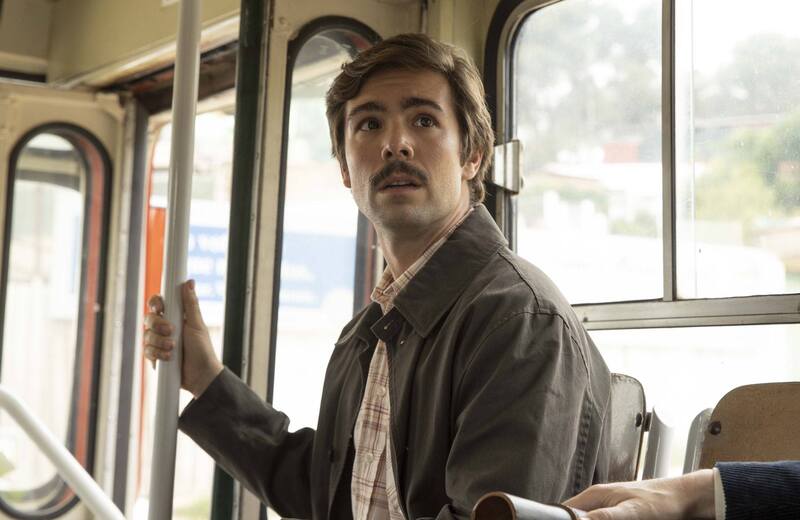
Set in Barcelona in the late 1970s, THE 47 follows Manolo Vital (Eduard Fernández), a bus driver and resident of Torre Baró, a neighborhood largely built by working-class migrants from other parts of Spain seeking better opportunities. These families built homes, built a community, and contributed to the city's growth, only to be repeatedly overlooked when it came to basic infrastructure and municipal services. Among their most persistent frustrations was the lack of reliable public transportation. City officials maintained that the neighborhood's steep, narrow streets made bus service impossible, an explanation Manolo had grown understandably tired of hearing.
What makes the underlying story particularly fascinating is how small the residents' demand seems compared with the resistance they face. They're not requesting something extraordinary or asking for preferential treatment. They simply want the same consideration afforded to people living elsewhere in the city. Barrena recognizes the absurdity of this situation and uses it to establish a story about dignity, belonging, and the exhausting process of convincing those in power that your existence deserves acknowledgment.
Fernández is particularly well suited to playing Manolo because he doesn't approach him like a conventional historical hero. His portrayal has a stubbornness that makes the character believable, especially in how his frustrations build through repeated encounters with a system that has become remarkably comfortable ignoring him. He's passionate about his neighborhood, but he's also a working man with responsibilities and a family. Fernández gives him an appealing combination of determination, irritation, and genuine affection for the people around him. His performance keeps Manolo from becoming an idealized symbol rather than a real person.
The supporting characters are equally important to establishing why this fight matters. Clara Segura plays Manolo's wife, Carme, bringing a welcome sense of emotional stability to a story often defined by mounting frustration. Their relationship offers a personal perspective on the sacrifices involved in community activism, especially when the responsibility of improving everyone's circumstances begins to affect life at home. Segura doesn't need exaggerated emotional moments to make her presence felt, and her chemistry with Fernández helps establish the history between these two people.
Zoe Bonafonte, portraying their daughter Joana, introduces another interesting perspective through the complicated relationship younger generations can have with their upbringing. The question of belonging becomes especially relevant when considering how migrant families established themselves in Catalonia, carrying their previous identities into a place that didn't always embrace them. The film's use of Spanish and Catalan supports this discussion without requiring lengthy explanations of the region's cultural differences. Language becomes another expression of identity, reflecting a community shaped by people who arrived from elsewhere and gradually made Barcelona their home.
One of THE 47's strongest qualities is how it presents Torre Baró itself. The neighborhood is never treated as an anonymous collection of struggling households that exists solely to give its protagonist a worthwhile cause. Its steep roads, modest homes, and surrounding landscape establish a physical separation from the Barcelona typically presented to international audiences. Cinematographer Isaac Vila captures that distinction beautifully, while the production design gives the late-1970s setting a convincing, lived-in appearance. The environment's authenticity reinforces the residents' connection to the place they've worked so hard to establish.
Barrena also deserves credit for recognizing the importance of the neighborhood's collective identity. Although Manolo remains the primary focus, the underlying conflict belongs to an entire community rather than one exceptionally determined individual. Salva Reina, Óscar de la Fuente, and the surrounding ensemble contribute to that communal atmosphere, creating a convincing sense of shared frustration. Their presence establishes that Manolo's actions aren't happening in isolation. He's representing people who have spent years facing the same dismissive attitudes, and that distinction gives the story considerably more weight.
However, the film's conventional approach to historical drama occasionally prevents it from reaching the emotional depth its subject deserves. Barrena and co-writer Alberto Marini establish their conflict clearly, but several parts of the screenplay return to familiar frustrations without adding much to our understanding of those experiencing them. The repeated bureaucratic resistance becomes predictable, and the film occasionally feels too concerned with making sure the audience understands exactly which side deserves sympathy. The circumstances themselves communicate that effectively enough without every interaction reinforcing the same point.
The film also tends to smooth out some of the narrative's more complicated aspects to maintain its inspirational tone. The social and political circumstances surrounding Barcelona during Spain's transition away from the Franco dictatorship offer considerable material, particularly concerning migration, class divisions, and the uneven distribution of public resources. THE 47 acknowledges these issues but rarely goes beyond what's immediately necessary for Manolo's story. A little more attention to those underlying tensions would've made the film's depiction of institutional neglect considerably stronger.
That said, I appreciate how accessible Barrena keeps the material. Historical dramas often get bogged down in political explanations and context. This film generally understands that its audience doesn't need an extensive education in Spanish municipal government to recognize injustice. Its most persuasive argument is also its simplest. The people who helped build a city shouldn't have to fight for the privilege of participating in it.
The musical choices, including songs associated with the era's social and political movements, further reinforce the film's connection to its historical setting. Arnau Bataller's score complements the material, although some of the more emotionally heightened passages feel a little too eager to direct our response. This is a recurring issue with THE 47, which occasionally leans toward sentimentality when the performances and circumstances already earn that reaction. A bit of restraint would've helped in a handful of these moments.
The film's eventual emotional payoff works because of the groundwork it lays throughout. Even knowing that the story is based on actual events doesn't diminish the satisfaction of watching an ordinary person's determination become something meaningful to those around him. Barrena handles that progression with considerable affection for the real people involved, and the result carries an emotional sincerity that survives the screenplay's more conventional decisions.
THE 47 received fourteen nominations at the 2025 Goya Awards and ultimately won five, including Best Picture in a historic tie with LA INFILTRADA. It's easy to understand why the film resonated so strongly with Spanish audiences. Beyond its historical significance, something about communities being neglected by institutions that are supposed to represent them is universally recognizable. The details are specific to Barcelona, but the frustrations certainly aren't.
Kino Lorber's DVD release gives this worthwhile Spanish drama another opportunity to reach audiences unfamiliar with Manolo Vital or the people of Torre Baró. While the presentation is relatively straightforward, with trailers listed as the disc's supplemental material, the film still offers plenty to discuss. Its occasional sentimentality and somewhat simplified handling of broader political issues keep it from reaching the heights of its subject matter, but Fernández's performance and Barrena's affection for the community remain compelling throughout.
Ultimately, what stays with me about THE 47 isn't the idea of one man challenging an entire city government. It's the realization that a neighborhood full of hardworking people spent years demanding access to something most of us barely think about when we leave our homes. That's a frustrating piece of history, and one worth remembering, particularly when the people responsible for changing it were never supposed to be anyone extraordinary.
Please visit https://linktr.ee/overlyhonestr for more reviews.
Follow me on Letterboxd, Instagram, Twitter, and YouTube. You can also find my social media accounts on most platforms by searching for 'Overly Honest Reviews'.
I’m always happy to hear from my readers; please don't hesitate to say hello or send me any movie questions.
[photo courtesy of KINO LORBER]
DISCLAIMER:
At Overly Honest Movie Reviews, we value honesty and transparency. Occasionally, we receive complimentary items for review, including DVDs, Blu-rays, CDs, Vinyl Records, Books, and more. We assure you these arrangements do not influence our reviews, as we are committed to unbiased, sincere evaluations. We aim to help you make informed entertainment choices regardless of our relationship with distributors or producers.
Amazon Affiliate Links:
This site also contains Amazon affiliate links. If you purchase through these links, we may receive a commission. This affiliate arrangement does not affect our commitment to honest reviews and helps support our site. We appreciate your trust and support as you navigate these links.


Happy
0 %

Sad
0 %

Excited
0 %

Sleepy
0 %

Angry
0 %

Surprise
0 %
 0
0
 0
0

Average Rating