An Uneven Journey Worth Taking
Read Time:7 Minute, 19 Second
MOVIE REVIEW
Fireflies at El Mozote
 –
– 

Genre: Drama, War, History
Year: 2025, 2026 Blu-ray
Runtime: 1h 39m
Director: Ernesto Melara
Writer: Ernesto Melara
Cast: Mateo Honles, Paz Vega, Juan Pablo Shuk, Yancey Arias, Mena Suvari, Jeff Fahey
Where to Watch: available now; order your copy here: www.moviesunlimited.com or www.amazon.com
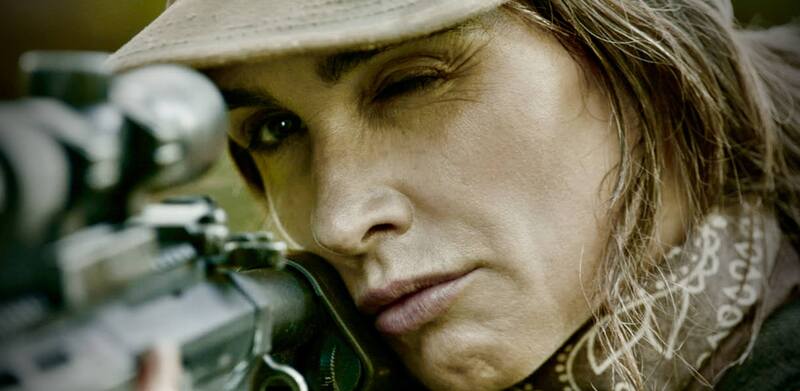
RAVING REVIEW: The guns get more explanation than the people carrying them in FIREFLIES AT EL MOZOTE. That imbalance follows Ernesto Melara’s historical drama through much of its running time, even as its young lead gives the violence a human consequence that’s difficult to dismiss. There’s a worthwhile film here about a child trying to understand what adults have done to his world. It’s also a war adventure that sometimes seems impatient to move him toward the next confrontation.
Set during the Salvadoran Civil War, the story follows ten-year-old José, played by Mateo Honles, after government soldiers destroy his village and murder his family. His escape brings him into contact with guerrillas, whose fight against the military offers both protection and a dangerous outlet for his anger. Melara builds the film around José’s survival and growing desire for revenge, using a fictional personal journey to approach the real December 1981 massacre at El Mozote and surrounding communities.
That distinction matters. This isn’t a comprehensive reconstruction of the massacre, and José’s story shouldn’t be mistaken for the documented experience of a particular survivor. Salvadoran troops from the U.S.-trained Atlacatl Battalion killed hundreds of civilians, including many children, during the operation. The film draws its urgency from that history, but its dramatic interests gradually shift toward pursuit, armed resistance, and keeping a guerrilla radio operation alive.
The radio material gives the story one of its more useful ideas. Being able to speak, broadcast, and contradict an official account becomes a practical form of resistance. A transmitter is equipment worth protecting because controlling information helps determine whose suffering gets acknowledged. That gives the military a stronger reason to pursue than simply chasing fleeing opponents, and it connects the struggle to survive with the struggle to leave a record.
It also highlights the difference between the adults' goals and what José needs immediately. Preserving a broadcast operation serves a larger cause, while keeping one frightened child safe demands attention to the person standing directly in front of them. Those responsibilities don’t always fit together comfortably. The film becomes more engaging when that conflict emerges through decisions rather than speeches about the importance of the fight.
José isn’t approaching any of this as an argument about information or political power. He’s a child whose family has been taken from him, and Honles gives the film an emotional focus that the surrounding screenplay doesn’t always maintain. His presence makes the adults’ decisions feel consequential. Whatever their cause, they’re making choices around someone who’s still young enough to need reassurance and old enough to recognize that reassurance doesn’t guarantee safety.
Paz Vega’s Alma is particularly valuable in that respect. Her protectiveness gives José someone to respond to beyond the soldiers he fears and the enemies he wants punished. Their relationship lets the film treat care as something that requires effort under terrible circumstances. Protecting a child also means resisting his urge to put himself in danger, especially when his anger is understandable and could help the people around him.
Vega helps keep those exchanges from becoming purely instructional. Alma has her own experience of loss, which complicates her attachment to José without making their relationship difficult to understand. Both people have a recognizable need, even when neither can stop and address it properly. These quieter interactions give the film something combat alone can’t supply, a reason to care about what survival might mean after the immediate danger passes.
Those competing responsibilities create the film’s most interesting tension. José’s desire to fight back makes emotional sense, but letting that desire guide him raises questions the story doesn’t fully examine. A child’s participation in an armed struggle remains troubling even when the people sheltering him have legitimate reasons to resist. FIREFLIES AT EL MOZOTE recognizes that discomfort, although its movement toward action sometimes gives revenge a cleaner dramatic purpose than the material can comfortably support.
The screenplay’s limited political groundwork adds to the problem. It provides enough information to follow the immediate danger, but less on the conditions that allowed such violence or the different interests sustaining the conflict. Keeping the perspective accessible doesn’t require a history lecture. It does require enough context to keep a specific atrocity from becoming a general illustration of war’s cruelty, and the film doesn’t consistently provide it.
That shortage also affects the supporting characters. Juan Pablo Shuk’s Aurelio brings another adult influence into José’s life, while Yancey Arias supplies the military threat as Colonel Reynaldo Montenegro. Yet too many people are defined primarily by what the next stretch of the plot needs from them. Orders, explanations, and immediate objectives take up space that might’ve given these characters more individual lives. Recognizable faces, including Mena Suvari and Jeff Fahey, don’t resolve that thinness.
Melara is more persuasive when the physical surroundings communicate how hard it is to escape. Filming in El Salvador gives the journey a tangible setting, with terrain that makes the characters feel exposed and exhausted. The countryside offers places to hide but no reliable shelter. That supports the survival material, especially when simply getting from one place to another carries enough uncertainty to hold attention.
The action has energy, but the repeated return to armed encounters changes the film’s emotional emphasis. The massacre establishes an enormous loss, and the subsequent adventure has difficulty finding room for its aftermath. Grief needs time to affect behavior, conversation, and relationships. Here, another immediate threat often arrives before those consequences have developed, leaving José’s anger more clearly expressed than the full extent of what he’s lost.
Some of the dialogue further narrows that emotional range by explaining positions too directly. The film is strongest when José has to judge the adults through their behavior, including the distance between their promises and their decisions. Statements about enemies, justice, and violence feel less effective when they seem designed to settle questions the relationships have complicated. A little less explanation would’ve left more uncertainty in the room.
At 99 minutes, FIREFLIES AT EL MOZOTE takes on remembrance, childhood trauma, military brutality, and resistance without giving each the development it needs. Honles and Vega provide a relationship worth following, and the radio storyline meaningfully connects survival with the preservation of testimony. Those elements carry the film through passages that feel too familiar or insufficiently developed. I stayed invested in José even when the writing around him became less convincing.
What remains frustrating is how close the film gets to a more searching account of his situation. A boy can escape the people who killed his family and still be failed by adults who see a purpose for his anger. FIREFLIES AT EL MOZOTE gives that possibility enough attention to make it linger, even as the gunfire keeps demanding the foreground. Its strongest reason to watch is the child still needing protection amid everyone else’s plans.
Please visit https://linktr.ee/overlyhonestr for more reviews.
Follow me on Letterboxd, Instagram, Twitter, and YouTube. You can also find my social media accounts on most platforms by searching for 'Overly Honest Reviews'.
I’m always happy to hear from my readers; please don't hesitate to say hello or send me any movie questions.
[photo courtesy of MOVIES UNLIMITED, ALLIANCE HOME ENTERTAINMENT, MAGENTA LIGHT]
DISCLAIMER:
At Overly Honest Movie Reviews, we value honesty and transparency. Occasionally, we receive complimentary items for review, including DVDs, Blu-rays, CDs, Vinyl Records, Books, and more. We assure you these arrangements do not influence our reviews, as we are committed to unbiased, sincere evaluations. We aim to help you make informed entertainment choices regardless of our relationship with distributors or producers.
Amazon Affiliate Links:
This site also contains Amazon affiliate links. If you purchase through these links, we may receive a commission. This affiliate arrangement does not affect our commitment to honest reviews and helps support our site. We appreciate your trust and support as you navigate these links.


Happy
0 %

Sad
0 %

Excited
0 %

Sleepy
0 %

Angry
0 %

Surprise
0 %
 0
0
 0
0


Average Rating