An Impossible Morning, Repeated
Read Time:7 Minute, 29 Second
MOVIE REVIEW
Unauthorised Absence
 –
– 
Genre: Drama, Short
Year: 2026
Runtime: 15m
Director: Georgia Parris
Writer: Jo Clayton
Cast: Emily Bruni, Beatrice Flaherty, Cathy Tyson, Anna Maxwell Martin, Natalie Lauren, Amy Booth-Steel, Nicole Sadie Sawyerr, Sabil Suleman
Where to Watch: shown at the 2026 London Breeze Film Festival
RAVING REVIEW: UNAUTHORISED ABSENCE understands how everyday surroundings can overwhelm a child, then places that experience beside the calm administrative red tape used to dismiss it. Across fifteen minutes, director Georgia Parris makes the distance between those two realities feel enormous. The people completing the paperwork and the people living with its consequences seem to occupy different worlds. It’s one of the biggest issues we face worldwide, and this short focuses on one small aspect of it.
The sound is essential to how that separation hits us. Traffic signals, electrical noise, and overlapping voices move forward in the mix until the environment demands attention that’s difficult to redirect. Sound designer Udit Duseja gives familiar noises an intrusive presence, helping communicate nine-year-old Thea’s sensory struggles without requiring her to explain it in a way that makes sense to an adult. The filmmaking tries to understand her before the institutions around her do, and that choice shapes everything that follows.
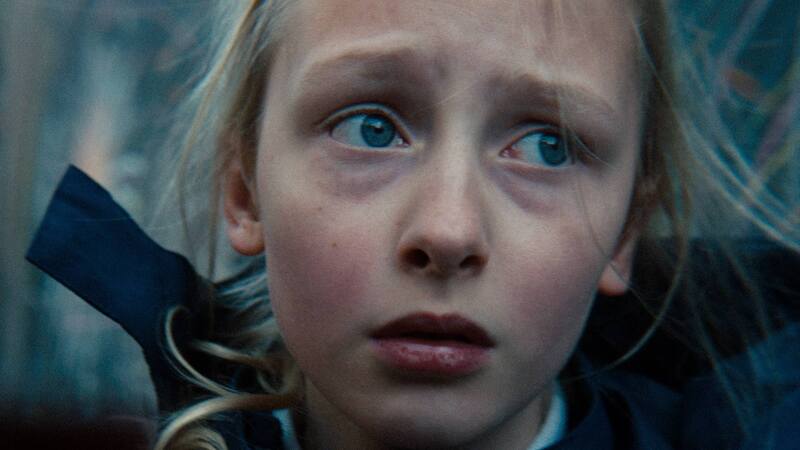
Thea, played by Beatrice Flaherty, is autistic and experiencing severe distress at school. Her mother, Anna (Emily Bruni), seeks support while trying to protect her from circumstances she can’t simply tolerate through determination. School attendance requirements continue to press against that responsibility, turning an already difficult situation into an escalating threat. Requests for help lead to scrutiny, fines, and further demands, leaving Anna accountable for producing an outcome without receiving the support needed to make it possible. As a parent, I can tell you firsthand that attendance requirements matter, but when they’re handled only one way, with no flexibility, they become a hindrance.
Jo Clayton’s screenplay clearly shows how that pressure weighs on everyone trying to help Thea. Anna isn’t refusing to acknowledge a problem or pretending that education doesn’t matter. She’s trying to communicate a problem that the available procedures keep translating into something else. Her daughter’s difficulty attending becomes a failure to secure attendance, and the distinction changes who receives attention. The child’s needs recede while the mother’s compliance becomes the subject under examination.
Bruni carries that without making Anna feel like a spokesperson delivering the film’s story. Asking someone with authority for help is an exhausting calculation when their judgment can make your circumstances worse. Anger risks being interpreted as hostility, distress as instability, and persistence as an unwillingness to cooperate. Bruni gives Anna the strain of someone who still needs the conversation to succeed, even as each exchange drains her dwindling reserves.
That makes the performance particularly affecting. Anna has to attend to Thea while also managing how other adults perceive her parenting, and those tasks compete for the same space within her existence. The film doesn’t need to present her as endlessly composed or exceptionally selfless to establish that she cares. Her exhaustion belongs in the portrait. Protecting a child remains work even when love is unquestionable, and Bruni lets that work show.
Flaherty’s contribution is equally important because Thea remains a child whose experience deserves attention in its own right. She isn’t just there as evidence of how hard Anna’s life has become. Her distress communicates an immediate need, and the film treats it seriously even when not everyone who owes her an answer gives one. Parris lets behavior, expression, and silence carry meaning rather than requiring an articulated explanation for the audience’s benefit.
The closeness between the two performances forms the film's foundation. Anna’s understanding of her daughter comes from paying attention to her, something that takes on greater significance when their circumstances are being assessed from outside. They share an experience that doesn’t become less real because another person struggles to recognize it. That gap between familiarity and official judgment creates a tension more painful than a straightforward disagreement about whether a rule has been followed.
Evelin van Rei’s handheld camerawork keeps us near that experience. The proximity gives Anna and Thea little room to grow distant, while the camera’s movement reinforces the sense that the day won’t just wash away. The film's look and sound are physically connected. Both keep attention on the effort required to navigate surroundings that others treat as ordinary.
The fragmented storytelling also serves a purpose beyond compressing events into a short running time. Editor Zeb Achonu gives the film a feeling that it must be solved before the last issue. An explanation doesn’t create a clear transition, and a conversation doesn’t necessarily bring anyone closer to an actual answer. The interruptions accumulate, making Anna’s circumstances feel ongoing rather than arranged into a reassuring series of problems and solutions.
Crucially, the institutional pressure doesn’t require theatrical displays of cruelty. A measured response can still be devastating when it refuses to engage with what someone is saying. The supporting cast includes Cathy Tyson as the headteacher, Nicole Sadie Sawyerr as the school’s special educational needs coordinator, Amy Booth-Steel as a child and adolescent mental health services worker, and Sabil Suleman as an education welfare officer. Their different positions reveal how many points of contact a family can have without finding an effective way forward. Anna Maxwell Martin, who also serves as an executive producer, plays the school secretary, while producer Natalie Lauren plays Thea’s teacher. The range of roles creates a network of responsibilities where everyone has a defined function, yet a child’s actual needs go unmet. Being referred onward isn’t the same experience as being helped.
Lauren developed the film from lived experience and the accounts of hundreds of families, and that background gives its argument a particular focus. It understands the burden of repeatedly explaining something deeply personal to people who encounter only one part of the situation. Each new conversation may begin as a new assessment for the person involved. For the family, it carries the exhaustion of every previous attempt, along with the fear that another explanation will lead to another consequence.
The film has an obvious advocacy purpose, but it earns its emotion through the relationship and sensory detail. It doesn’t rely on viewers knowing Britain’s education system or the terminology around special educational needs and disabilities. We get enough to understand the conflict, then we're asked to stay with the people experiencing it. The specificity makes the story accessible without suggesting that one family represents every autistic child or every parent seeking support. I was really shocked to learn this is such a broad issue; the US has more than enough issues, so I assumed this was another unique one.
Its short runtime is used with exceptional discipline. The performances, editing, camerawork, and sound keep returning to the same situation from different directions, adding understanding without requiring lengthy explanations. Parris trusts viewers to distinguish between a child struggling and a child misbehaving. She also trusts us to see how a response can deepen a crisis while remaining perfectly orderly on paper.
UNAUTHORISED ABSENCE left me thinking about the effort Anna has to spend making her daughter’s distress clear to people empowered to respond. Thea is already communicating, and her mother is already listening. The failure lies in what happens when that knowledge reaches the next desk, the next conversation, the next request. Fifteen minutes is enough for this remarkable film to make that failure feel intolerable.
Please visit https://linktr.ee/overlyhonestr for more reviews.
Follow me on Letterboxd, Instagram, Twitter, and YouTube. You can also find my social media accounts on most platforms by searching for 'Overly Honest Reviews'.
I’m always happy to hear from my readers; please don't hesitate to say hello or send me any movie questions.
[photo courtesy of MIMESIC]
DISCLAIMER:
At Overly Honest Movie Reviews, we value honesty and transparency. Occasionally, we receive complimentary items for review, including DVDs, Blu-rays, CDs, Vinyl Records, Books, and more. We assure you these arrangements do not influence our reviews, as we are committed to unbiased, sincere evaluations. We aim to help you make informed entertainment choices regardless of our relationship with distributors or producers.
Amazon Affiliate Links:
This site also contains Amazon affiliate links. If you purchase through these links, we may receive a commission. This affiliate arrangement does not affect our commitment to honest reviews and helps support our site. We appreciate your trust and support as you navigate these links.


Happy
0 %

Sad
0 %

Excited
0 %

Sleepy
0 %

Angry
0 %

Surprise
0 %
 0
0
 0
0


Average Rating