The Price of Being Somebody
Read Time:9 Minute, 41 Second
MOVIE REVIEW
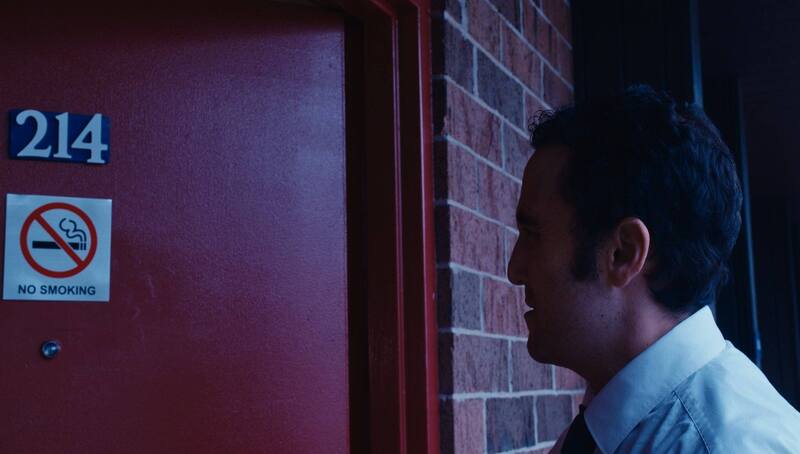
What Lives in Room 214?
 –


Genre: Psychological Horror, Mystery, Thriller
Year: 2026
Runtime: 55m
Director: Brandon Rice
Writer: Brandon Rice
Cast: Adam Joseph Turner, Timothy J. Cox, Rachel Moore, Jennifer Rizzi Horvath, Nicolas Antonucci, Patrick Mona, Gavin Greathouse, Alex DeCourville, Angel R. Reed
Where to Watch: release scheduled TBD
RAVING REVIEW: Hollywood has a funny way of convincing people they've finally made it, only to leave them wondering whether they'll ever work again. Writer-director Brandon Rice takes that insecurity and gives it a psychological horror spin in WHAT LIVES IN ROOM 214?, a 55-minute independent production following an actor whose latest career achievement leads him somewhere considerably less glamorous than he might have anticipated. Set primarily in a motel populated by people connected to the entertainment industry, the film explores professional ambition, isolation, and the uncomfortable relationship between success and personal identity. It's an interesting concept for a modestly produced horror featurette, even if its ideas don't always cohere as well as its premise suggests.
Adam Joseph Turner stars as Cory King, a B-list actor fresh off the biggest movie of his career. Unfortunately, a professional milestone doesn't necessarily bring the stability or satisfaction people imagine success brings. Cory moves into the Sunset Hills Motel, an establishment that caters to actors, producers, directors, and others in the entertainment business. It's an unusual setting, particularly because the people staying there occupy an interesting position between having accomplished something and still searching for whatever comes next.
For Cory, room 214 gradually becomes far more than temporary accommodation. His experiences begin to raise questions about the motel, the people around him, and his own understanding of what's happening. Rather than presenting a conventional haunted-house scenario involving an unsuspecting family moving into an obviously cursed property, Rice approaches the mystery through someone already experiencing a degree of personal and professional uncertainty. That distinction gives the film a useful foundation, especially given how much of Cory's identity depends on an industry that offers little lasting reassurance.
Turner carries much of that uncertainty. Playing an actor at an important career turning point creates an interesting performance challenge because Cory needs to convey both the confidence of professional success and the insecurity that can accompany it. His circumstances aren't those of someone who's never achieved anything. He's experienced enough success to understand its appeal, which makes losing momentum an added concern.
The film's treatment of Hollywood ambition also offers an interesting alternative to the familiar stories of struggling actors desperately seeking their first break. Cory has already experienced a degree of recognition, but that doesn't mean his professional future is guaranteed. In an industry where individual achievements can become yesterday's news remarkably quickly, maintaining relevance can be every bit as demanding as establishing it in the first place. Rice uses that instability to inform the character's increasingly uncomfortable surroundings.
Timothy J. Cox appears as Paul Denner, a successful industry figure Cory encounters at Sunset Hills. Cox has built an extensive career through independent productions, and his involvement adds a recognizable presence to the film's ensemble. His character also contributes to the entertainment-industry environment Rice establishes, where the distinction between professional standing and personal fulfillment becomes an interesting part of the broader premise.
The motel itself is an effective setting. Hotels and motels have long been associated with horror, largely because they occupy an uncomfortable space between public and private. You can lock your door and temporarily convince yourself that a room belongs to you. You're ultimately staying somewhere filled with strangers, unfamiliar routines, and a history you know practically nothing about. A room number becomes your temporary identity, and the people passing through the surrounding hallways might never become anything more than unfamiliar faces.
Sunset Hills adds another layer by connecting its residents through the entertainment business. These aren't simply travelers passing through an anonymous roadside establishment. Their professional lives revolve around being seen, recognized, and remembered. Placing individuals accustomed to seeking attention within an environment associated with anonymity gives Rice an interesting contradiction to explore. Cory's increasing confinement makes that relationship even more uncomfortable, especially as the room begins to take up more of his existence.
The relatively contained approach also suits the film's independent origins. Working without the resources of a major studio doesn't automatically prevent a production from delivering effective psychological horror, especially when its premise relies more on atmosphere and uncertainty than on elaborate visual spectacle. Rice creates an environment where discomfort grows through the character's changing relationship with his surroundings, rather than requiring a continuous parade of expensive supernatural encounters.
The film's ambitions occasionally outpace its ability to develop them within the available running time. There's a substantial difference between introducing an intriguing psychological mystery and giving its various elements enough attention to become equally compelling. WHAT LIVES IN ROOM 214? establishes several possibilities through its setting, entertainment-industry commentary, and increasingly troubled protagonist, but the relationship between those ideas isn't always as convincing as the individual concepts.
Its supporting ensemble contributes to the unusual environment surrounding Cory, with Rachel Moore appearing as Mandy Monroe and Jennifer Rizzi Horvath as Ellie Wilkes. Additional cast members include Nicolas Antonucci, Patrick Mona, Gavin Greathouse, and Alex DeCourville. The number of characters also reflects Rice's interest in establishing Sunset Hills as a place with more than one resident. The limited runtime means the surrounding personalities don't all receive substantial development.
That's an interesting consideration for a production positioned somewhere between a conventional short and a full-length feature. At 55 minutes, Rice has more room to establish his premise than filmmakers working within the familiar ten- or twenty-minute short format. He doesn't have the luxury of a ninety-minute feature to develop every relationship or explore every possibility. The result occupies an unusual middle ground, with enough material to support a larger story while retaining the concentrated approach of a smaller independent project.
I also appreciate that the film's interest in fame isn't limited to the familiar idea that success automatically turns someone into a terrible person. Professional recognition can complicate personal identity, especially when someone's confidence depends on maintaining an image others find appealing. Cory's circumstances offer an opportunity to examine that pressure through horror, where the inability to feel comfortable in your own environment becomes an extension of deeper personal uncertainty.
The title's question contributes to that approach. WHAT LIVES IN ROOM 214? immediately encourages audiences to anticipate a disturbing discovery, but the broader premise leaves room to interpret the character's relationship with himself as much as the physical surroundings. The film explores what happens when someone becomes increasingly disconnected from the world beyond a confined space, especially when their previous identity depended on being visible to others.
That underlying idea is stronger than its execution. The production has an interesting concept, an appropriate location, and enough psychological material to distinguish itself from another routine low-budget horror offering. Certain aspects of its storytelling don't develop with the same confidence, leaving parts of the experience less engaging than the setup. The mystery keeps you engaged, but the emotional connection to Cory's circumstances isn't always strong enough to give every development equal weight.
For a film made on modest independent resources, it's also worth examining what its creators are attempting rather than expecting the presentation of a much more expensive production. Rice wrote and directed the project, with CavingInFilms listed among its production companies alongside Dark Hearts Productions and Fronz Productions. Bringing together a sizeable cast for a comparatively short psychological horror featurette demonstrates an interest in creating something beyond a simple single-character exercise, even when the resulting material doesn't fully capitalize on every possibility.
The production's exploration of success also feels appropriate for an industry where independent filmmakers frequently face their own challenges involving visibility and recognition. There's an interesting parallel between Cory's professional anxiety and the challenges smaller productions face in reaching an audience. Creating something is only part of the process. Finding people willing to watch it, discuss it, and remember it afterward presents another challenge entirely.
That doesn't mean the film deserves extra credit simply because it was independently produced. Its storytelling still needs to work, and some areas of the execution could be more engaging. Rice chose a premise that fits the production's scale, using a familiar horror environment to explore themes beyond whether a mysterious room contains something dangerous.
Approaching fame through psychological horror also gives the project a personality distinct from more straightforward entertainment-industry thrillers. Horror has long been comfortable examining obsession, identity, and the consequences of letting a desire consume someone's life. Cory's professional situation offers an accessible starting point, while the unsettling circumstances surrounding Sunset Hills push the material into stranger territory.
WHAT LIVES IN ROOM 214? is an interesting independent effort that finds an appealing premise in the gap between achieving recognition and actually feeling successful. Adam Joseph Turner and Timothy J. Cox give the film recognizable personalities to build around. At the same time, the motel setting creates an appropriate environment for its exploration of isolation and professional anxiety. Its ideas don't always get the development they deserve, and the production isn't consistently as effective as the concept, but there's enough here to make Rice's approach worth exploring.
Hollywood is full of stories about people doing terrible things to become famous, though comparatively few examine what happens when someone reaches a professional milestone and discovers success hasn't provided the reassurance they expected. Cory King's experience takes that uncertainty somewhere considerably darker. Most actors would probably consider a bad review, an unsuccessful audition, or an extended period between jobs a pretty lousy career development. Moving into a motel where your biggest professional concern might eventually become the least of your problems? That's an entirely different reason to reconsider your accommodations.
Please visit https://linktr.ee/overlyhonestr for more reviews.
Follow me on Letterboxd, Instagram, Twitter, and YouTube. You can also find my social media accounts on most platforms by searching for 'Overly Honest Reviews'.
I’m always happy to hear from my readers; please don't hesitate to say hello or send me any movie questions.
[photo courtesy of CAVINGINFILMS, DARK HEARTS PRODUCTIONS, FRONZ PRODUCTIONS, REELLIFE-STUDIOS, SPOOKY OLD MAN PRODUCTIONS]
DISCLAIMER:
At Overly Honest Movie Reviews, we value honesty and transparency. Occasionally, we receive complimentary items for review, including DVDs, Blu-rays, CDs, Vinyl Records, Books, and more. We assure you these arrangements do not influence our reviews, as we are committed to unbiased, sincere evaluations. We aim to help you make informed entertainment choices regardless of our relationship with distributors or producers.
Amazon Affiliate Links:
This site also contains Amazon affiliate links. If you purchase through these links, we may receive a commission. This affiliate arrangement does not affect our commitment to honest reviews and helps support our site. We appreciate your trust and support as you navigate these links.


Happy
0 %

Sad
0 %

Excited
0 %

Sleepy
0 %

Angry
0 %

Surprise
0 %
 0
 0



Average Rating