Finding Humanity in Unexpected Places
Read Time:11 Minute, 45 Second
MOVIE REVIEW
Simone Barbès or Virtue (Simone Barbès ou La Vertu)
 –


Genre: Drama, Comedy, LGBTQ+
Year Released: 1980, 2026 Blu-ray
Runtime: 1h 17m
Director: Marie-Claude Treilhou
Writers: Marie-Claude Treilhou, Michel Delahaye
Cast: Ingrid Bourgoin, Martine Simonet, Michel Delahaye, Sonia Saviange, Max Amyl, Noël Simsolo
Where to Watch: available now, order your copy here: www.radiancefilms.co.uk, www.mvdshop.com, or www.amazon.com
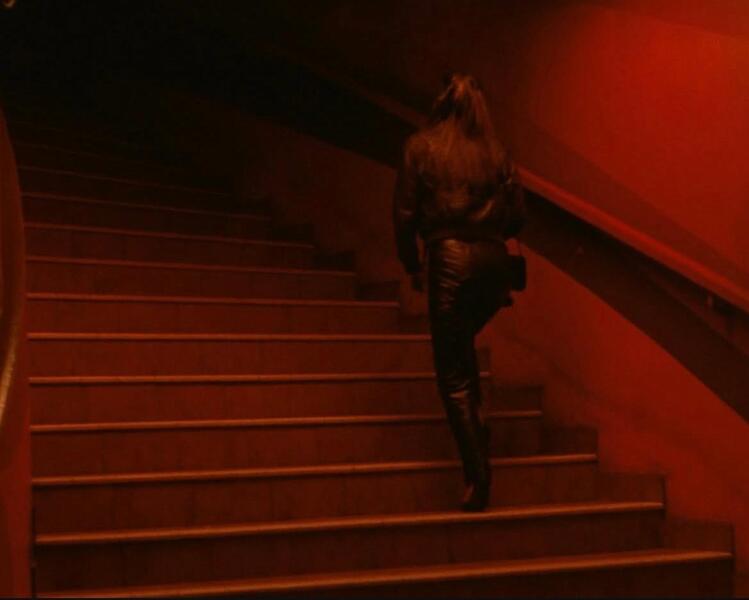
RAVING REVIEW: A porn theater might seem like an unusual place to discover how little people understand about intimacy, but Marie-Claude Treilhou finds plenty to work with in SIMONE BARBÈS OR VIRTUE. The customers have come looking for sex on a screen, while the women responsible for keeping the place running are mostly concerned with getting through their shift. That gap between what people want and what they're actually getting becomes an amusing, occasionally sad way to look at the rest of the night. Treilhou follows Simone through three settings in Paris, giving each encounter enough room to expose something about the person moving between them. Nobody seems especially close to finding what they came for.
Simone (Ingrid Bourgoin) works alongside Martine (Martine Simonet) at an adult cinema in Montparnasse, where the clientele provides a near-constant stream of opportunities for conversation and irritation. Their workplace isn't presented as an exotic underworld requiring some grand explanation. It's a job, complete with unpleasant customers, coworkers who know each other's habits, and stretches of time that have to be filled somehow. The humor comes from regarding an establishment built around sexual fantasy as a fairly ordinary business. There's an appealing lack of ceremony to the way the women deal with men who might prefer to believe their evening activities are more mysterious than they really are.
The opening section has the structure of a workplace comedy, although its setting gives the familiar exchanges a more peculiar edge. People arrive carrying their own expectations, then leave as the ushers continue their conversations. The women become the constants in a location supposedly devoted to the customers' private pleasures. Treilhou doesn't have to keep taking us into the screening room to make the place understandable. Keeping attention on the lobby brings the employees into focus while the pornography remains largely on the other side of the door. The choice also means that the men, who pay to look at women, become the people being examined.
That reversal gives Simone and Martine a degree of authority rarely associated with their position. They can be sarcastic, impatient, and dismissive without having to make themselves pleasant for the people passing through. Their conversations aren't uniformly profound, and that's part of why they belong here. People who spend hours together at work don't deliver carefully prepared speeches about society. They complain, joke, revisit familiar grievances, and find ways to pass the time. Treilhou lets the exchanges accumulate without pretending every customer represents some enormous revelation about human nature. The theater is peculiar enough without treating everyone who enters it as a specimen.
Bourgoin is particularly important to the film's personality. Treilhou had worked as an usher herself and cast Bourgoin, her real-life colleague, in the title role. The cinema was also where the director had worked, giving the opening section a basis in lived experience that goes beyond a recreation of period nightlife. Bourgoin brings an everyday assurance to a character whose life doesn't become more understandable simply because she's at the center of the movie. Simone can handle the routine of her job while remaining considerably less certain about what she wants from the hours afterward. That difference gives the character more room than a portrait of a merely tough or cynical usher would allow.
The movie was produced through Paul Vecchiali's Diagonale, a collective associated with resourceful, independent French filmmaking outside the expectations of more conventional production. Treilhou had worked as Vecchiali's assistant before directing this first feature, and its modest scale suits the material. The film doesn't build toward a sweeping conflict or ask for an emotional transformation on schedule. Instead, the organizing principle is the passage from one social environment to another, with Simone remaining our point of contact. The three-part construction is straightforward enough to follow, but the changes in company and setting matter more than any traditional escalation of events.
Once Simone leaves work for a lesbian nightclub, the balance changes. At the theater, she has an assigned place and a coworker with whom she can share the evening's absurdities. At the club, she's there for personal reasons, waiting for her girlfriend, and the social world is no longer organized around her job. It's a useful contrast because the film doesn't automatically make a queer space an uncomplicated sanctuary. A room can offer belonging while remaining full of complicated people, private disappointments, and social performances. Treilhou lets the club have its own theatricality rather than presenting it merely as a more enlightened alternative to the cinema.
The performers and personalities associated with the nightclub create a different kind of entertainment from the one sold at Simone's workplace. The film's Paris isn't neatly divided into respectable daytime life and a uniform underground after sunset. Particular communities and individual ways of occupying a room each have expectations of their own. The club's cabaret-like diversions, including its more extravagant performances, make the setting feel inhabited by people with lives beyond Simone's immediate concerns. That abundance can also pull attention away from her. It's a curious choice in a film whose title promises a character portrait, allowing the lead to become an observer within her own story.
There is an underlying loneliness to this part of the evening that doesn't require the club itself to be portrayed negatively. Simone has left a setting where her purpose is obvious and entered one where being present doesn't guarantee a meaningful connection. Having somewhere to go isn't the same as having somebody to return to. Treilhou approaches that distinction through everyday disappointment rather than an elaborate romantic crisis. The film is much more comfortable with awkward intervals than with the kind of decisive confrontation another story might use to explain precisely what its protagonist is feeling. That can be appealing, even when the deliberate looseness makes the narrative less immediately engaging.
The final section moves into a car with an unfamiliar man played by Michel Delahaye, whose participation also connects the production to French film criticism. It's an unexpected change in company after the nightclub, and one that complicates any simple description of the film as the story of a woman visiting a series of queer spaces. The stranger has his own desire for contact, and Simone becomes part of a conversation that doesn't necessarily offer either participant the understanding they're looking for. A shared journey can be strangely intimate when people know they may never meet again. The car provides a temporary room with its own rules, removed from the established social arrangements of the previous locations.
That closing movement asks for a different kind of patience. The theater supplies an ensemble of amusing intrusions, and the club has its performances and crowded social world. A conversation in a car doesn't have those distractions. The change makes the film's episodic design particularly apparent and will probably divide viewers who were most entertained by the opening workplace material. The story is willing to trade comic variety for a narrower encounter, risking that attention to ordinary conversation will be enough. In a film so interested in the roles people perform around others, the decision makes sense, even when its appeal is less immediate than the earlier exchanges.
The title's reference to virtue is another small provocation. The locations invite conventional judgments about sexual behavior, but the film has little interest in giving those judgments the last word. A customer at a porn theater may be ridiculous without being reduced to the activity that brought him there. A lesbian nightclub isn't automatically a place where every emotional need gets fulfilled. An apparently ordinary man can bring his own frustrations into a conversation with a stranger. The movie's interest lies in how people act around desire and in the gap between their circumstances and their self-image. Treilhou seems content to leave many of those contradictions in place.
Its filmmaking is inseparable from the particular Paris it records. Cinematographer Jean-Yves Escoffier worked on a production that moves among an enclosed theater lobby, a nightclub, and the passing city outside a car. The spaces create distinct conditions for how people can look at one another and who gets to speak. The cinema is especially interesting because the street outside and the auditorium within it remain neighboring worlds while the workers occupy the threshold. This is a movie about an evening, but also about how much of a city exists behind doors that other people never think to open. Its relatively small geographical range gives it a specificity that a more elaborate tour of Paris might have lost.
Treilhou's background makes that perspective worth emphasizing. Her own employment at the adult cinema wasn't undertaken as some artist's research exercise. She worked there to earn money and later recognized that the experience could provide the basis for a film. That distinction helps explain why the opening doesn't simply mock the employees' workplace from the outside. There's practical knowledge behind the humor and an appreciation for the unnoticed routines that continue while customers imagine themselves having an extraordinary experience. Bringing that knowledge into fiction is more valuable than treating the venue as an easy way to make a small production seem provocative.
Radiance Films' limited-edition Blu-ray gives the film an especially appropriate home within a catalog that has regularly made room for neglected and unconventional international cinema. The edition draws on a 4K scan and restoration by Cosmodigital and includes uncompressed mono PCM audio, along with an improved English subtitle translation. These are substantial preservation and access details for a French-language production whose reputation has grown through rediscovery. The original mono configuration is also worth retaining in a film so concerned with conversation and the competing sounds of public spaces. The restoration helps keep this relatively obscure first feature available beyond occasional repertory screenings.
The supplemental lineup extends that context rather than focusing exclusively on technical specifications. Treilhou's nine-minute short LOURDES L'HIVER accompanies the feature. At the same time, a new visual essay by critic Lillian Crawford and an interview with scholar Elena Gorfinkel offer additional routes into the film's history and concerns. An archival French television interview with Bourgoin from 1980 connects the release to its original period. Radiance also includes a booklet with writing by Erika Balsom and archival material. Collectors get reversible artwork and the label's removable OBI presentation, with the limited edition restricted to 3,000 copies. It's a thoughtful collection of material for a movie that benefits from being understood as part of a wider filmmaking culture.
SIMONE BARBÈS OR VIRTUE isn't interested in giving Simone a tidy revelation before morning. The comedy of her working life and the less predictable encounters that follow don't settle into a single lesson, which is both part of the film's appeal and a reason its three sections won't land equally for everyone. Treilhou has made an unusual portrait of ordinary people passing time in places that outsiders tend to define entirely by sex. Her most memorable decision is to look away from the expected attraction and toward the people left waiting, working, or talking when the performance has ended. By the time Simone's night draws to a close, the city's supposed dens of pleasure have revealed just how difficult simple companionship can be.
Bonus Materials:
4K scan and restoration by Cosmodigital
Uncompressed mono PCM audio
Lourdes l’hiver – short film by Marie-Claude Treilhou (1981, 9 mins)
New visual essay by film critic Lillian Crawford (2026)
Archival French TV interview with star Ingrid Bourgoin (1980)
New interview with film scholar Dr. Elena Gorfinkel (2026)
Newly improved English subtitle translation
Reversible sleeve featuring original and newly commissioned artwork by Time Tomorrow
Limited edition booklet featuring writing by Erika Balsom and archival writing
More to be confirmed
Limited edition of 3000 copies, presented in full-height Scanavo packaging with removable OBI strip leaving packaging free of certificates and markings
Please visit https://linktr.ee/overlyhonestr for more reviews.
Follow me on Letterboxd, Instagram, Twitter, and YouTube. You can also find my social media accounts on most platforms by searching for 'Overly Honest Reviews'.
I’m always happy to hear from my readers; please don't hesitate to say hello or send me any movie questions.
[photo courtesy of RADIANCE FILMS, MVD ENTERTAINMENT]
DISCLAIMER:
At Overly Honest Movie Reviews, we value honesty and transparency. Occasionally, we receive complimentary items for review, including DVDs, Blu-rays, CDs, Vinyl Records, Books, and more. We assure you these arrangements do not influence our reviews, as we are committed to unbiased, sincere evaluations. We aim to help you make informed entertainment choices regardless of our relationship with distributors or producers.
Amazon Affiliate Links:
This site also contains Amazon affiliate links. If you purchase through these links, we may receive a commission. This affiliate arrangement does not affect our commitment to honest reviews and helps support our site. We appreciate your trust and support as you navigate these links.


Happy
0 %

Sad
0 %

Excited
0 %

Sleepy
0 %

Angry
0 %

Surprise
0 %
 0
 0


Average Rating