Some Legends Are Hungry for More
Read Time:11 Minute, 53 Second
MICRO SERIES REVIEW
Raven Mocker
 –


Genre: Horror, Supernatural, Folk Horror
Year Released: 2026
Runtime: Approximately 40 minutes, 20 episodes
Director: Gabe McCauley
Writer: John White
Cast: Lauren Braddock, Darby Cappillino, Jazlyn Adams
Where to Watch: exclusively on Screamify, TBA
RAVING REVIEW: A broken-down car on an isolated Tennessee road is hardly an unfamiliar way to begin a horror story. It's practically an invitation for something terrible to come wandering out of the woods. RAVEN MOCKER takes that familiar situation and connects it to a much older nightmare, one drawn from Cherokee folklore and a tragedy dating back more than a century. The series follows three teenagers stranded in 1971, unaware that their unfortunate choice of location has brought them into the territory of something that survives by consuming human hearts. Their immediate danger is tied to events from the 1860s, giving writer John White and director Gabe McCauley two periods to explore within an unusually compact production.
The title refers to a terrifying figure from Cherokee tradition, commonly associated with witches who prey upon the dying and consume their hearts to prolong their own lives. It's an unsettling concept because the creature's existence depends on stealing life from another person. The threat involves more than an indiscriminate monster attacking whoever crosses its path. The traditional Raven Mocker has a specific relationship with mortality, particularly the vulnerability of people approaching death. Those ideas provide a disturbing foundation for horror, especially when the mythology is adapted into a story where the creature's hunger threatens people far removed from the original events.
Cherokee folklore deserves consideration beyond its usefulness as material for a supernatural thriller. The Raven Mocker belongs to a living cultural tradition with histories and meanings that extend far beyond any contemporary entertainment adaptation. The familiar English name is only one way the figure has been represented in published accounts, and historical descriptions include characteristics that aren't necessarily carried over into modern horror interpretations. For a production drawing directly from Indigenous beliefs, the distinction between traditional accounts and newly invented mythology matters. White's screenplay connects the creature to a Civil War-era romantic tragedy, establishing a specific narrative history for this adaptation rather than reproducing every element of the original tradition.
That historical connection gives RAVEN MOCKER an unusual narrative arrangement for a survival-horror series. Its 1971 storyline concerns teenagers encountering danger in unfamiliar surroundings, while the earlier material concerns the circumstances that connected the witch to that location. The separation between the periods is substantial enough to make the landscape itself an important part of the premise. Generations have passed, but whatever happened during the nineteenth century continues to threaten people who had no involvement in the original tragedy. The characters aren't simply confronting a creature from another time. They're entering a place whose history has never stopped mattering.
The Civil War setting also carries implications beyond providing an older visual environment. Tennessee was a deeply divided state during the conflict, with competing loyalties and considerable violence affecting civilian communities. A romantic tragedy placed against that background exists within a period already defined by loss and uncertainty. Historical horror can connect personal suffering with broader circumstances without requiring every event to become a historical lesson. The screenplay's decision to set an origin story in this period is one of the production's more distinctive choices, especially when paired with the comparatively familiar image of teenagers traveling along an isolated road a century later.
The 1971 setting introduces a different relationship with the landscape. The teenagers inhabit an America separated from the Civil War by generations, yet their predicament returns them to a danger associated with that earlier period. A rural backroad becomes the point where the two stories intersect. Such a location offers a believable explanation for limited access to outside assistance, particularly in an era without mobile phones or modern navigation. The scenario requires relatively little explanation to establish the characters' vulnerability. A vehicle breaks down, the surrounding area is unfamiliar, and the nearest source of help is uncertain. Those are recognizable problems before anything supernatural enters the situation.
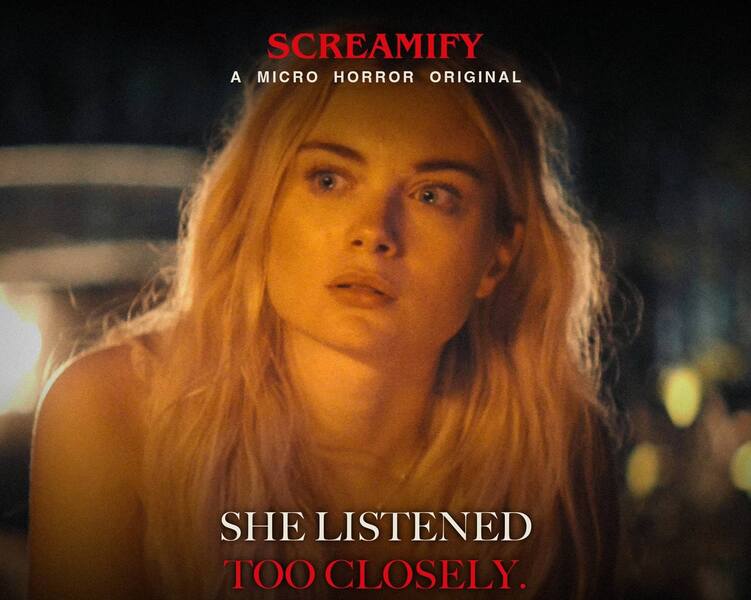
An especially interesting part of RAVEN MOCKER's production is its unconventional presentation. Screamify developed the series as part of its Micro Horrors line, using twenty vertically filmed episodes that run about two minutes apiece. Rather than adapting a traditionally framed television production into shorter clips, the company has organized the project around the viewing habits of an audience using mobile devices. Each installment is designed to end with a cliffhanger. The entire narrative runs about forty minutes, comparable to a single conventional television episode, despite being divided into twenty separate chapters.
That structure changes how much narrative space is given to individual developments. A conventional forty-minute drama can devote considerable time to a conversation before introducing a new incident. A two-minute installment has a different relationship with exposition, character introductions, and scene transitions. The decision to incorporate a cliffhanger into every chapter creates an additional structural demand. Those interruptions are part of the format's identity, not an incidental consequence of distributing the finished production online. RAVEN MOCKER therefore represents an experiment in how established horror storytelling conventions can be organized for an audience accustomed to consuming entertainment in shorter intervals.
The vertical image creates another challenge because conventional cinematic staging has generally developed around a frame that extends farther horizontally than vertically. Director of photography Chris Haggerty discussed the difficulty of accommodating over-the-shoulder compositions within the narrower format, particularly when two performers must occupy the same image. His comments identify a practical concern that isn't immediately obvious when watching short-form content on a phone. Positioning actors within the available space affects how conversations are photographed and how physical relationships can be communicated. The camera department must account for those restrictions throughout production rather than treating them as an issue to be corrected in editing.
Haggerty also described the financial pressures facing crews working within compressed production schedules. A smaller format doesn't eliminate the need for convincing performances, lighting, costumes, or practical effects. The work involved in presenting a nineteenth-century setting remains substantial regardless of the episode length. Period clothing and locations demand attention, while modern filmmaking equipment must be arranged around environments that weren't designed to accommodate it. These difficulties were particularly apparent during the Tennessee shoot, where the production contended with considerable heat and locations that presented their own logistical problems.
McCauley described working in Civil War clothing weighing several pounds during temperatures approaching 95 degrees. The detail offers a glimpse into the physical demands of recreating the historical setting. Crew member Joseph Machosky also discussed the difficulty of lighting a barn without an existing electrical supply. Such problems are familiar to independent productions, where the desired location and the available infrastructure don't always cooperate. A scene may call for an environment untouched by modern development, but the crew filming it needs power, equipment, and sufficient working conditions. The practical effort involved in overcoming those obstacles rarely receives much attention once the production is complete.
RAVEN MOCKER was produced by Nashville-based Soul Feather Studios, the company associated with the PBS documentary series RECONNECTING ROOTS. McCauley founded the studio, and its previous television work earned two Daytime Emmy Awards in 2024, including recognition for its writing team. Joel McAfee serves as producer on RAVEN MOCKER, with Laryssa Goodlad executive producing for Screamify and Oh Gosh Yeah Entertainment. The connection to an established documentary production company is an unusual element of the project. Historical research and nonfiction storytelling are different disciplines from supernatural horror, but both require careful decisions about what information an audience needs to understand a particular setting.
The creature effects are another notable component of the production. Special-effects makeup artist Jazlyn Adams constructed a practical silicone heart for the series, developing a prop intended to move and bleed. Adams also appears as one of the Raven Mockers, connecting her work behind the camera directly to her performance. It's a particularly appropriate use of practical materials for a story whose supernatural threat revolves around the consumption of human organs. A physical prop gives performers something to handle during filming, while the mechanics needed to simulate a beating heart make its construction a small engineering project in addition to a makeup assignment.
Lauren Braddock portrays the title Raven Mocker, placing the creature itself within the ensemble rather than leaving the supernatural threat entirely abstract. The production material also identifies more than one Raven Mocker, a distinction that broadens the creature mythology beyond the image of a single witch. The available accounts establish the casting and the use of practical makeup without detailing every transformation or encounter. What they do reveal is a production involving performers and effects artists who worked closely together to bring its supernatural characters into physical form.
Darby Cappillino occupies another unusual position in the cast, portraying Grace and a young Antoinette across the two historical periods. The dual casting creates an identifiable connection between the timelines, although its precise narrative meaning belongs to the finished story. Cappillino also performed the nineteenth-century song "Lorena" during filming. The ballad was written in 1856 and became especially popular during the American Civil War, making it a historically recognizable musical choice for the earlier setting. Its association with longing and romantic separation corresponds with the production's established emphasis on a love story whose consequences extend far beyond its original period.
Cappillino discussed performing the song after several days of screaming for the camera, describing the strain on her voice near the end of production. The circumstances reflect the competing demands placed on performers in a short-form horror series. Vocal performances, physical acting, and elaborate makeup can all fall within the same production schedule. An actor moving between different historical characters also has to account for costume changes and the separate circumstances of each role. The behind-the-scenes accounts illustrate how much work can go into a project whose individual installments are measured in minutes.
Screamify's Micro Horrors initiative places RAVEN MOCKER alongside several productions with very different premises. AUTONOMOUS uses the confined environment of a driverless vehicle, while GAME NIGHT: SURVIVE THE SLASHER draws upon the masked-killer tradition. SCARY MARY approaches supernatural horror through aspiring online personalities and the familiar mirror legend. RAVEN MOCKER brings historical folklore and a dual-period narrative into that lineup. The variety suggests the format isn't limited to a single kind of horror story, even though each production shares the company's emphasis on short episodes and mobile-oriented presentation.
The platform's approach also raises interesting questions about the relationship between distribution and storytelling. Horror has a long history of adapting to different exhibition formats, from theatrical features and television anthologies to home-video productions and internet shorts. Each method changes how audiences encounter the material. Watching a complete story in one sitting offers a different experience from following a series through individual installments, particularly when those installments are designed to encourage immediate continuation. Screamify's model makes that distinction part of the production process itself, with narrative divisions established before the audience ever encounters the work.
RAVEN MOCKER brings several recognizable horror traditions into that emerging format. The isolated rural setting belongs to decades of survival stories, the creature draws on established folklore, and the historical tragedy connects supernatural violence to human decisions. Those components have been incorporated into horror many times before, but their arrangement within a twenty-part vertical production distinguishes this particular project. Its identity comes from combining an older supernatural tradition with an entertainment model shaped by contemporary viewing habits.
The most substantial aspect of the production may be the contrast between the age of its source material and the relatively new distribution format being used to tell the story. A creature associated with generations of oral tradition has been brought into a series designed for episodes lasting barely longer than an ordinary social-media video. The filmmaking process involved physical sets, period costumes, traditional makeup techniques, and practical creature props. The finished material is intended for a platform built around mobile accessibility. That combination shows how independently produced horror keeps finding new ways to present familiar fears.
RAVEN MOCKER's premise ultimately rests on a particularly enduring idea. The consequences of a terrible event don't necessarily disappear when the people involved are gone. A century can pass, the landscape can change, and a new generation can enter the same place without knowing anything about the history beneath it. The teenagers on that Tennessee road have no reason to expect their mechanical trouble to connect them with a Civil War tragedy. Their misfortune brings them into contact with something that belongs to a much older story. For a witch whose survival depends on taking others' lives, time has evidently done little to diminish her appetite.
Please visit https://linktr.ee/overlyhonestr for more reviews.
Follow me on Letterboxd, Instagram, Twitter, and YouTube. You can also find my social media accounts on most platforms by searching for 'Overly Honest Reviews'.
I’m always happy to hear from my readers; please don't hesitate to say hello or send me any movie questions.
[photo courtesy of SCREAMIFY, SOUL FEATHER STUDIOS, SCREAMIFY ORIGINALS]
DISCLAIMER:
At Overly Honest Movie Reviews, we value honesty and transparency. Occasionally, we receive complimentary items for review, including DVDs, Blu-rays, CDs, Vinyl Records, Books, and more. We assure you these arrangements do not influence our reviews, as we are committed to unbiased, sincere evaluations. We aim to help you make informed entertainment choices regardless of our relationship with distributors or producers.
Amazon Affiliate Links:
This site also contains Amazon affiliate links. If you purchase through these links, we may receive a commission. This affiliate arrangement does not affect our commitment to honest reviews and helps support our site. We appreciate your trust and support as you navigate these links.


Happy
0 %

Sad
0 %

Excited
0 %

Sleepy
0 %

Angry
0 %

Surprise
0 %
 0
 0

Average Rating