An Afternoon Before Okinawa
Read Time:7 Minute, 37 Second
MOVIE REVIEW
The Mosquito Bowl
 –


Genre: War, Drama, Sports
Year Released: 2026
Runtime: 2h 7m
Director: Peter Berg
Writers: Peter Berg, Mark L. Smith, based on the book by Buzz Bissinger
Cast: Nicholas Galitzine, Bill Skarsgård, Ray Nicholson, Tom Francis, Brent Comer, Dominic Bogart, Ella Newton, Lola Bond
Where to Watch: releasing on Netflix November 25, 2026
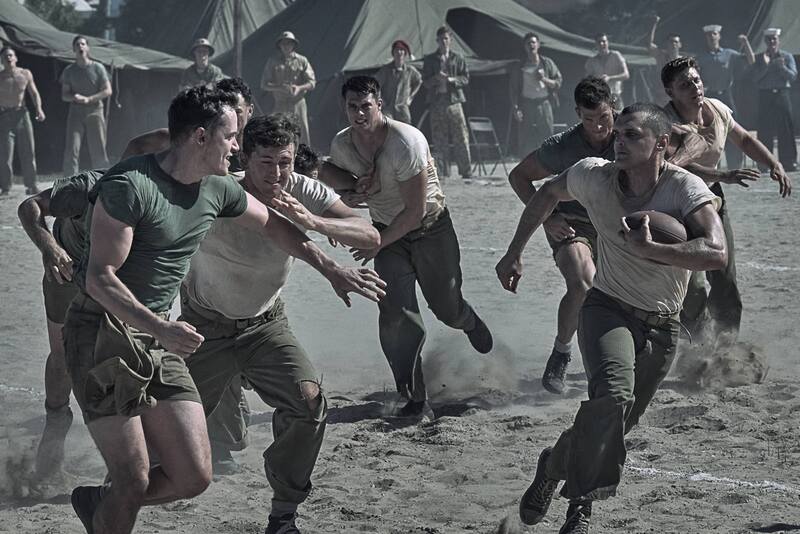
RAVING REVIEW: The 4th and 29th Marines took an argument onto a dirt and coral field on Christmas Eve in 1944. Each regiment figured it had the better football team, and there were enough former college stars on Guadalcanal to make a good case for either side. Peter Berg made a movie about how some of those men got there. For all the history attached to that afternoon, the easiest thing to understand about it is the pleasure of looking over at the guy next to you and telling him he’s wrong about football.
THE MOSQUITO BOWL takes the game seriously. You know which direction you’re supposed to go, and even a bad call gives you something to argue about because everybody agreed to a set of rules before they put the ball down. The Marines have been through enough by Christmas Eve to make that sort of certainty feel like a luxury. From the side of the field, they can get worked up about whether a catch counted and let the next snap give them something new to worry about. Berg gets the appeal of that afternoon. It’s harder to get a feel for what it means for these particular men to get back on a football field.
The screenplay by Berg and Mark L. Smith gives the players different reasons to miss the lives they had before the war. Nicholas Galitzine’s John McLaughry takes the field at Brown, where his father is the coach. Tom Francis and Bill Skarsgård play Dave Schreiner and Bob Bauman, teammates at Wisconsin, and Ray Nicholson’s Tony Butkovich made his name at Purdue. McLaughry’s connection to Brown tells us more about him than his standing as a player. He learned what was expected of him on the field from the same guy he’d see at the dinner table. Leaving football also means leaving behind a way he and his father knew how to talk to each other.
The Wisconsin teammates give Berg a different relationship to work with. Schreiner and Bauman arrive with a history that predates their service, which makes the time between training and the game especially important. The script shows what they’ve done together on a football field. It gives us less of a sense of what they’ve come to count on each other for by the time they get back to one. The film moves them through enough shared experiences for that friendship to have changed, then gives us too little time with the two of them to feel the difference. When they line up on Guadalcanal, the pleasure of seeing them get to play again comes through. The game brings the rivalry between the regiments back to life more easily than it brings out what’s changed between the two former teammates.
Berg’s previous Bissinger adaptation, FRIDAY NIGHT LIGHTS, had a whole town invested in what a handful of kids did on a football field. Those players could feel expectations coming from people they barely knew. Here, a guy who could draw the attention of a whole stadium can disappear into a crowd of men dressed like him. A recognizable name might buy him a few minutes of conversation in camp. Once the talk moves on, the people who know what he was good at are the guys close enough to have heard him talk about it. That change in who’s paying attention is one of the better reasons to start the film on campus. We know what being recognized used to buy them.
Ella Newton plays McLaughry’s girlfriend Jane, and Lola Bond plays Schreiner’s fiancée Odette Hendrickson. Odette has the freedom to take Schreiner less seriously than the fans in the stands can. Just about anybody in Wisconsin could tell you what he was good at on a Saturday. She has a whole future to consider with him, and his ability to play football can only answer so many questions about how good a husband he’d be. The film’s time at home is most valuable when it gives someone like Odette room to regard one of these guys on her own terms. That does more for Schreiner than another reminder of how many people came out to watch him play.
Bissinger found some of that personal history in correspondence that families had kept for years. McLaughry’s family had letters going back to his childhood, and Bissinger was able to read letters from Odette as well as Schreiner’s. He also learned that his own father had served with the 4th Marines and had kept quiet about Okinawa. The difference matters to the film because the men are easier to understand if we’ve spent time with them before they ship out. A name in a military record can tell you where somebody was sent. A letter can tell you who he thought he’d be coming back to and what he could bring himself to say to that person before he left.
Berg shot much of the film in story order, giving the actors time together as teammates and rivals before they had to play men with months of shared experience in the Marines. The training section works best when the players’ experience carries them only part of the way. They’ve already learned how to keep going after they’ve had enough. A coach can ask a player to dig a little deeper with a pretty good idea of when practice will end. That familiarity gets the men through some of what’s asked of them in training. It offers less when there’s no way to know whether working harder will get them home.
The film opens with a line about who declares wars and who has to fight them. Berg plays General Simon Buckner, who commanded the U.S. Tenth Army at Okinawa. By the time the men reach Okinawa, we’ve had a chance to understand why they wanted to serve, which gives that opening line more weight. The decision to enlist belongs to them. After that, a decision somebody else makes about where to send their regiment can matter more to the rest of their lives than anything they’ve decided for themselves.
At Okinawa, Berg keeps the fighting close to the Marines. The size of what they’ve walked into is hard to take in from where they’re standing, and the immediate problem of what’s happening to the guy near them takes precedence over any sense of where the battle is going. That limited perspective is effective when the fighting starts. Over time, the focus on the next injury or threat makes the combat feel more repetitive than it needs to. Berg has already shown what it takes to keep moving when he can barely make sense of what’s happening in front of him. Staying at that distance for as long as he does gives the film fewer ways to develop what it’s already made painfully clear.
The real game was played months before Okinawa, and it had an audience beyond the Marines who found a spot around the field. The military radio broadcast reached service members elsewhere in the South Pacific. You could be nowhere near Guadalcanal and stop what you were doing to listen for whether a pass was caught. For a few seconds, knowing the answer was the only thing you had to do.
Please visit https://linktr.ee/overlyhonestr for more reviews.
Follow me on Letterboxd, Instagram, Twitter, and YouTube. You can also find my social media accounts on most platforms by searching for 'Overly Honest Reviews'.
I’m always happy to hear from my readers; please don't hesitate to say hello or send me any movie questions.
[photo courtesy of NETFLIX]
DISCLAIMER:
At Overly Honest Movie Reviews, we value honesty and transparency. Occasionally, we receive complimentary items for review, including DVDs, Blu-rays, CDs, Vinyl Records, Books, and more. We assure you these arrangements do not influence our reviews, as we are committed to unbiased, sincere evaluations. We aim to help you make informed entertainment choices regardless of our relationship with distributors or producers.
Amazon Affiliate Links:
This site also contains Amazon affiliate links. If you purchase through these links, we may receive a commission. This affiliate arrangement does not affect our commitment to honest reviews and helps support our site. We appreciate your trust and support as you navigate these links.


Happy
0 %

Sad
0 %

Excited
0 %

Sleepy
0 %

Angry
0 %

Surprise
0 %
 0
 0


Average Rating