McQueen Makes Cool Look Effortless
Read Time:10 Minute, 17 Second
MOVIE REVIEW
Bullitt
 –


Genre: Action, Crime, Mystery, Thriller
Year Released: 1968, 2026 4K
Runtime: 1h 54m
Director: Peter Yates
Writers: Alan R. Trustman, Harry Kleiner (based on the novel Mute Witness by Robert L. Fish)
Cast: Steve McQueen, Robert Vaughn, Jacqueline Bisset, Don Gordon, Robert Duvall, Simon Oakland, Norman Fell, Georg Stanford Brown
Where to Watch: available December 8, 2026; pre-order your copy here: www.arrowvideo.com, www.mvdshop.com, or www.amazon.com
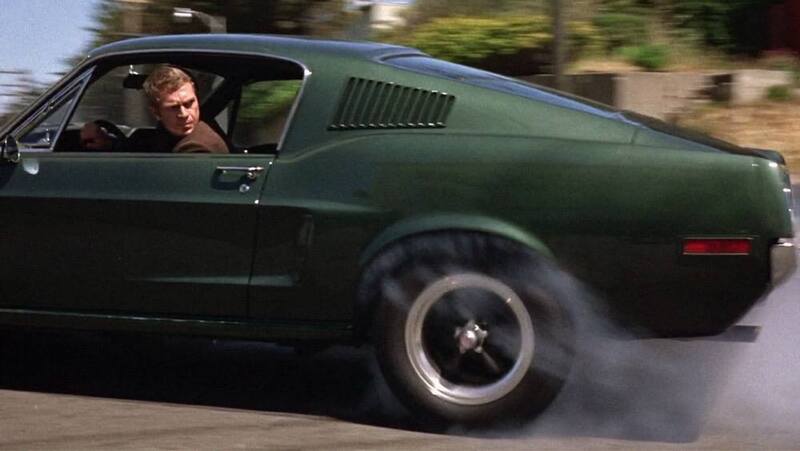
RAVING REVIEW: Imagine spending nearly two hours following a detective around San Francisco and coming away with generations of moviegoers wanting the car he drove. The green Ford Mustang has become so synonymous with BULLITT that the distinction between the film and its most famous sequence has almost disappeared from popular culture. Peter Yates made a very good crime thriller whose contributions to filmmaking extend well beyond the automotive industry, and Arrow Video's restoration gives the entire production some deserved attention. There's considerably more to Frank Bullitt than his ability to get around town in a hurry.
Steve McQueen plays the San Francisco police lieutenant assigned to protect a witness whose testimony could expose organized crime. Walter Chalmers (Robert Vaughn) has a considerable personal investment in the man's appearance before a Senate committee, and the assignment becomes a serious problem for everyone involved when the protection detail is compromised. Bullitt's investigation takes him in directions that don't necessarily serve Chalmers' interests. The political ambitions behind the original assignment become an additional source of trouble for the detective, who has to contend with someone eager to dictate how the investigation proceeds.
McQueen's approach to the character has an appeal that extends beyond his reputation as one of Hollywood's coolest leading men. Frank Bullitt doesn't seem particularly concerned with whether anyone likes him, and the actor conveys his character's impatience without raising his voice. It seems entirely appropriate that a man with so much responsibility wears clothes that look as though he could leave work and head straight to dinner. The turtleneck and sport coat have become iconic in their own right, giving the detective a recognizable appearance without resorting to the visual shorthand of a uniform. McQueen's celebrity and the character's unassuming manner make for an interesting combination.
Robert Vaughn has a different job entirely. Chalmers' authority depends on other people acknowledging it, which makes his encounters with Bullitt particularly revealing. Vaughn gives the politician the outward respectability that allows him to apply pressure without behaving like a conventional movie villain. His concern with the investigation is inseparable from what its outcome means for his career. The prospect of a public embarrassment gives him an incentive to interfere with people who have a much more immediate concern for the consequences of the crime. The conflict between the two men helps make the detective's independence understandable without requiring lengthy explanations of his personal philosophy.
The screenplay by Alan R. Trustman and Harry Kleiner originated with Robert L. Fish's novel MUTE WITNESS, which featured a New York detective named Clancy. Relocating the story to San Francisco and giving its protagonist a new identity gave the adaptation a character of its own. The location change was particularly consequential because of how much of the investigation takes place in recognizable public spaces. The streets are full of people going about their lives, and the institutions Bullitt visits have responsibilities that extend beyond his case. The city belongs to people other than the leading man, an important distinction in a production built around such a recognizable star.
The hospital scenes are especially useful in understanding Yates' approach to the material. The medical staff's responsibilities continue independently of Chalmers' demands, and Georg Stanford Brown's presence as Dr. Willard gives that part of the story its own professional perspective. A crime thriller can easily move from an act of violence directly into its protagonist's pursuit of the people responsible. Spending time with the people dealing with the physical consequences of that violence expands the scope of the investigation. The possibility that the witness may be unable to provide information also makes the detective dependent on evidence he has to acquire himself.
Jacqueline Bisset's Cathy introduces a concern that has very different implications for Bullitt's life. As someone outside the police department, she has no professional obligation to accept the things Frank encounters as a routine part of his day. Their relationship gives the screenplay room to address what prolonged exposure to violence can do to someone without making a diagnosis of its protagonist. Cathy's ability to question that apparent detachment is important because the same qualities that make Bullitt effective at work can become a problem away from it. Bisset has considerably less screen time than McQueen, though her character has a purpose that can't be fulfilled by any of his colleagues.
Yates came to BULLITT after directing ROBBERY in Britain, a film whose pursuit sequence helped attract McQueen's attention. This was his first American feature, and his collaboration with cinematographer William A. Fraker produced a film closely identified with the physical layout of San Francisco. There are practical advantages to working in a city where the elevation can change dramatically within a few blocks. A camera looking down a street can reveal a great deal about the surrounding area. The same geography becomes a source of uncertainty when a vehicle disappears over the top of a hill. It's an environment that gives the director possibilities a conventional studio street couldn't offer.
The famous pursuit between the Mustang and the Dodge Charger also deserves recognition as the work of people whose names aren't necessarily familiar to everyone who loves the sequence. McQueen participated in the driving, with stunt professionals including Bud Ekins contributing to the Mustang footage and Bill Hickman driving the Charger. The cars have distinct appearances that make them recognizable from different angles, and their physical movement communicates changes in speed without requiring dialogue. Yates and Fraker can place the audience inside a vehicle and then move outside to establish what the driver is facing. Each perspective provides information that the other can't.
Frank P. Keller won the Academy Award for Film Editing for BULLITT, an achievement worth considering in the context of the film as a whole. The chase has some amusing continuity errors, including the recurring appearance of a green Volkswagen Beetle. Those inconsistencies haven't prevented the sequence from communicating a convincing sense of pursuit. Editing an action scene involves deciding how long the audience needs to remain with a particular image before the next one becomes useful. Keller lets the cars' movements register on screen, making the shift from one camera position to another part of the experience of traveling with the vehicles. The physical action supplies plenty of material for the editor to work with.
Lalo Schifrin's musical contribution has an identity separate from the engines that dominate the pursuit. His jazz-influenced score belongs to the urban crime story Yates is telling, and letting the sound of the vehicles take over during the high-speed action gives the music a well-defined role elsewhere. Removing the score during that stretch allows individual changes in engine noise to become meaningful. There's an interesting relationship between the restraint in McQueen's performance and the confidence of Schifrin's compositions. The music can express a sense of movement during periods when the detective is quietly going about his business.
Arrow Films' restoration was sourced from the original 35mm camera negative, and the Ultra HD edition presents the film in 2160p with Dolby Vision and HDR10 compatibility. The inclusion of the restored original mono soundtrack is particularly welcome for a production in which sound plays such an important part. Arrow also provides a lossless stereo surround option, giving collectors a choice between audio presentations, along with English subtitles for deaf and hard-of-hearing viewers. BULLITT entered the National Film Registry in 2007, and its preservation has value beyond the continued popularity of its leading man. The location photography documents a version of San Francisco that's gradually disappeared over the intervening decades.
The supplements have been assembled with some attention to the individual filmmaking disciplines that contributed to BULLITT. Composer and historian Neil Brand examines Schifrin's music in THE SOUND OF COOL, and the inclusion of the feature-length documentary THE CUTTING EDGE: THE MAGIC OF MOVIE EDITING is especially appropriate given Keller's Oscar. Director Peter Yates is represented by an archival commentary and a recording of his 1996 BFI interview. Film critics Jason Bailey and Matt Zoller Seitz contribute a newly recorded commentary, providing a contemporary critical perspective alongside the director's account. There's also a vintage featurette devoted to McQueen's pursuit of authenticity during production.
The limited edition includes a reversible cover with original artwork and a new design by Ben Turner, along with a booklet featuring essays by Alexandra Heller-Nicholas and Priscilla Page. The theatrical trailer and image gallery round out the package. Having written material alongside recorded discussions is particularly useful for a film with decades of cultural history behind it. The original promotional imagery also provides an interesting point of comparison with the reputation the movie has acquired since its theatrical run.
BULLITT is a very good movie with a remarkable place in the history of American crime films. Its reputation is so closely associated with one piece of filmmaking that the opportunity to appreciate the rest of Yates' work can sometimes get lost. Arrow's edition gives the movie a home worthy of the attention it has received over the years. It's also a chance to appreciate Steve McQueen in a role that required him to spend far more time as a detective than as a driver, regardless of what the history books and Mustang enthusiasts might have you believe.
Bonus Materials:
4K ULTRA HD LIMITED EDITION CONTENTS
Brand new 4K restoration from the original 35mm camera negative by Arrow Films
4K (2160p) Ultra HD Blu-ray presentation with Dolby Vision (HDR10 compatible)
Original restored lossless mono audio, plus lossless stereo surround audio
Optional English subtitles for the deaf and hard of hearing
Archive audio commentary by director Peter Yates
Brand new audio commentary by film critics Jason Bailey & Matt Zoller Seitz
The Sound of Cool, a brand new appreciation of Lalo Schifrin’s iconic score by composer and historian Neil Brand
Bullitt: Steve McQueen’s Commitment to Reality, a vintage behind-the-scenes featurette
Peter Yates at the BFI, an on-stage interview with the director from 1996
The Cutting Edge: The Magic of Movie Editing, an archive feature-length documentary
Theatrical trailer
Image gallery
Reversible sleeve featuring original and newly commissioned artwork by Ben Turner
Collectors’ booklet containing new writing by film critics Alexandra Heller-Nicholas and Priscilla Page
Please visit https://linktr.ee/overlyhonestr for more reviews.
Follow me on Letterboxd, Instagram, Twitter, and YouTube. You can also find my social media accounts on most platforms by searching for 'Overly Honest Reviews'.
I’m always happy to hear from my readers; please don't hesitate to say hello or send me any movie questions.
[photo courtesy of ARROW VIDEO, MVD ENTERTAINMENT]
DISCLAIMER:
At Overly Honest Movie Reviews, we value honesty and transparency. Occasionally, we receive complimentary items for review, including DVDs, Blu-rays, CDs, Vinyl Records, Books, and more. We assure you these arrangements do not influence our reviews, as we are committed to unbiased, sincere evaluations. We aim to help you make informed entertainment choices regardless of our relationship with distributors or producers.
Amazon Affiliate Links:
This site also contains Amazon affiliate links. If you purchase through these links, we may receive a commission. This affiliate arrangement does not affect our commitment to honest reviews and helps support our site. We appreciate your trust and support as you navigate these links.


Happy
0 %

Sad
0 %

Excited
0 %

Sleepy
0 %

Angry
0 %

Surprise
0 %
 0
 0

Average Rating