A Chamber Drama Haunted by Mortality
Read Time:6 Minute, 9 Second
MOVIE REVIEW
Conversation Piece (Gruppo di famiglia in un interno) (Blu-ray)
 –
– 

Genre: Drama, World Cinema
Year Released: 1974, 2026 Kino Lorber Blu-ray
Runtime: 2h 2m
Director(s): Luchino Visconti
Writer(s): Enrico Medioli, Suso Cecchi D’Amico, Luchino Visconti
Cast: Burt Lancaster, Helmut Berger, Silvana Mangano, Claudia Marsani, Stefano Patrizi
Where to Watch: available now, order your copy here: www.kinolorber.com or www.amazon.com
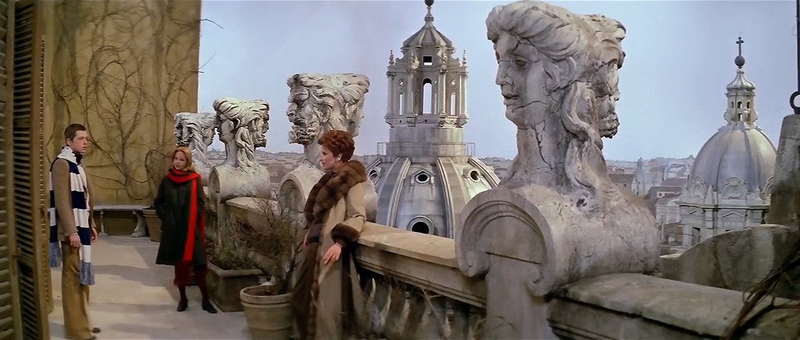
RAVING REVIEW: The first thing CONVERSATION PIECE does is trap you inside a room full of objects, paintings, books, antiques, sculptures, furniture, and memories. Director Luchino Visconti doesn’t introduce Burt Lancaster’s professor through dialogue or exposition so much as accumulation. Every inch of the apartment feels curated to protect him from contact with the outside world. It’s less a home than an environment designed to preserve a man slowly disappearing into intellectual isolation. The film understands immediately that loneliness can become its own form of luxury. That’s what makes the intrusion so effective when it arrives.
Silvana Mangano storms into the film with the energy of someone who doesn’t believe silence should exist in any room she enters. Her portrayal of Marchesa Bianca Brumonti isn’t merely disruptive because she’s loud or vulgar. She represents a kind of modern social chaos that the professor has spent years carefully insulating himself against. Visconti stages their early interactions almost like a form of territorial warfare. The apartment itself becomes a contested space, every new decoration, every burst of noise, every rearranged room functioning like an attack on the professor’s carefully maintained emotional paralysis. What’s remarkable is how quickly the film reveals that he doesn’t necessarily want to resist it.
That contradiction sits at the center of CONVERSATION PIECE. The professor outwardly rejects the younger group invading his life, but Visconti makes it painfully obvious that their presence also awakens something dormant inside him. Not youth exactly, and not necessarily sexuality in the conventional sense either. It’s closer to emotional risk. After years of intellectual detachment, these people force him back into unpredictability, jealousy, humiliation, attraction, and longing. They exhaust him while simultaneously making him feel alive again.
Burt Lancaster gives one of the most internal performances of his career here. So much of the role depends on reaction rather than declaration. He spends large stretches of the film simply observing, processing, and absorbing the emotional damage happening around him. Lancaster avoids turning the professor into either a tragic martyr or a symbol of old-world superiority. There’s arrogance in him, and repression, and fear. You can sense how deeply uncomfortable he is with emotional vulnerability, even as he becomes increasingly dependent on the chaos surrounding him.
Helmut Berger’s Konrad operates almost like a living provocation. Beautiful, manipulative, politically volatile, sexually fluid, emotionally unstable, he drifts through the film with the energy of someone perpetually trying to destroy himself before anyone else gets the chance. Berger’s performance won’t work for everyone, and honestly, I can definitely see some criticism aimed at it. There are moments when the character’s emotional shifts feel more frustrating than mysterious. But Visconti seems aware of that imbalance. Konrad isn’t meant to feel stable or fully knowable. He’s a projection surface for everyone around him.
The relationship between Konrad and the professor becomes, without question, the film’s most fascinating aspect because Visconti refuses to pin it down. There’s desire there, certainly, but also longing, envy, generational resentment, fascination, and self-recognition. The professor sees someone damaged beneath Konrad’s arrogance, while Konrad seems drawn toward the emotional safety and intelligence the professor represents. Their dynamic constantly shifts between tenderness and manipulation, never settling into anything comfortable.
Meanwhile, Mangano is phenomenal throughout. Bianca could’ve easily become cartoonishly excessive in another actor’s hands, but Mangano gives her acuity underneath the performative glamour. She understands exactly how power functions socially and sexually within her class environment. The film never excuses her selfishness, but it also refuses to reduce her to decadence alone. She’s deeply aware of the systems she benefits from, even as those systems hollow out everyone connected to them.
Visconti folds all of this into a broader meditation on class and political collapse without turning the film into a lecture. The version of Italy hanging over CONVERSATION PIECE feels exhausted, unstable, and fragmented. References to fascism, radical politics, social unrest, and bourgeois decay drift through conversations almost casually, but they shape the atmosphere constantly. That gives the film an uneasy pulse beneath all the elegance. Even during quieter scenes, there’s a sense that emotional and political violence are never far away. Visconti made the film after suffering a stroke, and mortality hangs over nearly every frame. You can feel a filmmaker exploring his own isolation, his own aging, his own complicated relationship with beauty and desire.
CONVERSATION PIECE isn’t built around plot escalation. It’s built around emotional erosion. The apartment gradually transforms from sanctuary into mausoleum, then from mausoleum into something almost resembling family, before finally collapsing into grief and emptiness once more. Visconti’s visual control remains extraordinary. Every room feels carefully sculpted without becoming artificial. The warm lighting, the cluttered interiors, the oppressive textures of wealth and history pressing in from every direction, all create an environment where emotional suffocation becomes physical. Few filmmakers understood how architecture could reflect psychological states the way Visconti did.
What makes the film linger is how unsentimental it ultimately becomes about both isolation and companionship. The people invading the professor’s life are selfish, destructive, immature, and emotionally reckless. They also save him, at least temporarily, from disappearing entirely into his own curated detachment. CONVERSATION PIECE recognizes that human connection often arrives in imperfect, damaging forms. Sometimes the people who break your peace are also the ones reminding you that you’re still alive.
Product Extras:
Audio Commentary by Film Critic Bilge Ebiri
Archival Interview with Film Critic and Screenwriter Alessandro Bencivenni
Alternate Italian Audio Track
Theatrical Trailer
Please visit https://linktr.ee/overlyhonestr for more reviews.
You can follow me on Letterboxd, Instagram, Twitter, and YouTube. My social media accounts can also be found on most platforms by searching for 'Overly Honest Reviews'.
I’m always happy to hear from my readers; please don't hesitate to say hello or send me any questions about movies.
[photo courtesy of RARO CINEMA ART VISIONS, KINO LORBER]
DISCLAIMER:
At Overly Honest Movie Reviews, we value honesty and transparency. Occasionally, we receive complimentary items for review, including DVDs, Blu-rays, CDs, Vinyl Records, Books, and more. We assure you that these arrangements do not influence our reviews, as we are committed to providing unbiased and sincere evaluations. We aim to help you make informed entertainment choices regardless of our relationship with distributors or producers.
Amazon Affiliate Links:
Additionally, this site contains Amazon affiliate links. If you purchase through these links, we may receive a commission. This affiliate arrangement does not affect our commitment to honest reviews and helps support our site. We appreciate your trust and support as you navigate these links.


Happy
0 %

Sad
0 %

Excited
0 %

Sleepy
0 %

Angry
0 %

Surprise
0 %
 0
0
 0
0

Average Rating