A Nightmare Built Room by Room
Read Time:7 Minute, 20 Second
MOVIE REVIEWS
Backrooms
 –
– 


Genre: Horror, Science Fiction, Mystery
Year Released: 2026
Runtime: 1h 51m
Director: Kane Parsons
Writer: Will Soodik
Cast: Chiwetel Ejiofor, Renate Reinsve, Mark Duplass, Finn Bennett, Lukita Maxwell
Where to Watch: available now; stream here: www.amazon.com
RAVING REVIEW: There’s something fundamentally uncomfortable about a room that looks completely ordinary but feels like somewhere you were never supposed to find. BACKROOMS understands that feeling better than most horror movies attempting to turn internet mythology into something feature-length, and director Kane Parsons wisely spends much of the movie trusting the spaces themselves to do the frightening. Yellow walls, fluorescent lights, endless hallways, and rooms that seem designed for a purpose nobody can remember become far more threatening than another monster jumping out of the darkness ever could.
That’s especially impressive, given how familiar the Backrooms concept has become online. What began as an unsettling image and eventually grew into an entire mythology has been copied, expanded, turned into games, filled with creatures, and explained from seemingly every possible direction. Parsons, who previously built his own hugely successful series around the idea, could have easily responded by simply making everything bigger. Instead, BACKROOMS works best when it strips the mythology back down to its simplest question: what happens when you walk through the wrong door?
Clark, played by Chiwetel Ejiofor, finds that answer after discovering something impossible beneath the furniture showroom he owns. His life outside that doorway isn't exactly stable either, and his relationship with therapist Mary, played by Renate Reinsve, gives the movie a human story to run alongside everything happening in that strange space. BACKROOMS isn't interested in becoming a straightforward exploration movie where characters walk from level to level discovering increasingly elaborate dangers. Parsons wants these rooms to mean something without ever completely explaining what that something is.
That choice is both one of the movie's strengths and eventually one of its biggest frustrations. For a long stretch, not knowing is exactly what makes BACKROOMS work. A doorway shouldn't be there, a hallway shouldn't continue as far as it does, and familiar spaces shouldn't rearrange themselves according to rules nobody understands. The movie lets those ideas sit long enough to become uncomfortable instead of immediately rushing toward an explanation.
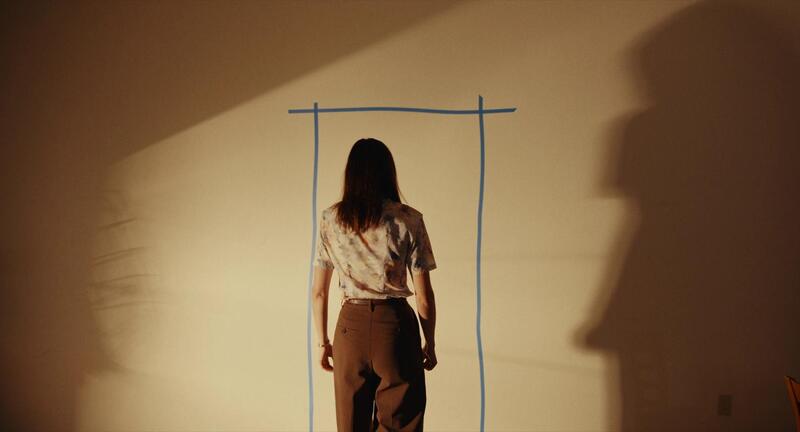
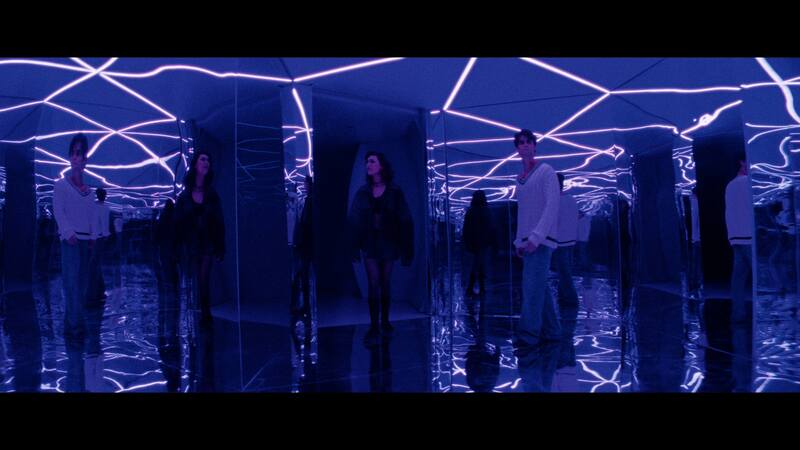
Jeremy Cox's cinematography and Danny Vermette's production design deserve much of the credit for making that discomfort stick. The Backrooms have the ugly familiarity of office buildings, abandoned retail spaces, basements, and waiting areas that seem to exist everywhere while belonging nowhere. They're plain enough to recognize and strange enough that being trapped inside them feels immediately wrong. The sickly lighting does as much work as anything lurking around the next corner, while wide shots frequently make the characters seem ridiculously small compared with whatever they've entered.
Parsons also doesn't forget what made his original work so effective. BACKROOMS leans into the rougher visual language of found footage and low-resolution recordings in moments, without turning the entire movie into an imitation of the YouTube series. Those shifts in presentation feel like pieces of the same world rather than a filmmaker reminding everyone where the idea originated. That restraint matters because the movie already has more than enough visual identity without constantly pointing toward its internet roots.
Sound may actually be even more important. BACKROOMS fills its empty spaces with humming lights, distant noises, and mechanical sounds that make silence feel almost impossible. You're constantly listening for something without knowing exactly what, and that uncertainty becomes part of the experience. Edo Van Breemen and Parsons' score adds another layer without constantly announcing when we're supposed to be frightened.
One of the smartest decisions BACKROOMS makes is refusing to overcomplicate the physical space, even though the movie has a larger budget than Parsons' earlier work. The scale expands at times, but the most effective images remain painfully ordinary: stained walls, cheap carpeting, fluorescent panels, and corridors that seem built by someone who understood function but forgot about people. That plainness is what makes the environment so believable. Nothing looks designed to be scary, which makes it far more unsettling when the geography stops making sense. Even when the visual effects become more noticeable, they usually support the feeling that reality is bending rather than replacing the practical spaces underneath it. The movie understands that the Backrooms are frightening because they resemble places we've all seen before, only emptied of the one thing that normally makes them feel safe: other people.
Ejiofor gives the movie something equally important: a character who feels exhausted before anything supernatural even begins. Clark isn't simply the guy who finds the doorway. Anger and disappointment are hanging over him, and Ejiofor never lets those emotions turn into an easy explanation for everything that follows. Renate Reinsve takes a quieter approach with Mary, giving the movie another entry point into its ideas about memory, behavior, and the ways people repeatedly return to the same emotional places.
The problem is that BACKROOMS eventually becomes more interested in those ideas than in bringing them together. Mystery doesn't require explanation, and horror certainly doesn't need every question answered, but there is a difference between leaving something unresolved and leaving pieces feeling unfinished. The movie occasionally crosses that line. As Clark and Mary become more connected to what is happening, the symbolism begins demanding attention that the actual story hasn't always earned.
That becomes especially noticeable later in the film. The early sections create such an effective sense of discovery that almost anything resembling an answer would struggle against what we'd imagined ourselves. However, BACKROOMS complicates matters by reaching for emotional and existential meaning while still refusing to define some of its narrative pieces. It's fascinating in the moment and considerably harder to put together afterward.
There are also stretches where the movie's commitment to disorientation works against it. Being confused inside the Backrooms is part of the point, but being uncertain about what the characters are pursuing or why a particular development matters isn't always the same thing. A few additional anchors would've helped without destroying the mystery, particularly once the film moves beyond the basic terror of discovering the space.
None of that takes away from how impressive Parsons' feature debut is. He approaches BACKROOMS with confidence that goes well beyond recreating something that already worked on YouTube, and some images stick around because they're so simple. An empty doorway. Another hallway. A room that looks almost identical to the one you just left. Horror movies spend enormous amounts of money designing creatures, yet BACKROOMS repeatedly proves that beige carpet and fluorescent lighting can do plenty on their own.
That's ultimately why the movie survives the places where its story becomes less certain. BACKROOMS doesn't fully solve the problem of turning an intentionally unexplained internet nightmare into a traditional feature, and I'm not convinced it should have. Parsons preserves enough of the original mystery that this still feels like entering somewhere forbidden rather than visiting another horror franchise attraction.
I wanted the story surrounding those rooms to hit as hard as the rooms themselves, and it never quite gets there. What Parsons has created visually and sonically, however, is difficult to shake, and BACKROOMS succeeds at something considerably harder than simply reproducing a popular idea: for nearly two hours, those yellow walls feel strange again.
Please visit https://linktr.ee/overlyhonestr for more reviews.
You can follow me on Letterboxd, Instagram, Twitter, and YouTube. You can also find my social media accounts on most platforms by searching for 'Overly Honest Reviews'.
I’m always happy to hear from my readers; please don't hesitate to say hello or send me any questions about movies.
[photo courtesy of A24]
DISCLAIMER:
At Overly Honest Movie Reviews, we value honesty and transparency. Occasionally, we receive complimentary items for review, including DVDs, Blu-rays, CDs, Vinyl Records, Books, and more. We assure you that these arrangements do not influence our reviews, as we are committed to unbiased, sincere evaluations. We aim to help you make informed entertainment choices regardless of our relationship with distributors or producers.
Amazon Affiliate Links:
This site also contains Amazon affiliate links. If you purchase through these links, we may receive a commission. This affiliate arrangement does not affect our commitment to honest reviews and helps support our site. We appreciate your trust and support as you navigate these links.


Happy
0 %

Sad
0 %

Excited
0 %

Sleepy
0 %

Angry
0 %

Surprise
0 %
 0
0
 0
0

Average Rating