Chaos Meets Consequences
Read Time:5 Minute, 57 Second
MOVIE REVIEWS
All Is Fine in '89
 –
– 


Genre: Coming-of-Age, Drama
Year Released: 2024, 2026
Runtime: 1h 40m
Director(s): Matthew Lupis
Writer(s): Matthew Lupis
Cast: Adam Lupis, Shelby Handley, Dani Romero, Tom Keat, Damien Gulde, Dylan Hawco
Where to Watch: streaming on digital March 3, 2026
RAVING REVIEW: ALL IS FINE IN ’89 opens with a deceivingly comforting idea, one last high school party before the decade closes, before adulthood officially takes hold, before the outside world demands more than swagger and flirting in hallways. It shines with the aesthetics of late ’80s coming-of-age stories, but it doesn’t stay there. This isn’t a movie content to bask in nostalgia or the reassuring familiarity of its genre's classics. It’s a film about transition, about the exact moment when optimism starts to feel dishonest and pretending everything is fine becomes a form of avoidance.
Set on November 9, 1989, the day the Berlin Wall fell, the film draws an intentional parallel between global change and personal turmoil. While the world outside Romano High is rewriting history, the students and teachers inside its walls are grappling with their own messier revolutions. That juxtaposition is one of the film’s best ideas, not because it’s heavy-handed, but because it’s grounded. The characters aren’t reacting to world events in grand lectures. They’re too busy dealing with crushes, shame, repression, fear, and longing. The irony is that history is changing whether they’re ready for it or not.
Writer/director Matthew Lupis approaches the material with affection but not indulgence. He understands the appeal of familiarity, the boy-next-door romantic, the jock masking insecurity with cruelty, the girl carrying secrets too heavy for her age, the teacher who means well but crosses lines anyway. These figures are instantly recognizable, but the film’s strength lies in its refusal to let them remain mere caricatures. The script pushes each into situations where their self-image isn’t just one-dimensional.
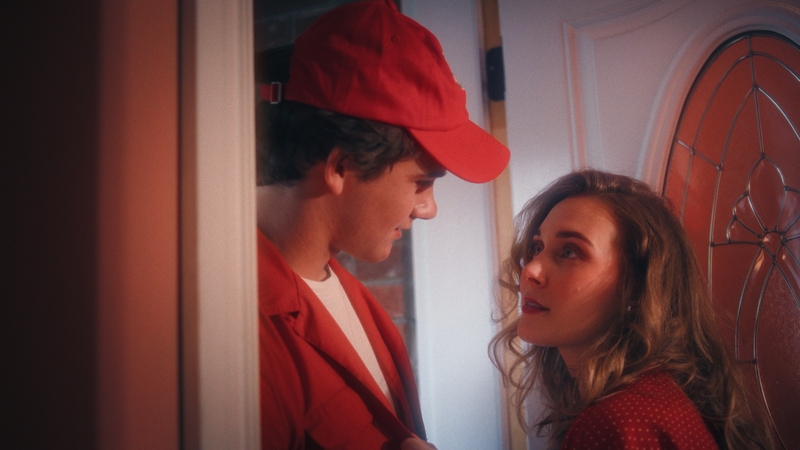
At the center of the film is Mark, played by Adam Lupis, a character defined by principled intentions and emotional innocence. Mark wants connection, approval, and a future that feels secure, but he doesn’t yet understand how fragile those desires are. Lupis plays him sincerely rather than gracefully, which is an important distinction. Mark isn’t cool, and the film doesn’t try to guide him to that ending.
Shelby Handley’s Mrs. Applewood adds complexity by embodying the danger of unresolved longing in adulthood. As the beloved teacher who becomes a surrogate parent to some students, she initially feels like a stabilizing presence. The film complicates that perception by allowing her desires to surface in ways that feel inappropriate and deeply human. This isn’t played for shock value. Instead, it underscores how authority and vulnerability can coexist in troubling ways, especially when adulthood itself feels unfulfilled.
Dani Romero’s Linda is where the film finds much of its emotional weight. Her storyline is rooted in fear, secrecy, and isolation, and Romero plays her with restraint rather than melodrama. Linda’s predicament isn’t treated as just some narrative twist or a morality lesson. It’s treated as an ongoing burden, one that reflects on every interaction she has. The film resists the urge to frame her as either a cautionary tale or a symbol. She’s simply someone whose options have narrowed far too quickly.
The male antagonism in the film, particularly through Tom Keat’s Cole, is handled with a degree of care that avoids simplification. Cole’s cruelty isn’t excused, but it’s contextualized. His repression and aggression are shown as learned behaviors, reinforced by environment and expectation rather than instinctive malice. That doesn’t make him a sympathetic character, but it does make him real. The film understands that masculinity, especially in this era, often comes with rules that leave very little room for vulnerability.
Damien Gulde’s Mr. Parker offers one of the film’s more devastating performances. As a teacher who never quite belonged, Parker’s desperation for inclusion becomes increasingly uncomfortable to watch. He’s not a villain, but he’s a warning. His need to be seen, to matter finally, pushes him into territory that feels inappropriate and tragic rather than malicious. The film allows that discomfort to linger instead of resolving it, which feels like a genuine conclusion to his arc.
ALL IS FINE IN ’89 allows humor, awkwardness, and warmth to coexist with darker undercurrents without flattening any of them. The party sequences are energetic and messy, filled with the kinds of interactions that feel authentic to that age and era, half-performative, half-desperation. But the film never lets the audience forget that something else is unfolding beneath the surface. The laughter doesn’t erase the consequences. It only delays them.
Adolescence itself is unfinished, uneven, and unresolved. ALL IS FINE IN ’89 doesn’t pretend otherwise. It doesn’t end with exposition, but with recognition. The characters leave the night changed, though not necessarily wiser or better. The world continues moving forward, indifferent to whether they feel prepared.
ALL IS FINE IN ’89 nails the experience because it remembers youth is confusing, often painful, and deeply formative, not because everything was simpler, but because everything was unsettled. It captures that moment when the illusion of safety cracks, when the phrase “everything will be fine” starts to sound like a lie people tell themselves to get through the night. It understands that growing up isn’t about finding answers; it’s about realizing how many questions you’ve been avoiding. That realization, silently devastating and deeply relatable, is what gives the film its staying power.
Please visit https://linktr.ee/overlyhonestr for more reviews.
You can follow me on Letterboxd, Instagram, Twitter, and YouTube. My social media accounts can also be found on most platforms by searching for 'Overly Honest Reviews'.
I’m always happy to hear from my readers; please don't hesitate to say hello or send me any questions about movies.
[photo courtesy of WESTONA]
DISCLAIMER:
At Overly Honest Movie Reviews, we value honesty and transparency. Occasionally, we receive complimentary items for review, including DVDs, Blu-rays, CDs, Vinyl Records, Books, and more. We assure you that these arrangements do not influence our reviews, as we are committed to providing unbiased and sincere evaluations. We aim to help you make informed entertainment choices regardless of our relationship with distributors or producers.
Amazon Affiliate Links:
Additionally, this site contains Amazon affiliate links. If you purchase through these links, we may receive a commission. This affiliate arrangement does not affect our commitment to honest reviews and helps support our site. We appreciate your trust and support as you navigate these links.


Happy
0 %

Sad
0 %

Excited
0 %

Sleepy
0 %

Angry
0 %

Surprise
0 %
 0
0
 0
0

Average Rating