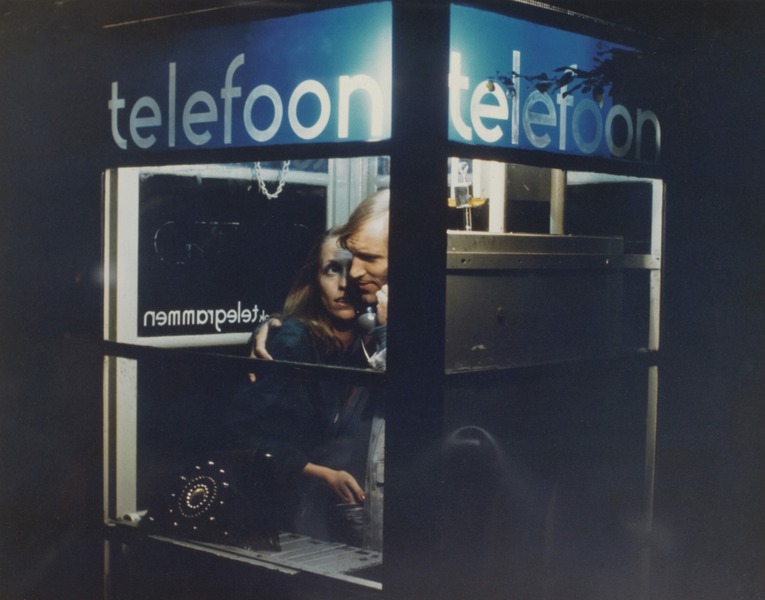
Family Values Meet the Slaughterhouse
Read Time:6 Minute, 34 Second
MOVIE REVIEW
VD
 –
– 


Genre: Satire, Drama, Arthouse
Year Released: 1972, 2026 Cult Epics Blu-ray
Runtime: 1h 47m
Director: Wim Verstappen
Writers: Wim Verstappen, Charles Gormley, Jan Verstappen
Cast: Kees Brusse, Andrea Domburg, Guus Oster, Ank van der Moer, Rudolf Lucieer, Sonja Barend, Hugo Metsers, Maartje Bijl, Marja Kok, Helmert Woudenberg, Kitty Courbois, Piet Römer
Where to Watch: order your copy here: www.cultepics.com, www.mvdshop.com, or www.amazon.com
RAVING REVIEW: Wim Verstappen’s 1972 Dutch satire arrives in its restored Cult Epics edition with provocation, made in the aftermath of BLUE MOVIE and carrying many of the same era’s obsessions with sex, commerce, liberation, and rot. The result isn’t an easy rediscovery. It’s blunt, unpleasant, dry, funny, occasionally brilliant, and often so committed to making its audience squirm that entertainment becomes almost incidental to the attack.
Kees Brusse plays Cornelis van Doorn, the aging patriarch of the VD empire, a business that turns flesh into profit in more ways than one. His company produces meat and contraceptives, which tells you nearly everything about the film’s worldview. Bodies are inventory. Desire is a market. Family is less a sacred structure than an ownership model. Around Cornelis, the Van Doorn clan carries itself with the entitlement of people who have spent generations confusing money with morality. The question of succession becomes less about who should lead the family business than who has inherited its most poisonous instincts.
VD is easiest to describe as a dark satire, though that phrase doesn’t quite prepare viewers for how deadpan the movie can be. Verstappen doesn’t chase laughter in an obvious way. He lets the ugliness sit there, presented at enough of a distance that the viewer has to decide whether to laugh, recoil, or both. Much of the film’s humor comes from the calm with which everyone discusses things, as though exploitation, incestuous entanglements, abortion, manslaughter, infidelity, and unethical business practices are merely inconveniences in a corporate transition plan. It’s a satire of moral collapse told by people who no longer recognize collapse when they’re standing in it.
That straight-faced approach is both the film’s strength and barrier. VD can be wickedly effective when the family’s depravity mirrors the business. The slaughterhouse isn’t subtle, and it’s not meant to be. Verstappen keeps tying human behavior back to meat, reproduction, consumption, and waste, making the Van Doorns look less like a family and more like a processing system. The film’s harshest ideal is that modern respectability doesn’t eliminate brutality; it gives it paperwork, boardrooms, inheritance plans, and respectable clothes.
The animal slaughter is the element most likely to stop modern viewers cold. It’s graphic, sustained enough to matter, and impossible to treat as background noise. VD uses those images as a moral counterpoint, cutting through the family’s casual decadence with real horror. The tactic is clear, and it gives the film an anger that still comes through. It also creates a viewing experience that many people will understandably reject. The footage isn’t a detachable moment. It’s built into the film, which makes it more defensible as an artistic strategy and harder to recommend casually.
Verstappen’s direction has a chilly, observational quality that suits the material. He doesn’t glamorize the Van Doorns, and he doesn’t make their corruption seductive in the way some films about rotten elites do. The restored image helps emphasize how controlled the compositions are, especially in scenes where rooms seem to swallow characters into arrangements of money, manners, and bad faith. The framing gives the family drama a boxed-in feeling, which works well for a story about people trapped inside inherited appetites and calling it tradition.
The performances lean into the film’s design. Brusse makes Cornelis less a snarling monster than a man so accustomed to power that charm and cruelty have fused into one habit. That choice keeps him from becoming a joke, even when the surrounding material pushes toward exaggeration. Andrea Domburg, Guus Oster, Ank van der Moer, Rudolf Lucieer, Sonja Barend, Hugo Metsers, and the rest of the ensemble form a family structure in which affection feels transactional and desire often seems inseparable from control. The cast’s restraint keeps the satire dry instead of frantic.
The film is more interesting as a cultural object than as a consistently gripping drama. Coming after BLUE MOVIE, VD feels like a deliberate refusal to give audiences the same kind of liberation fantasy. Sex here isn’t freedom. It’s leverage, inheritance, compulsion, boredom, and commerce. Verstappen seems less interested in scandal for its own sake than in asking what happens after a society congratulates itself for loosening up while leaving greed and patriarchy untouched.
That makes VD more than a relic, though it remains very much a product of its era. Some of its scenes have aged into blunt-force symbolism, and its treatment of taboo subjects can feel more intent on abrasion than insight. There are moments when the human beings disappear behind the thesis, leaving the viewer with a foul, intelligent diagram of corruption rather than a drama that keeps evolving from scene to scene.
The Cult Epics restoration gives VD a better chance of being seen on its own terms. The film benefits from historical distance, not because time has softened it, but because its obsessions now read as part of a larger Dutch cinema movement testing censorship, taste, sex, politics, and public hypocrisy. Viewers coming to it for scandal may be surprised by how sour and anti-sensual it is. Viewers coming for satire may find it both sharper in concept and more punishing in execution than expected.
VD is a difficult, jagged, and worthwhile rediscovery. It’s too dry to work as simple exploitation, too abrasive to work as a conventional family drama, and too methodical to deliver cult-movie thrills. That oddness is also what keeps it alive. Verstappen made a film that treats capitalism, sex, lineage, and meat as parts of the same diseased machine, and even when the film drags, the nastiness of that vision sticks. VD doesn’t always make for a satisfying watch, but it does make for a hard one to shake.
Bonus Materials:
New Restored 2K Transfer
Audio Commentary by film historian Peter Verstraten
Festival of Love (1969) – a short film by Wim Verstappen (30 min)
Photo Gallery
Scorpio Films Trailers
New artwork design by Juan Estaban R.
Reversible sleeve with original Dutch poster art
Slipcase
Please visit https://linktr.ee/overlyhonestr for more reviews.
You can follow me on Letterboxd, Instagram, Twitter, and YouTube. My social media accounts can also be found on most platforms by searching for 'Overly Honest Reviews'.
I’m always happy to hear from my readers; please don't hesitate to say hello or send me any questions about movies.
[photo courtesy of CULT EPICS]
DISCLAIMER:
At Overly Honest Movie Reviews, we value honesty and transparency. Occasionally, we receive complimentary items for review, including DVDs, Blu-rays, CDs, Vinyl Records, Books, and more. We assure you that these arrangements do not influence our reviews, as we are committed to providing unbiased and sincere evaluations. We aim to help you make informed entertainment choices regardless of our relationship with distributors or producers.
Amazon Affiliate Links:
Additionally, this site contains Amazon affiliate links. If you purchase through these links, we may receive a commission. This affiliate arrangement does not affect our commitment to honest reviews and helps support our site. We appreciate your trust and support as you navigate these links.


Happy
0 %

Sad
0 %

Excited
0 %

Sleepy
0 %

Angry
0 %

Surprise
0 %
 0
0
 0
0

Average Rating