Dolls Aren’t the Creepiest Thing Here
Read Time:8 Minute, 0 Second
MOVIE REVIEWS
The Dollmaker (Encantador)
 –
– 


Genre: Horror, Thriller
Year Released: 2025, 2026
Runtime: 1h 37m
Director: José María Cicala
Writers: José María Cicala, Griselda Sanchez
Cast: Rodrigo Noya, Alejo García Pintos, Griselda Sanchez, Arturo Puig, Mario Alarcón, Alejandra Baldoni, Guillermo Zapata
Where to Watch: arriving on VOD, digital on August 25, 2026
RAVING REVIEW: THE DOLLMAKER spends much of its first act making the town itself feel off, just something about it that doesn’t seem right. Tomás keeps mostly to himself, the local video store seems frozen in another time, and everyone around him continues with their daily routines even as women begin disappearing. Director/co-writer José María Cicala doesn’t push the community into the kind of panic you might expect, and that response becomes increasingly unsettling. There’s a normalcy to something that clearly isn’t normal, giving the movie an uneasy ambiance before it gives too many answers.
Tomás certainly doesn’t present himself as the obvious protagonist of a horror film. Rodrigo Noya portrays him as socially awkward, eager to please, devoted to his mother, and slightly out of sync with practically everyone he meets. He works at a video store and helps around the local clinic while maintaining a fascination with dolls. Any one of those things would be harmless on their own. Put them together inside a movie about missing women and the alarms begin sounding before Inspector Porter has finished unpacking.
Cicala knows the audience is already suspicious, so the screenplay doesn’t waste much time pretending Tomás is just an unfortunate eccentric who happens to look guilty. The more interesting experience involves determining how much of what surrounds him he can trust. Reality gradually becomes unstable, scenes twist into things that don’t connect to the established tone, and people can appear exaggerated enough to have wandered in from someone else’s nightmare. That instability gives THE DOLLMAKER much of its personality; ultimately, though, it’s part of why the film struggles.
The influences are difficult to overlook. PSYCHO is never far away when a socially stunted man, an overpowering motherly relationship, murder, and unhealthy reactions toward women begin gathering under the same roof. TWIN PEAKS hangs over the small-town-meets-decaying-secrets, while other pieces of horror history eventually become even more obvious. Cicala doesn’t exactly hide his reference points. But he never tries to copy them directly either.
The movie is better when those influences provide a foundation rather than directives. There are stretches where THE DOLLMAKER finds a strange rhythm all its own, especially when Tomás is working through mundane conversations that feel just off enough without immediately revealing why. Cicala can make an ordinary interaction uncomfortable through timing, an unexpected response, or a character holding onto a look a few seconds longer than needed, making it feel like part of the larger story.
Noya won Best Actor at Screamfest for the performance, and it isn’t difficult to understand why. Tomás could have easily become just a collection of tics and creepy smiles, especially with the screenplay surrounding him with so many reasons to distrust him. Noya finds something less predictable. There’s genuine vulnerability mixed into the anxiety, and the moments when Tomás appears almost childlike can make his darker behavior more disturbing rather than less. He’s also capable of becoming threatening without undergoing some dramatic transformation. The discomfort comes from realizing that all these things had been sitting side by side all along. Tomás wants affection, approval, companionship, and a place in the world. None of those desires are unusual. What he’s willing to do with them is another matter.
His relationship with his mother adds another uncomfortable dimension. The film pushes their dependence on one another into increasingly unhealthy territory, using the household to explain parts of Tomás without offering it as an excuse. Cicala and co-writer Griselda Sanchez aren’t especially subtle about the psychological implications, and some of the scenes risk reducing the way he acts to shorthand about domineering mothers and sexually repressed sons. Noya makes Tomás too strange to fit inside a diagnosis the movie can solve for us.
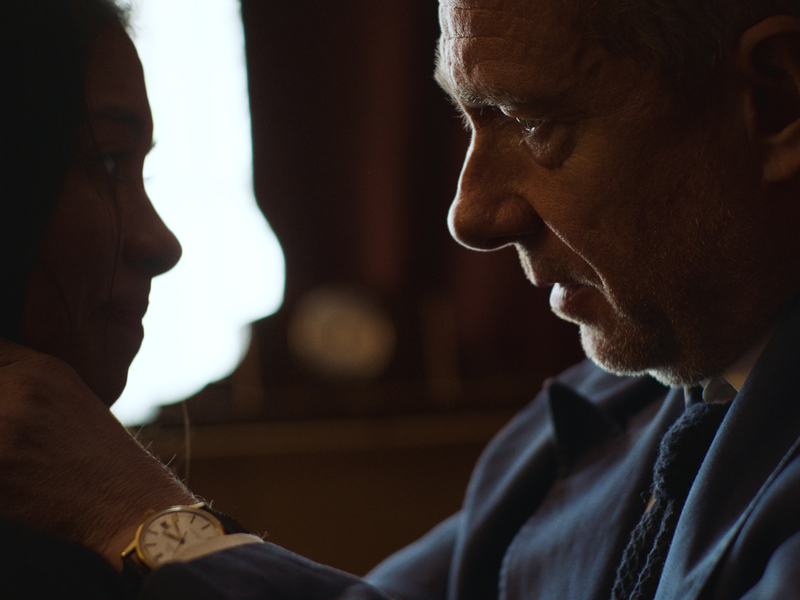
Alejo García Pintos brings a really interesting counterbalance as Porter, the inspector who has come to investigate the disappearances. A mystery needs someone willing to admit that the circumstances are abnormal, and Porter fills that role in a place where concern seems to have gone missing alongside the women. His investigation gives the film a more recognizable structure whenever Tomás’ increasingly unstable world threatens to pull everything apart. Leads are pursued, suspicions shift, and characters provide information, but the investigative mechanics can feel strangely relaxed considering the seriousness of the case. Porter is meant to be the outsider noticing what everyone else has accepted. There are moments when even he seems slower to react than the evidence warrants. It makes me wonder if there’s something more to this aspect of the story.
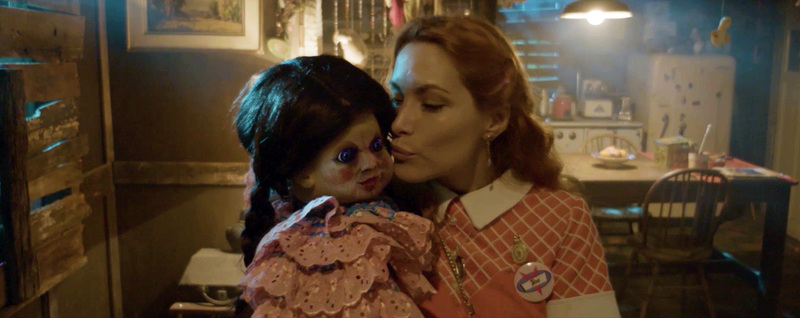
Once Cicala moves into outright horror, restraint gives way quickly. The violence is bloody, physical, and sometimes nasty enough to make the eccentricity feel like camouflage. Bodies stop being abstract missing-person cases and become objects subjected to horrifying treatment. The doll imagery is an obvious extension of that objectification. Dolls can be posed, dressed, collected, and rendered incapable of rejecting their owner. THE DOLLMAKER doesn’t need to explain at length why that appeals to someone unable to maintain a normal life. Its most disturbing images understand the connection without explaining it at all.
Martin Nico’s cinematography underscores the contrast between the town’s inviting feel and the ugliness hidden within it. Bright exteriors and community spaces don’t behave like traditional horror environments, making the darker interiors feel more disconnected from the apparent safety outside. The framing also allows Cicala to spread characters across spaces that sometimes feel emptier than they should. The personality of that becomes more aggressive as Tomás’ reality begins loosening. Not everything is meant to be taken literally, and the film increasingly invites questions about whether certain images belong to objective reality, memory, fantasy, or a damaged state of mind. Cicala has fun refusing to provide clear answers.
Surrealism is most effective when ambiguity opens possibilities rather than covering gaps. THE DOLLMAKER reaches a point where the accumulation of incidents, abrupt shifts, darker imagery, and references can make the uncertainty feel less deliberate than the movie intends. A few developments continue to make you think about it, long after the scene ends. Others left me wondering whether they were actually adding anything beyond another layer of oddity.
Nahuel Maeso’s music adds another layer to the off-kilter atmosphere without constantly telling the audience that something terrible is coming. Cecilia Calarota’s editing has the tougher assignment, moving between mystery, comedy, psychological horror, violence, and dream logic. When those pieces connect, THE DOLLMAKER feels playfully unpredictable. When they don’t, the movie can seem as though it’s changing approaches before finishing.
There’s no question that Cicala has committed to the world he’s created. Even the choices I found excessive are much preferred to a safer version of this story that merely follows an investigator toward a serial killer. The movie has too many strange, unique ideas, which is a considerably more interesting problem than having none.
Rodrigo Noya remains the reason those ideas have something to bounce off of. Tomás is pathetic, frightening, funny, unpleasant, and occasionally sympathetic without those qualities ever coming to terms with each other.
THE DOLLMAKER is at its best when it stops reminding us of the filmmakers Cicala admires and allows this peculiar Argentine town to become unsettling on its own terms. The investigation could be stronger; the surrealism sometimes clouds rather than deepens the story. None of that makes the experience dull. The town promises that nothing bad can happen there. Horror movies have taught us never to trust a sentence like that. THE DOLLMAKER spends the rest of its running time proving just how dishonest it was.
Please visit https://linktr.ee/overlyhonestr for more reviews.
You can follow me on Letterboxd, Instagram, Twitter, and YouTube. My social media accounts can also be found on most platforms by searching for 'Overly Honest Reviews'.
I’m always happy to hear from my readers; please don't hesitate to say hello or send me any questions about movies.
[photo courtesy of CINEPHOBIA RELEASING]
DISCLAIMER:
At Overly Honest Movie Reviews, we value honesty and transparency. Occasionally, we receive complimentary items for review, including DVDs, Blu-rays, CDs, Vinyl Records, Books, and more. We assure you that these arrangements do not influence our reviews, as we are committed to providing unbiased and sincere evaluations. We aim to help you make informed entertainment choices regardless of our relationship with distributors or producers.
Amazon Affiliate Links:
Additionally, this site contains Amazon affiliate links. If you purchase through these links, we may receive a commission. This affiliate arrangement does not affect our commitment to honest reviews and helps support our site. We appreciate your trust and support as you navigate these links.


Happy
0 %

Sad
0 %

Excited
0 %

Sleepy
0 %

Angry
0 %

Surprise
0 %
 0
0
 0
0

Average Rating