Humanity and Hostility Share the Same Horizon
Read Time:5 Minute, 37 Second
MOVIE REVIEW
Tarika
 –
– 

Genre: Drama, Fantasy
Year Released: 2025
Runtime: 1h 26m
Director(s): Milko Lazarov
Writer(s): Ekaterina Churilova, Milko Lazarov, Simeon Ventsislavov
Cast: Vesela Valcheva, Zachary Baharov, Ivan Barnev, Christos Stergioglou
Where to Watch: shown at the BFI London Film Festival
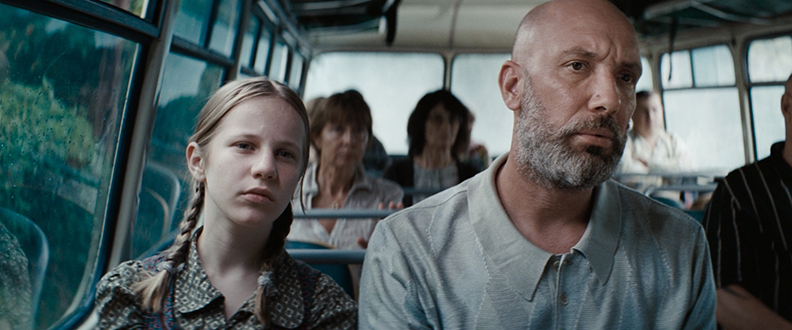
RAVING REVIEW: Some films unfold at a pace that demands patience, not because they’re unfocused, but because they’re interested in small moments of human behavior rather than constant escalation. TARIKA is built in that tradition. It’s a story about a father and daughter living on the outskirts of a Bulgarian village, surrounded by people who respond to anything unfamiliar with hostility rather than empathy. That premise alone is heavy, but Milko Lazarov approaches it with an understated tone, anchoring the film in a relationship that feels deeply personal. The film’s quietness isn’t a stylistic pose; it’s an extension of the characters' isolation.
The heart of the film is the father–daughter bond between Ali and Tarika. Their life carries a simplicity shaped by necessity. There are no indulgent comforts, and no sense of community beyond the family’s small circle. Tarika’s rare bone condition, known locally as “butterfly wings,” makes her an object of suspicion. In many films, characters with physical differences are exaggerated for effect or dramatized through spectacle. Here, it’s the opposite. Her condition is treated with dignity. It defines her challenges, but not her identity. What isolates her isn’t the condition itself — it’s the way her village chooses to respond to it.
Vesela Valcheva, in the role of Tarika, brings a presence that elevates the film’s quiet moments. She doesn’t rely on drama to communicate her character’s inner life. Instead, her performance is built on small reactions, guarded expressions, and the kind of optimism that can only survive if it stays soft. There’s a gentleness to her portrayal that never becomes sentimental. She plays Tarika as a child who understands the world isn’t made for her but remains curious about it anyway.
Zachary Baharov plays Ali with a mixture of exhaustion and unwavering commitment. His performance is grounded, focusing on the instinctive drive to protect rather than grand gestures of parental heroism. There’s a lived-in quality to his presence — someone who has been navigating suspicion, judgment, and rumors for so long that he has learned to conserve his energy. When the community turns, his desperation grows not through loud outbursts but through subtle shifts in demeanor. That restraint strengthens the story rather than diminishing it.
The dynamic between father and daughter is where TARIKA feels the strongest. Their connection is believable because it reflects the reality of people who have no one else to rely on. Lazarov doesn’t need to spell out their history or explain the layers of loss they share. Their relationship is conveyed through routine, and Ali’s fear surfaces whenever Tarika tries to step beyond the boundaries he’s set to keep her safe.
The village serves as the film’s central antagonistic force, not through any single identifiable villain but through a collective mindset shaped by fear. When livestock in the region falls victim to a mysterious illness, paranoia becomes the natural response. Rather than searching for answers, the villagers seek a target. Tarika becomes a convenient explanation. What the film captures well is how discrimination rarely presents itself as organized cruelty. It’s often a buildup of whispers, sideways looks, and acts that create an environment where danger grows slowly before it becomes explicit.
TARIKA uses symbolic elements to make fears visible without leaning into fantasy. The condition referred to as “butterfly wings” becomes both a literal and figurative representation — fragile bones and fragile social acceptance. Lazarov uses these elements sparingly. The intent isn’t to transform the film into a dreamlike fable but to add slight distance between reality and metaphor, allowing the story to examine intolerance without tying it to any single historical event or political moment.
The film’s clarity remains its strength. TARIKA confronts the reality that marginalized people often suffer not because of who they are but because of how communities project fear onto them. The village’s attitude reflects a recognizable human pattern: when uncertainty grows, compassion shrinks. The contrast between the tenderness within Ali’s home and the hostility outside it creates a meaningful divide that the film explores with seriousness and restraint.
Another effective aspect is how the story acknowledges the limits of protection. Ali’s efforts to shield his daughter are genuine, but the world outside his home is larger than he can control. TARIKA doesn’t indulge in melodramatic arcs or exaggerated confrontations. Instead, it shows how fear gradually erodes safety, even when love is strong. That slow, steady tightening of the pressure allows the film to reflect real emotional stakes without turning its characters into symbols.
The film’s balance: compelling ideas, strong performances, and a thoughtful approach, paired with pacing choices that may hold it back from reaching its full impact. TARIKA is a story anchored in human fragility, devotion, and the danger of communities shaped by superstition. It may not hit its themes with the full force they deserve, but it resonates in quieter ways, offering a somber and humane examination of how people respond to the unfamiliar.
Please visit https://linktr.ee/overlyhonestr for more reviews.
You can follow me on Letterboxd, Instagram, Twitter, and YouTube. My social media accounts can also be found on most platforms by searching for 'Overly Honest Reviews'.
I’m always happy to hear from my readers; please don't hesitate to say hello or send me any questions about movies.
[photo courtesy of RED CARPET, 42FILM, AMOUR FOU LUXEMBOURG, ZDF/ARTE]
DISCLAIMER:
At Overly Honest Movie Reviews, we value honesty and transparency. Occasionally, we receive complimentary items for review, including DVDs, Blu-rays, CDs, Vinyl Records, Books, and more. We assure you that these arrangements do not influence our reviews, as we are committed to providing unbiased and sincere evaluations. We aim to help you make informed entertainment choices regardless of our relationship with distributors or producers.
Amazon Affiliate Links:
Additionally, this site contains Amazon affiliate links. If you purchase through these links, we may receive a commission. This affiliate arrangement does not affect our commitment to honest reviews and helps support our site. We appreciate your trust and support as you navigate these links.


Happy
0 %

Sad
0 %

Excited
0 %

Sleepy
0 %

Angry
0 %

Surprise
0 %
 0
0
 0
0

Average Rating