The Emotional Cost of Making Something Real
Read Time:5 Minute, 27 Second
BOOK REVIEW
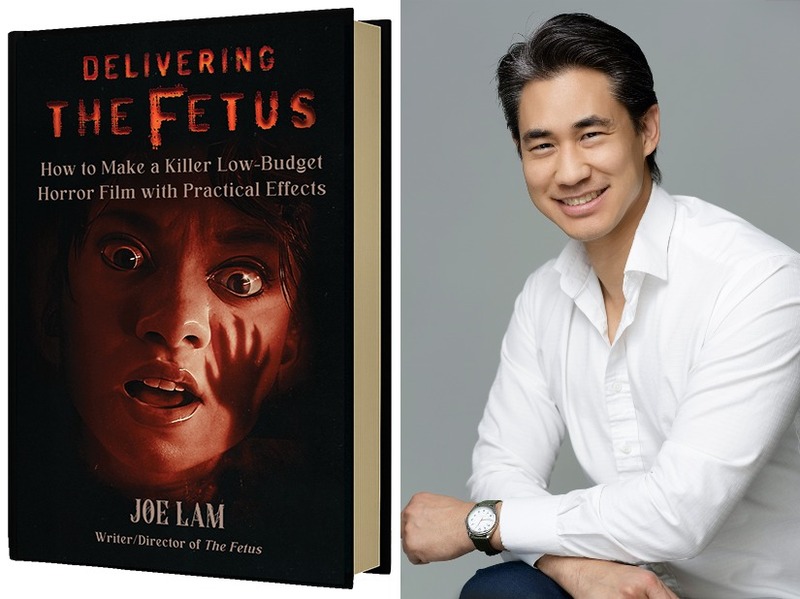
Delivering The Fetus


Genre: Nonfiction, Film Production, Horror
Year Released: 2025
Writer(s): Joe Lam
Pages: 318
Where to Read: find out more, here: www.thefetusfilm.com
RAVING REVIEW: What does it actually mean to finish something that once lived only in your head? That question underpins DELIVERING THE FETUS, even when the book is focused on logistics, budgets, casting decisions, or the reality of watching plans collapse in real time. On the surface, Joe Lam’s book presents itself as a behind-the-scenes account of making a low-budget horror film. In practice, it becomes something far more reflective. This is not just a guide to indie filmmaking; it’s an examination of compromise, endurance, and the emotional weight of turning intention into something tangible.
From the outset, Lam makes it clear what this book is and what it refuses to be. It isn’t a refined memoir or a celebratory victory lap. It avoids the temptation to romanticize struggle or sell the idea that persistence alone guarantees success. Instead, it frames DELIVERING THE FETUS as a record of how a film comes together when resources are limited, decisions are imperfect, and control is often an illusion. That framing establishes trust; the reader isn’t being sold a fantasy of indie filmmaking; they’re being invited into its reality.
The book’s structure mirrors the actual lifecycle of a film, beginning with development and moving through funding, pre-production, production, post-production, and distribution. This chronological approach gives the material a sense of momentum while reinforcing how interconnected these stages truly are. Creative choices made early ripple outward into every corner of the production in unexpected ways, and Lam repeatedly acknowledges that many decisions were shaped as much by constraint as by the vision.
The early chapters, which focus on conception and story, are particularly revealing because they foreground uncertainty rather than inspiration. Lam doesn’t frame the idea for THE FETUS as a lightning-bolt moment. Instead, it emerged through reassessment and redirection, shaped by the practical reality of what a first-time feature filmmaker could realistically make. Horror becomes not just a genre choice, but a strategic one, allowing emotion, metaphor, and physical storytelling to compensate for scale.
As the book moves into funding and pitching, its tone becomes more grounded and, at times, uncomfortable. Lam describes fundraising as repetitive, humbling, and emotionally taxing. What makes these sections compelling isn’t the specific strategies but the mindset shift they require. Filmmaking, the book argues, demands that creators stop waiting for permission and start treating their work like a business, even when that clashes with artistic instincts. Passion may ignite a project, but structure sustains it.
The chapters devoted to casting and crew highlight one of the book’s strongest throughlines: collaboration over control. Lam emphasizes that actors and crew members don’t simply help him create a vision; they reshape it. Casting becomes an act of alignment rather than acquisition, and crew selection is framed as a test of trust and adaptability. The book consistently reinforces that the right people matter more than a perfectly planned vision, especially when conditions inevitably change.
The sections on logistics and locations strip away the illusion that chaos is accidental. Lam makes a compelling case that what looks spontaneous on screen is usually the result of careful preparation colliding with reality. Schedules, contracts, permits, and negotiations all become part of the creative process, whether filmmakers acknowledge them or not.
The section focused on ‘monsters’ and practical effects stands out, particularly for readers drawn to the physical world of filmmaking. Lam’s commitment to the practical impacts is framed as intention. He argues that physical materials bring texture and unpredictability that digital tools often struggle to replicate, especially on a limited budget.
The book’s final stretch, dealing with distribution and release, refuses to offer perfect conclusions. Lam frames this stage as another transformation, where filmmakers must become negotiators and marketers almost overnight. Distribution is presented not as a reward but as a risk, where one misstep can undo years of work. The discussion of self-distribution versus traditional pathways is measured and pragmatic.
In the end, Lam reflects on the gap between the film he imagined and the one that exists, acknowledging that no project remains unchanged. Rather than framing this as a failure, he reframes it as a collaboration. Filmmaking isn’t about perfection. It’s about surrendering control and allowing others to help shape something that eventually no longer belongs to one person. DELIVERING THE FETUS succeeds because it understands its purpose. It doesn’t try to be the definitive guide, and it doesn’t pretend that one experience applies to every case. Horror fans will gain deeper context for THE FETUS. Aspiring filmmakers will find practical insight tempered by realism. This isn’t a manual. It’s a record of what it feels like to push a project into existence without guarantees.
DELIVERING THE FETUS wasn’t just about making the ‘perfect’ horror film. It’s about surviving the process, learning from the distance between intention and outcome, and choosing to keep creating even when certainty disappears. That honesty is what gives the book its importance, and it’s what stays with you after flipping the final page.
Please visit https://linktr.ee/overlyhonestr for more reviews.
You can follow me on Letterboxd, Instagram, Twitter, and YouTube. My social media accounts can also be found on most platforms by searching for 'Overly Honest Reviews'.
I’m always happy to hear from my readers; please don't hesitate to say hello or send me any questions about movies.
DISCLAIMER:
At Overly Honest Movie Reviews, we value honesty and transparency. Occasionally, we receive complimentary items for review, including DVDs, Blu-rays, CDs, Vinyl Records, Books, and more. We assure you that these arrangements do not influence our reviews, as we are committed to providing unbiased and sincere evaluations. We aim to help you make informed entertainment choices regardless of our relationship with distributors or producers.
Amazon Affiliate Links:
Additionally, this site contains Amazon affiliate links. If you purchase through these links, we may receive a commission. This affiliate arrangement does not affect our commitment to honest reviews and helps support our site. We appreciate your trust and support in navigating these links.


Happy
0 %

Sad
0 %

Excited
100 %

Sleepy
0 %

Angry
0 %

Surprise
0 %
 1
1
 0
0



Average Rating