Two Outsiders Rewrite the Rules
Read Time:8 Minute, 27 Second
MOVIE REVIEWS
The Deb
 –
– 

Genre: Comedy, Musical
Year Released: 2024, 2026
Runtime: 2h 1m
Director: Rebel Wilson
Writers: Hannah Reilly; additional writing by Rebel Wilson; story by Hannah Reilly and Meg Washington
Cast: Natalie Abbott, Charlotte MacInnes, Stevie Jean, Rebel Wilson, Shane Jacobson, Tara Morice, Steph Tisdell, Costa D’Angelo, Hal Cumpston
Where to Watch: available on digital & on demand August 25, 2026
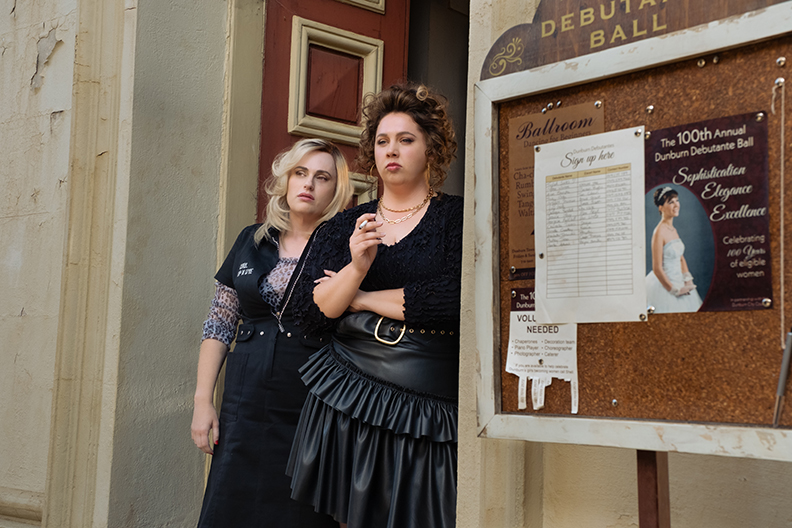
RAVING REVIEW: So I didn’t know what to expect going into this. I saw Rebel Wilson’s name and was intrigued enough to take the plunge without knowing any background. What I wasn’t expecting was a musical about a coming-of-age story. Taylah Simpkins and Maeve Barker can look at the same debutante ball and see completely different futures. Taylah sees a chance to finally be noticed in a town where she’s spent most of high school on the outside. Maeve sees an outdated ritual built around expectations she already decided she wants nothing to do with. THE DEB spends two hours pushing those cousins together until both discover that thinking you know who you are can be just another way of hiding.
Rebel Wilson’s feature directing debut doesn’t shy away from being a musical almost from the get-go, and there’s very little hesitation once the songs begin. Maeve’s introduction through “Fuck My Life” is deliberately obnoxious, introducing a wealthy Sydney private-school student whose grievances are presented wrapped in privilege and social-media-ready dialogue. Charlotte MacInnes understands the joke. Maeve genuinely cares about social issues, but she also enjoys being seen while caring about them, and that difference gives the character room to grow.
After getting herself exiled from Sydney, Maeve lands in drought-stricken Dunburn with her cousin Taylah. Natalie Abbott plays Taylah as a character that couldn’t be more different. She isn’t looking to overthrow anything. She wants a dress, a date, and one night when the people around her might look at her differently. The Debutante Ball may represent everything Maeve considers a joke, but to Taylah it represents possibility. Maeve assumes Taylah needs to be liberated from the tradition she embraces. Taylah assumes Maeve’s confidence means she has already figured herself out. Neither assessment survives very long.
Abbott doesn’t turn Taylah into the predictable sweet outsider waiting for a makeover. Her desire to attend the ball is sincere, occasionally awkward, and entirely understandable. There’s a loneliness behind the enthusiasm that Abbott never oversells. Taylah has built this evening up over time because teenagers are especially good at convincing themselves that a single event will permanently change their social standing.
MacInnes has the character and initially gets many of the jokes that hit harder. Maeve’s politics, confidence, and ability to turn nearly any conversation into a statement could easily become exhausting, but the performance gradually exposes the insecurity behind the certainty. Her arrival in Dunburn doesn’t make her the sophisticated outsider who teaches an ignorant rural community how the world works. She gets things wrong too. Although the reliance on the mockery of being “woke” grows a little tiresome.
The songs are often where the clash between the girls becomes funniest. Meg Washington and Hannah Reilly move between contemporary pop, musical theater, rock, and intentionally exaggerated genre pastiche. The lyrics can be blunt, foul, clever, ridiculous, and occasionally all of the above before the number ends. Not every song is equally memorable, but the soundtrack has enough personality that the musical sections rarely feel like obligations imposed on the story.
Abbott has a strong theatrical voice that suits Taylah’s enormous feelings, while MacInnes can shift between sarcasm and sincerity without making either side feel forced. Stevie Jean, as local queen bee Annabelle, gets some of the movie’s best opportunities to turn a familiar mean-girl role sideways. Annabelle initially seems easy to categorize, which becomes part of the joke as the film begins to pull apart what everyone assumes about her.
Wilson wisely keeps herself in a supporting role as Janette, Annabelle’s ambitious hairdresser mother. Janette is exactly the sort of character Wilson can play in her sleep. She’s inappropriate, aggressive, self-impressed, and capable of saying something outrageous before anyone else in the scene has prepared. The performance doesn’t stretch her acting chops, but it doesn’t need to. She drops in, disrupts the room, and gets out before Janette can take the movie away from its younger leads.
THE DEB likes the people it makes fun of. That affection is important because the movie is playing with a fairly obvious cultural divide. Maeve arrives carrying city assumptions about rural Australians. Dunburn has its own assumptions about people like Maeve. The debutante tradition becomes a battlefield for arguments about feminism, class, gender expectations, performative activism, body image, and the difference between respecting somebody’s choices and deciding which choices they ought to make.
The satire is funny because no one is immune to it. Maeve’s wording can become as self-important as the traditions she mocks. Rural defensiveness can turn into stubbornness. Teenage empowerment can become another form of social competition. Adults who claim they only want what’s best for their children tend to have suspiciously specific ideas about what “best” should look like.
Characters who function beautifully at heightened musical-comedy volume don’t always become equally convincing when a scene suddenly asks for emotional realism. Some conflicts are introduced and resolved with surprising efficiency, as though the story has realized another song and several subplots are still waiting.
At 121 minutes, THE DEB also struggles to know when enough is enough. There are plenty of characters worth spending time with, but the screenplay keeps adding complications, relationships, town politics, rivalries, misunderstandings, and personal revelations. The energy carries much of it, though the middle can feel awfully crowded. A shorter cut might have given Taylah and Maeve’s friendship even greater impact. Watching Taylah realize that fitting in may require sacrificing parts of herself, and Maeve recognize that rejecting everything doesn’t automatically make her enlightened, gives the movie a solid emotional foundation. Some of the surrounding plotting only delays their arrival there.
The film raises worthwhile questions about feminism, body confidence, identity, and performative progressiveness, only to turn them into jokes or songs before they become uncomfortable. That approach fits the kind of musical Wilson is making, though anyone expecting the social satire to develop much bite may find it surprisingly gentle underneath the profanity. Its sincerity eventually wins out over its cynicism anyway.
THE DEB can spend most of its running time taking shots at teenage insecurity, beauty standards, small-town traditions, activism, masculinity, and the increasingly complicated rules surrounding how young people present themselves. When it finally asks its characters to stop performing for one another, the sentiment lands because the movie has already spent so much time showing how exhausting those performances can become. There’s nothing especially revolutionary about telling teenagers to accept themselves. The difference comes from giving that message to characters who think somebody else is the one who needs fixing.
Wilson’s connection to the material predates the movie. The stage version emerged from the Rebel Wilson Comedy Commission at the Australian Theatre for Young People. It premiered in Sydney in 2022, with Hannah Reilly writing the book and Meg Washington creating the music. Turning that into her directing debut makes sense. Wilson clearly loves musicals, Australian comedy, outsiders, vulgar humor, and stories about women whose personalities take up more space than other people would prefer.
THE DEB ultimately turns the contradictions at its core into its reason for having a debutante ball at all. The film doesn’t need to convince Maeve that the tradition is secretly progressive, nor does it require Taylah to reject everything she wanted at the beginning. Both have been treating the ball as something it can’t possibly be. It won’t validate Taylah’s entire existence, and it won’t determine Maeve’s politics. It’s one night. What matters is who they decide to be when they get there.
THE DEB is too long, occasionally too generic in its messaging, and crowded enough that some emotions get less room than they deserve. It’s also funny, energetic, proudly Australian, and carried by two young performers who understand that the movie works better when the friendship matters more than the spectacle. For all the dresses, dates, choreography, and arguments about what a debutante ball supposedly represents, the movie ultimately finds its meaning somewhere simpler. Taylah wants someone to see her. Maeve wants everyone to listen to her. Eventually, each learns to do a little more of the other.
Please visit https://linktr.ee/overlyhonestr for more reviews.
You can follow me on Letterboxd, Instagram, Twitter, and YouTube. My social media accounts can also be found on most platforms by searching for 'Overly Honest Reviews'.
I’m always happy to hear from my readers; please don't hesitate to say hello or send me any questions about movies.
[photo courtesy of SUNRISE FILMS, VERTIGO RELEASING]
DISCLAIMER:
At Overly Honest Movie Reviews, we value honesty and transparency. Occasionally, we receive complimentary items for review, including DVDs, Blu-rays, CDs, Vinyl Records, Books, and more. We assure you that these arrangements do not influence our reviews, as we are committed to providing unbiased and sincere evaluations. We aim to help you make informed entertainment choices regardless of our relationship with distributors or producers.
Amazon Affiliate Links:
Additionally, this site contains Amazon affiliate links. If you purchase through these links, we may receive a commission. This affiliate arrangement does not affect our commitment to honest reviews and helps support our site. We appreciate your trust and support as you navigate these links.


Happy
0 %

Sad
0 %

Excited
0 %

Sleepy
0 %

Angry
0 %

Surprise
0 %
 0
0
 0
0

Average Rating