Being Normal Was Never an Option
Read Time:8 Minute, 30 Second
BOOK REVIEWS
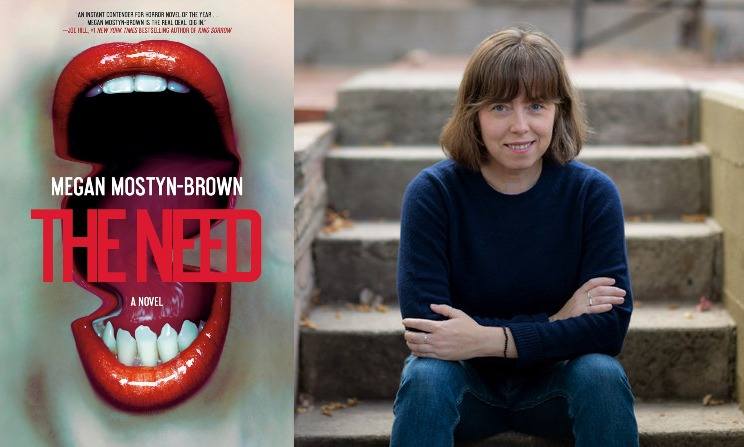
The Need


Genre: Horror, Mystery, Thriller, Suspense
Year Released: 2026
Pages: 288
Author(s): Megan Mostyn-Brown
Where to Read: available September 22, 2026. Pre-order your copy here: www.amazon.com
RAVING REVIEW: Eating people isn't even the biggest problem this family has. That's the most wonderfully ridiculous intro I think I’ve written, and that’s just the starting point Megan Mostyn-Brown establishes in THE NEED, a horror debut about a rare genetic disorder requiring those affected to consume human flesh to survive. The concept sounds like something about blood, shock value, and increasingly disgusting meals. Mostyn-Brown certainly doesn't shy away from any of those things, but the surprise is how quickly cannibalism becomes almost the norm. Bodies are a problem to clean up. Meat has to be sourced. Murder creates logistical headaches. The real damage, though, comes from parents, children, money, resentment, loneliness, and people who are trying desperately to decide whether their families are protecting them or ruining their lives.
Talia has spent years on the run with her teenage twins, Sam and Rosie, changing their identities whenever danger shows its head. She and Sam have the Need. Rosie doesn't. Talia has developed rules designed to keep them alive and inconspicuous, including one that should probably be obvious. Just don't eat anyone. Sam isn't particularly good at following that one.
The book begins with Rosie preparing for homecoming when Sam calls to tell her he's done it again. One dead teenager later, whatever chance Rosie had at a normal life disappears along with the identity she’s been using. It's an excellent introduction because Mostyn-Brown doesn't waste time manufacturing mystery around the family's condition. Sam eats people. Talia helps clean up the consequences. Rosie is thoroughly sick of both of them.
Rosie isn't horrified every time her brother kills someone because she's long past that stage. She's irritated because Sam's inability to control himself means another school change, another friendship erased, another name discarded, and another attempt at becoming an ordinary teenager destroyed. Mostyn-Brown understands that once something becomes routine, the people living with it stop responding the way outsiders expect. Rosie can examine a mutilated body and still be more upset about missing homecoming.
Rosie became the character I cared about most. She wants embarrassingly normal things: friends, school dances, social media, romance, and enough stability to imagine where she'll be a year from now. Her family's secret makes everything temporary. Her relationship with Sam is where the book finds some of its most complex connections. Rosie can hate him, fear him, resent him, protect him, understand him, and love him within the same stretch. Sam, meanwhile, is much harder to forgive. He’s developed an elaborate way of justifying the people he kills, convincing himself that he's relieving miserable people of lives they didn't even want. It's obvious bullshit, and on some level Sam knows that too.
Mostyn-Brown doesn't try to make him sympathetic in the ways you’d expect. There are glimpses of the scared kid underneath all that cruelty, though, and those moments matter. Sam isn't just a monster born into a family. He's a teenager who’s spent his entire life believing normal relationships are impossible because humans can become food all too easily. His hunger and emotional detachment feed each other. The book never excuses what he does, but it does give us enough access to understand why he has become the person he is.
Talia sits somewhere between those two children, trying to convince herself that secrecy and control amount to good parenting because the alternatives are worse. Sometimes she's right. Sometimes she's wrong. Her rules have kept Rosie and Sam alive, but they've also made anything resembling a permanent life impossible. Mostyn-Brown allows Talia to be loving and exhausting at once, which makes her far more interesting than the endlessly self-sacrificing mother she could have been. Then there are the Armstrongs…
If Talia sees the Need as something to manage, the fabulously wealthy Armstrong family sees it as proof that they're special. Their money lets them turn the same condition that’s kept Talia running into another luxury. They don't scramble for scraps or worry about consequences the way she does. They have resources, lawyers, homes, employees, and enough influence to make problems disappear.
Vera Armstrong is particularly entertaining because she's terrible in ways that extend well beyond eating people. A former supermodel surrounded by money, status, fashion, pills, servants, resentment, and expectations, Vera’s spent decades being consumed by the same world she thinks she controls. Mostyn-Brown has fun contrasting Talia's survival with Vera's excess. One woman treats the Need as a curse that’s dictated her life. The other has incorporated cannibalism into the family brand.
That's where the premise becomes smarter than its initial shock value suggests. THE NEED isn't subtle about class, and it shouldn't be. Poorer people with the disorder steal from corpses, buy questionable meat, or kill because they're desperate. The Armstrongs can turn predation into an institution. Their wealth doesn't make them less monstrous. It simply makes monstrosity easier to hide. This is all too perfect for a parallel to the reality of being poor, even financially.
Mostyn-Brown goes further than the punchline, though. Money, labor, sex, reputation, lineage, and bodies all become things characters take from one another. The Armstrongs' condition is grotesque, but their belief that other people exist for their benefit isn't remotely supernatural. Cannibalism just makes the metaphor impossible to miss.
The book grows increasingly wild as the separate stories collide, and Mostyn-Brown commits to the chaos rather than suddenly getting serious about her premise. Genetic research, inherited wealth, teenage romance, old family grudges, murder investigations, secret identities, horrible relatives, and several competing approaches to ethical cannibalism somehow occupy the same story without making THE NEED feel like a parody.
The humor helps so much. This could have become miserable quickly. Instead, characters are often funniest when circumstances are at their worst. Talia can worry about parenting while harvesting organs from a corpse. Vera can worry about couture while being one of the most dangerous people in the room. The absurdity doesn't cancel out the horror. It keeps the book from drowning in it. More importantly, the comedy never completely overwhelms the sadness.
Mostyn-Brown said the idea was influenced in part by her own experience with a genetic disorder, and that connection makes sense when you look past the human flesh. The Need itself may be excessive, but the underlying question isn't. What happens when something inherited alters the way you understand your body, your future, your family, and potentially your children? What do parents owe their kids when they pass something down to them? What happens when one sibling inherits it, and another doesn't? Those questions give the book its heart.
I wouldn't have expected a book featuring this much cannibalism to hit hardest as a story about a mother and two teenagers trying to figure out whether loving one another is enough to keep them together. Yet that's exactly where THE NEED lands. Even the characters who desperately want freedom discover that freedom can come with grief attached.
I'd like more on the history of the Need and how far beyond these families the condition reaches. Mostyn-Brown creates a premise large enough for an entire hidden society and then deliberately keeps her attention on a handful of families. Normally, I'd consider that a bigger missed opportunity. Here, it mostly made me want more. (I’m ready for next book!)
THE NEED is bloody, vulgar, funny, cruel, surprisingly sad, and comfortable admitting that its characters are frequently awful people. Mostyn-Brown takes an idea that could have survived on novelty alone and finds a family story underneath it. The multiple perspectives occasionally overcrowd the book, and its frantic final act ties a few things together a little too perfectly, but those are small complaints against something this entertaining.
Cannibalism gets you through the door. Rosie, Sam, Talia, and Vera are why you stay. By the end, THE NEED isn't really asking whether these people are monsters. It's asking how much of ourselves we inherit from the people who raised us, how much we're allowed to reject, and whether being different from our family means we have to stop loving them. That's considerably more satisfying than wondering who's getting eaten next.
Please visit https://linktr.ee/overlyhonestr for more reviews.
You can follow me on Letterboxd, Instagram, Twitter, and YouTube. You can also find my social media accounts on most platforms by searching for 'Overly Honest Reviews'.
I’m always happy to hear from my readers; please don't hesitate to say hello or send me any questions about movies.
[photo courtesy of DEL REY]
DISCLAIMER:
At Overly Honest Movie Reviews, we value honesty and transparency. Occasionally, we receive complimentary items for review, including DVDs, Blu-rays, CDs, Vinyl Records, Books, and more. We assure you that these arrangements do not influence our reviews, as we are committed to unbiased, sincere evaluations. We aim to help you make informed entertainment choices regardless of our relationship with distributors or producers.
Amazon Affiliate Links:
This site also contains Amazon affiliate links. If you purchase through these links, we may receive a commission. This affiliate arrangement does not affect our commitment to honest reviews and helps support our site. We appreciate your trust and support as you navigate these links.


Happy
0 %

Sad
0 %

Excited
0 %

Sleepy
0 %

Angry
0 %

Surprise
0 %
 0
0
 0
0

Average Rating