Exploitation Cinema Draws Its Sword
Read Time:6 Minute, 53 Second
MOVIE REVIEWS
Cruel Tales of the Bohachi
 –
– 

Genre: Action, Samurai, Exploitation
Year Released: 1973, 1974, 2026 4K/Blu-ray
Runtime: 2h 44m
Directors: Teruo Ishii, Takashi Harada
Writers: San Kaji, Takeo Kaneko, Sadao Nakajima; based on the manga by Kazuo Koike and Goseki Kojima
Cast: Tetsuro Tanba, Goro Ibuki, Reiko Ike, Tatsuo Endo, Ryohei Uchida, Yuriko Hishimi, Bin Amatsu
Where to Watch: available September 21, 2026. Pre-order your copy here: www.eurekavideo.co.uk
RAVING REVIEW: The strangest thing about CRUEL TALES OF THE BOHACHI isn’t how much blood, nudity, cruelty, or general depravity Eureka Entertainment has managed to squeeze into two discs. It’s how little fifty-plus years have done to make either of these movies feel tame. BOHACHI BUSHIDO: CODE OF THE FORGOTTEN EIGHT and its spiritual successor, BOHACHI BUSHIDO: THE VILLAIN, come from a period of Japanese genre filmmaking when apparently somebody could ask, “Is this too much?” and the answer was repeatedly, enthusiastically, “Not even close.”
Period samurai movies aren’t automatically an easy sell for me, either, which made this particular pairing much more fun than expected. These aren’t stately historical dramas demanding reverence for tradition, and I'm not especially interested in romanticizing samurai honor. The Bohachi have essentially thrown honor into a ditch, run it over, and built their entire operation around everything traditional bushido supposedly rejects.
Teruo Ishii establishes that attitude almost immediately in 1973’s CODE OF THE FORGOTTEN EIGHT, and the movie never really backs away from it. Tetsuro Tanba plays Shino Ashita, a ronin so thoroughly exhausted by existence that death doesn’t hold much fear for him. Landing among the Bohachi gives him another outlet for that nihilism, as the clan employs him against competitors threatening the prostitution business that keeps their corrupt little empire running.
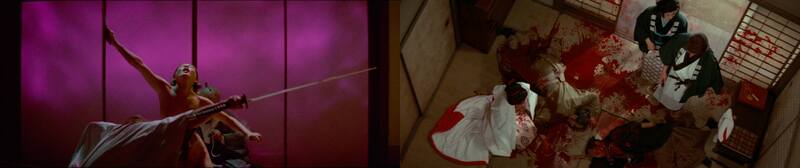
There’s a story in there, but Ishii clearly isn’t interested in behaving like a conventional storyteller for very long. CODE OF THE FORGOTTEN EIGHT can suddenly become an explosion of theatrical lighting, exaggerated color, naked bodies, spraying blood, and swordplay that feels several degrees removed from reality. Its artificiality becomes part of the attraction rather than something to disguise. The movie can look beautiful while showing something completely disgusting, and Ishii seems delighted by that contradiction.
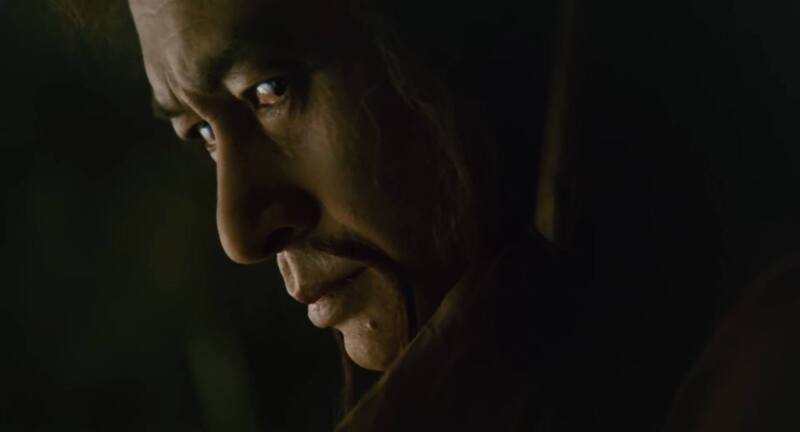
Tanba is exactly the right presence to hold that insanity together. Shino isn’t built as a lovable antihero waiting for someone to uncover his good side, and Tanba doesn’t soften him in an effort to win us over. His exhausted detachment makes sense inside a movie populated by people who abandoned conventional morality long before we arrived, and there’s something darkly funny about watching increasingly outrageous behavior encounter a man who often seems too dead inside to be particularly impressed by any of it.
That doesn’t mean all of the exploitation has aged comfortably. Women are trafficked, abused, tortured, objectified, and frequently stripped of much of their agency, with sexual violence sitting uncomfortably close to entertainment throughout both films. Calling something exploitation cinema explains the intent, but it doesn’t magically erase what’s on the screen. There were stretches where the relentless treatment of women became harder to shrug off than all the flying limbs and ridiculous violence surrounding it.
What keeps CODE OF THE FORGOTTEN EIGHT fascinating is how much actual filmmaking exists underneath that provocation. Ishii could have made something cheap, ugly, and purely sensational, yet real thought shows in the compositions, lighting, and movement. Its sleaziest impulses and strongest visual ideas frequently occupy the same frame, leaving you caught somewhere between appreciating what Ishii is doing and wondering what fresh insanity he’s about to throw at you.
THE VILLAIN arrives a year later with Takashi Harada directing and Goro Ibuki stepping into the lead as condemned criminal Kyushi Issho. The particulars change, but anyone who watched the first movie will immediately recognize the structure: another dangerous man with little concern for his own survival gets pulled into the orbit of the Bohachi and becomes useful during another violent struggle tied to their criminal interests.
That familiarity is both the sequel’s strength and its biggest limitation. Harada delivers plenty of swordplay, blood, sex, and bad behavior, and Reiko Ike's arrival gives the movie another charismatic presence worth watching. THE VILLAIN is still energetic and visually accomplished enough to stand comfortably beside plenty of 1970s Japanese exploitation, but following Ishii’s movie makes it easier to notice what’s missing.
Ishii gives the first film a genuinely strange personality that Harada can imitate without fully reproducing it. THE VILLAIN is somewhat more straightforward, and repeating so much of the first movie’s basic setup makes portions feel like variations rather than discoveries. It’s entertaining in its own right, but CODE OF THE FORGOTTEN EIGHT is the movie that leaves the larger bruise.
Eureka apparently agrees about which film is the centerpiece, because CODE OF THE FORGOTTEN EIGHT receives the premium treatment with a 4K digital restoration presented on UHD. In contrast, both films are included in 1080p on the accompanying Blu-ray. I’d obviously love to have both in 4K, but there’s no question which one benefits most from that extra attention. Ishii’s extreme lighting, wide compositions, and deliberately unnatural bursts of color are a major part of the experience, not decoration sitting around the edges.
The set doesn’t rely on the movies alone, either. There’s a commentary for CODE OF THE FORGOTTEN EIGHT from Tom Mes, another for THE VILLAIN featuring Arne Venema and Stefan Hammond, a new examination of the films and Toei’s changing production strategies, and material involving Shinya Tsukamoto, Yuriko Hishimi and other Japanese filmmakers. Add newly revised English subtitles, original Japanese mono audio, a collector’s booklet and limited-edition packaging, and Eureka has treated two movies built around absolute disrepute with an amusing amount of respect.
That may actually be the best argument for CRUEL TALES OF THE BOHACHI as a physical-media release. These aren’t merely curiosities being dragged out because someone found usable elements in an archive; together they capture a corner of 1970s Japanese filmmaking willing to mix serious visual craft with material proudly designed to test good taste. The first film is clearly the stronger of the two, while the second gives the collection enough additional personality to feel like more than a one-film release padded with a sequel.
You’ll probably know very quickly whether this particular flavor of filmmaking is for you, because subtlety never makes a serious attempt to enter the room. CRUEL TALES OF THE BOHACHI is violent, horny, mean, frequently gorgeous, and occasionally difficult to defend, yet something is refreshing about movies this committed to being exactly what they are. Eureka hasn’t cleaned up their personalities; it has simply given all that beautifully photographed bad behavior a very nice place to live.
Please visit https://linktr.ee/overlyhonestr for more reviews.
You can follow me on Letterboxd, Instagram, Twitter, and YouTube. You can also find my social media accounts on most platforms by searching for 'Overly Honest Reviews'.
I’m always happy to hear from my readers; please don't hesitate to say hello or send me any questions about movies.
[photo courtesy of EUREKA ENTERTAINMENT]
DISCLAIMER:
At Overly Honest Movie Reviews, we value honesty and transparency. Occasionally, we receive complimentary items for review, including DVDs, Blu-rays, CDs, Vinyl Records, Books, and more. We assure you these arrangements do not influence our reviews, as we are committed to unbiased, sincere evaluations. We aim to help you make informed entertainment choices regardless of our relationship with distributors or producers.
Amazon Affiliate Links:
This site also contains Amazon affiliate links. If you purchase through these links, we may receive a commission. This affiliate arrangement does not affect our commitment to honest reviews and helps support our site. We appreciate your trust and support as you navigate these links.


Happy
0 %

Sad
0 %

Excited
0 %

Sleepy
0 %

Angry
0 %

Surprise
0 %
 0
0
 0
0

Average Rating