Practical Gore Keeps the Gates Open
Read Time:7 Minute, 6 Second
MOVIE REVIEW
Charlie Shaw’s Revenge
 –


Genre: Horror, Thriller
Year Released: 2026
Runtime: 1h 29m
Director(s): John Langridge
Writer(s): John Langridge
Cast: Cerys Knighton, James Payton, Amelie Leroy, Bill Fellows, Mark Benton, Shahla Ayamah, Neil Burgess, John Locke, Billy Cashin, Molly Cattanach, Justin Hayward, Renato Pires
Where to Watch: available to rent or buy on Prime Video in the US; select UK theatrical screenings throughout October 2026
RAVING REVIEW: Keeping this park closed seems like sound business advice even before the murders begin. The workers in CHARLIE SHAW’S REVENGE have inherited a reopening deadline, an employer in financial trouble, and enough workplace resentment to make an ordinary shift unpleasant. Writer-director John Langridge gets some mileage out of that setup, especially the idea that everyone’s already too busy with their own frustrations to work as a team. Once a killer joins the schedule, though, the film struggles to make the danger as convincing as the location.
That imbalance is frustrating because the park gives this British slasher a useful identity. Filmed at Knockhatch Adventure Park and the East Sussex School of Circus Arts, the setting brings together attractions, circus activity, and the less glamorous work required to keep visitors entertained. It feels like a business people actually maintain. The employees have reasons to gather there, jobs to finish, and disagreements that exist before anyone becomes aware of a threat.
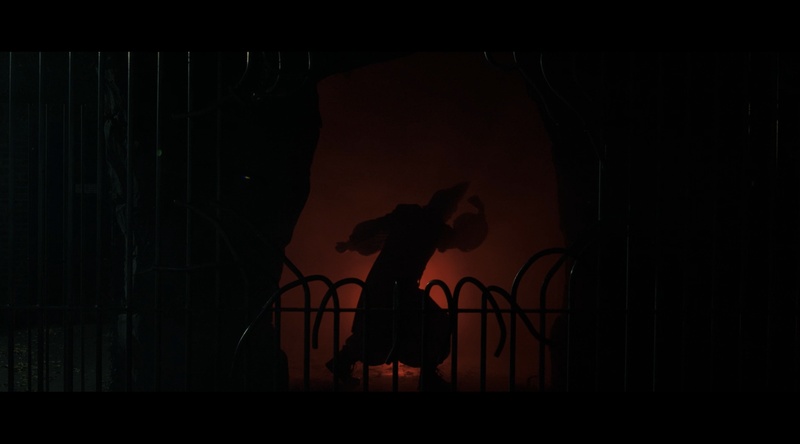
The circus connection also gives James Payton’s Otto the Clown an advantage. A costumed performer doesn’t immediately seem out of place among people preparing acts and organizing an entertainment venue. Payton uses that familiarity effectively, bringing an uncomfortable physical confidence to a largely silent role. His presence carries more personality than the basic description of another murderous clown suggests, and his movements give the film something to watch even when the surrounding scene isn’t especially tense.
Silence puts particular demands on a horror performance. Without dialogue to establish a personality or explain an intention, the actor must communicate through posture, timing, and how he occupies another person’s space. Payton understands that assignment. Otto’s connection to an entertainment setting adds discomfort, since exaggerated behavior already belongs here. The costume gives him a degree of familiarity before the violence gives everyone a reason to reconsider.
The film needs stronger reactions around him to capitalize on that discomfort fully. Fear becomes more persuasive when characters register danger differently, bringing their existing relationships into the decisions they make. An employee who distrusts the manager hesitates for a different reason than someone whose first instinct is to protect a colleague. The workplace setup establishes opportunities for those differences, but the survival material doesn’t consistently develop them. Too much of the ensemble’s individuality fades when it matters most.
That weakens the practical stakes of the isolation. Being unable to reach help is an effective starting condition, but suspense also depends on what people believe they can accomplish on their own. Their capabilities, disagreements, and willingness to cooperate need to shape the action. The park assembles people with different skills, giving the story a ready supply of potential solutions and competing ideas. Those possibilities are only partly explored. A stronger connection between their everyday work and their responses to the killer would give the familiar survival setup more character, making the setting matter beyond its considerable visual appeal.
Unfortunately, having an effective figure at the center of the violence doesn’t automatically make the violence frightening. Too often, the attacks reach their bloody destination without much suspense along the way. The opening establishes that problem early, introducing an entertainer whose travel plans go awry before steering him into a grisly encounter. His situation is amusingly ordinary, but the transition into horror builds little apprehension. The sequence establishes the threat without giving the audience a strong reason to dread its return.
The effects deserve credit for making those encounters tangible. Kate Griffiths’ makeup work gives the bodily damage a convincing texture, and the practical approach suits a film surrounded by physical performance, costumes, and equipment. The gruesome details show care. The limitation lies in how the scenes build toward them, since the anticipation of an injury rarely feels as carefully developed as the injury itself. Appreciating the craft and feeling worried for the person underneath it remain separate experiences here.
Marion, the newly appointed manager played by Cerys Knighton, presents another opportunity that the screenplay only partially develops. Her determination to get the park ready makes her demanding and difficult, which gives the staff something immediate to react against. Knighton doesn’t soften every abrasive exchange to make Marion easier company. That choice gives the character some resistance, especially in a genre that frequently settles for a broadly pleasant lead surrounded by disposable personalities.
The writing keeps returning to that friction without finding enough new territory within it. Repeated complaints and confrontations quickly establish Marion’s manner, then keep reinforcing an already clear impression. Spending time with an unpleasant character isn’t the problem. Spending time on exchanges that leave the relationships almost exactly where they started is. The film asks us to pay attention to these people’s working lives, so those scenes need to reveal more than another reason they’re annoyed.
Bill Fellows offers welcome relief as Russ, whose interactions with Marion let a less combative side of the film emerge. Their tentative connection gives Knighton a different register to work in and makes Marion easier to understand without requiring her to become suddenly agreeable. These scenes suggest how much stronger the ensemble material becomes when someone responds to her as a person. The surrounding cast has less consistent room to establish similarly specific relationships, and several characters remain defined mainly by their immediate function in the group.
The rehearsal material has a related limitation. Watching performers prepare belongs in this story, and it helps distinguish the park from a generic collection of dark corridors. Yet the film doesn’t consistently turn that activity into revealing behavior or mounting pressure. Some stretches feel occupied rather than purposeful, with enough happening onscreen to fill the time but too little changing between the people involved. The modest runtime makes those repetitions stand out more.
The film still has a scrappy appeal in its willingness to use its surroundings and let the violence get messy. Its British character comes through in the awkward exchanges, practical complaints, and general lack of glamour attached to the business. That specificity gives it more individuality than a straightforward imitation of an American camp slasher. Langridge has found a setting worth exploring and a performer capable of making its resident clown unpleasant company.
The storytelling becomes more ambitious as the film progresses, although the groundwork doesn’t always support the demands placed on it. Greater urgency helps, and Knighton benefits from material that pushes beyond another managerial dispute. Even so, later developments don’t make all the earlier repetition necessary or give the supporting characters the depth they’ve been missing.
CHARLIE SHAW’S REVENGE offers enough physical craft and local personality to make its shortcomings irritating rather than easy to dismiss. The filmmakers have put real effort into the place, the killer, and the damage he causes. What’s missing is an equally persuasive sense of the people facing that damage and the fear connecting one attack to the next. Otto earns his place in the park; the film needs to make waiting for him much worse.
Please visit https://linktr.ee/overlyhonestr for more reviews.
Follow me on Letterboxd, Instagram, Twitter, and YouTube. You can also find my social media accounts on most platforms by searching for ‘Overly Honest Reviews’.
I’m always happy to hear from my readers; please don’t hesitate to say hello or send me any movie questions.
[photo courtesy of DROP DEAD FILMS, INDIE RIGHTS, ACTING MOON]
DISCLAIMER:
At Overly Honest Movie Reviews, we value honesty and transparency. Occasionally, we receive complimentary items for review, including DVDs, Blu-rays, CDs, Vinyl Records, Books, and more. We assure you these arrangements do not influence our reviews, as we are committed to unbiased, sincere evaluations. We aim to help you make informed entertainment choices regardless of our relationship with distributors or producers.
Amazon Affiliate Links:
This site also contains Amazon affiliate links. If you purchase through these links, we may receive a commission. This affiliate arrangement does not affect our commitment to honest reviews and helps support our site. We appreciate your trust and support as you navigate these links.


Happy
0 %

Sad
0 %

Excited
0 %

Sleepy
0 %

Angry
0 %

Surprise
0 %
 0
 0


Average Rating