The Clowns Aren’t the Scariest Part
Read Time:9 Minute, 26 Second
MOVIE REVIEW
The Clown Murders (Kino Cult #54) (4K UHD)
 –


Genre: Horror, Crime, Mystery, Thriller
Year: 1976, 2026 4K
Runtime: 1h 35m
Director: Martyn Burke
Writer: Martyn Burke
Cast: Stephen Young, Susan Keller, Lawrence Dane, John Candy, Gary Reineke, John Bayliss, Al Waxman, Cec Linder
Where to Watch: available now; order your copy here: www.kinolorber.com or www.amazon.com
RAVING REVIEW: Four grown men dressing up as clowns to kidnap a woman on Halloween sounds like a spectacularly terrible idea, even before someone starts getting murdered. THE CLOWN MURDERS, Martyn Burke's 1976 Canadian thriller, takes that questionable premise and turns it into an unusual combination of crime drama, psychological tension, and eventual horror that isn't nearly as outrageous as its title suggests. With an early appearance by John Candy, the film has earned a cult following among movie collectors. Its notoriety has arguably benefited more from its marketing and recognizable supporting actor than from the production itself. Kino Lorber is giving this odd little piece of Canadian exploitation history a new 4K UHD release, which is wonderful news for preservation enthusiasts and anyone who's ever wondered what Candy was doing before becoming one of comedy's most beloved performers.
The story follows four former college friends who decide to interfere with a wealthy businessman's real estate deal by kidnapping his wife, Alison (Susan Keller). Their brilliant plan is to dress as clowns at a Halloween celebration, abduct her, and treat it as an elaborate practical joke. Because apparently nothing says harmless fun quite like forcibly removing a woman from her home and holding her against her will. Naturally, things get worse as the group's personal resentments, questionable motives, and general inability to make sensible decisions complicate what was already a pretty lousy idea.
Stephen Young plays Charlie, with Lawrence Dane as Philip, Gary Reineke as Rosie, and Candy appearing as Ollie. The group has a history together, but that familiarity doesn't make for an especially likable cast. Their conversations often expose old tensions and unresolved issues, suggesting this ridiculous criminal undertaking has as much to do with personal grievances as with the supposed business arrangement. The problem is that spending an extended period watching unpleasant people argue becomes considerably less entertaining when their personalities aren't developed enough to make those disagreements interesting.
Burke spends much of the film establishing relationships and letting the kidnapping scheme unravel through increasingly strained interactions. It's an approach that places THE CLOWN MURDERS closer to a crime thriller than the slasher movie suggested by decades of promotional artwork. Anyone approaching this expecting ninety minutes of masked killers terrorizing unsuspecting victims is in for a surprise, and probably not the pleasant kind. The clowns are certainly present, but the film's primary interest lies in the consequences of the group's actions rather than delivering an elaborate succession of murders.
That distinction isn't inherently a weakness. A psychological thriller about a group of privileged idiots discovering that their actions have real consequences could entertainingly examine entitlement, jealousy, and the danger of treating other people like disposable pieces in a personal dispute. Unfortunately, the screenplay doesn't develop those possibilities into consistently engaging material. The characters spend so much time bickering that the film occasionally feels less like an escalating criminal nightmare and more like being trapped at a party with four people who should've stopped speaking to one another years ago.
Susan Keller has the unenviable responsibility of playing Alison, whose circumstances make her the focal point of the group's increasingly ugly behavior. Her character also exposes one of the film's more uncomfortable qualities. These men insist on treating their actions as something comparatively innocent, but their willingness to disregard Alison's independence makes the situation disturbing long before the horror elements become more prominent. An unpleasant undercurrent of possessiveness runs through their behavior, and the film is most interesting when that ugliness becomes impossible to disguise as harmless male bonding.
Candy's presence will undoubtedly attract viewers who otherwise wouldn't give this obscure Canadian production a second glance. Seeing him in such an early role is fascinating, particularly because Ollie bears little resemblance to the warm, endlessly approachable characters that would eventually make Candy a household name. He's part of an unpleasant group, and his performance involves material considerably darker than audiences familiar with UNCLE BUCK or PLANES, TRAINS AND AUTOMOBILES might anticipate.
Unfortunately, Ollie is also subjected to repeated jokes about his weight, something that becomes tiresome rather quickly. Candy's natural screen presence is evident, but the screenplay doesn't always give him material worthy of it. It's worth seeing an actor before his familiar screen personality fully developed. His participation is an interesting piece of Canadian entertainment history, even if nobody should approach THE CLOWN MURDERS expecting a forgotten John Candy comedy. This isn't some lost treasure from his later career, and marketing it primarily around his involvement creates expectations the film was never designed to satisfy.
The production's connection to Canada's tax-shelter filmmaking period adds another reason for its continued interest. During the 1970s and early 1980s, financial incentives encouraged a range of independently produced Canadian features, including several that would become important entries in horror history. Films such as BLACK CHRISTMAS, THE BROOD, and TERROR TRAIN demonstrated that the country's filmmakers could produce distinctive genre entertainment, often with limited resources and an appetite for material that mainstream Hollywood wasn't necessarily pursuing.
THE CLOWN MURDERS belongs to that broader period, although placing it alongside those better-known productions shouldn't be mistaken for suggesting comparable quality. Its historical significance is considerably easier to appreciate than its execution. Burke worked with an interesting premise and recognizable genre elements, but the result lacks the confidence and memorable personality of the era's strongest Canadian horror films.
The Halloween setting is another missed chance to establish a more distinctive identity. Dressing the kidnappers as clowns provides an immediately recognizable visual gimmick, but the seasonal atmosphere rarely becomes an essential part of the experience. Considering how effectively other horror productions have used Halloween celebrations, costumes, and the uneasy relationship between harmless disguise and genuine danger, it's disappointing that this one doesn't exploit its setting more consistently. Those clown costumes should make an already uncomfortable situation even stranger, but the film often seems content to let the novelty speak for itself.
Its eventual shift toward more conventional horror provides welcome energy, especially after the extended stretches devoted to the group's deteriorating relationships. The genre shift also reveals how much of the running time is spent preparing for something that never lives up to the premise's promise. The violence and mystery contribute to the film's exploitation identity, but they don't fully compensate for the uneven development that comes before them.
I can appreciate a low-budget production that takes its time establishing atmosphere and character. Some of my favorite genre discoveries have very little money, unusual storytelling decisions, or performances that would never survive a major studio audition. Those qualities can become part of a movie's appeal when the filmmakers give audiences something interesting in return. THE CLOWN MURDERS occasionally finds that personality in its uncomfortable relationships and increasingly absurd criminal circumstances, but too much of the experience is devoted to conversations that don't develop into anything particularly memorable.
Kino Lorber's decision to resurrect the film through its Kino Cult line is considerably easier to celebrate. The October 27 release brings THE CLOWN MURDERS to 4K UHD, with an accompanying Blu-ray presentation, giving this relatively obscure production a substantial physical-media upgrade. The film's modest origins and limited reputation mean it could easily disappear into increasingly hard-to-find older editions, so its return is welcome regardless of how enthusiastically someone responds to the movie itself.
The package also includes two audio commentaries, arguably its most attractive supplementary features. Writer-director Martyn Burke is joined by executive producer Stephen Stohn for one track, while Canadian film historians Paul Corupe and Jason Pichonsky provide the second. That combination of firsthand production involvement and historical perspective is an excellent approach for a release like this, where the circumstances surrounding the film can be just as interesting as the finished production. Stohn's subsequent involvement with the DEGRASSI television franchise also makes his early connection to this project an amusing bit of Canadian entertainment trivia.
Additional archival interviews or a documentary examining the country's exploitation boom would have been welcome, especially given how much historical material exists from this period. Nevertheless, the two commentaries give collectors a worthwhile reason to explore the film beyond its primary presentation. It's encouraging to see boutique labels continuing to recognize that preservation shouldn't be restricted to universally acclaimed classics. Strange, forgotten, commercially unsuccessful, and occasionally downright questionable productions are also part of movie history.
THE CLOWN MURDERS certainly qualifies as an unusual rediscovery. Its premise promises something far more entertaining than Burke ultimately delivers, and the film's identity as an early clown-themed horror production is more convincing in historical discussions than during much of its runtime. Its uncomfortable crime story, early John Candy appearance, and place within Canadian exploitation history provide enough curiosity to keep it from becoming entirely disposable.
Kino Lorber has assembled a release that treats the film as something worth preserving rather than apologizing for its shortcomings. I appreciate that approach, even if the movie itself left me wishing its characters had spent less time arguing and more time giving me something worth remembering. The biggest joke here might be convincing four adults that kidnapping someone while dressed as clowns was ever a sensible plan. Then again, anyone buying this expecting ninety-five minutes of John Candy fighting a murderous clown might be an even bigger victim of false advertising.
Please visit https://linktr.ee/overlyhonestr for more reviews.
Follow me on Letterboxd, Instagram, Twitter, and YouTube. You can also find my social media accounts on most platforms by searching for 'Overly Honest Reviews'.
I’m always happy to hear from my readers; please don't hesitate to say hello or send me any movie questions.
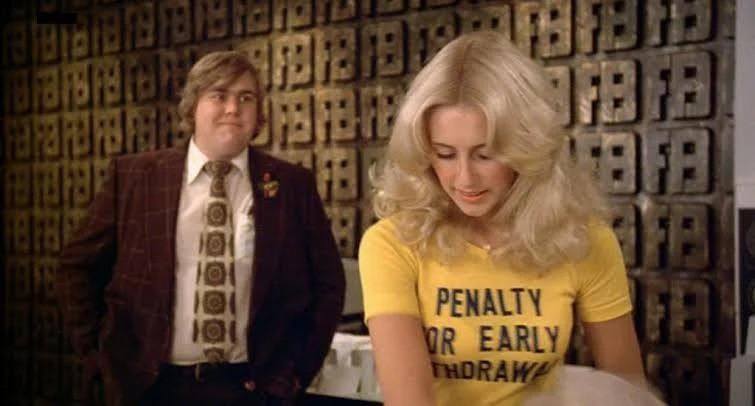
[photo courtesy of KINO LORBER]
DISCLAIMER:
At Overly Honest Movie Reviews, we value honesty and transparency. Occasionally, we receive complimentary items for review, including DVDs, Blu-rays, CDs, Vinyl Records, Books, and more. We assure you these arrangements do not influence our reviews, as we are committed to unbiased, sincere evaluations. We aim to help you make informed entertainment choices regardless of our relationship with distributors or producers.
Amazon Affiliate Links:
This site also contains Amazon affiliate links. If you purchase through these links, we may receive a commission. This affiliate arrangement does not affect our commitment to honest reviews and helps support our site. We appreciate your trust and support as you navigate these links.


Happy
0 %

Sad
0 %

Excited
0 %

Sleepy
0 %

Angry
0 %

Surprise
0 %
 0
 0


Average Rating