Who Gets the Microphone Next
Read Time:8 Minute, 0 Second
MOVIE REVIEW
Following Harry
 –


Genre: Documentary
Year Released: 2024, 2026
Runtime: 1h 30m
Director: Susanne Rostock
Where to Watch: available for streaming now
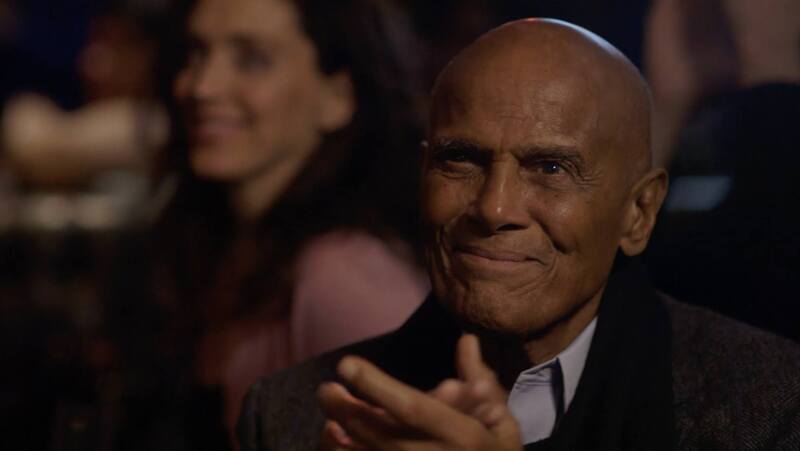
RAVING REVIEW: Susanne Rostock moved her editing equipment into Harry Belafonte’s Manhattan office after making SING YOUR SONG. Carmen Perez, who ran the Gathering for Justice, moved into the same offices. Years later, that space became a base for organizing the Women’s March. FOLLOWING HARRY gets something out of that history that a retrospective interview with either woman could only describe. Rostock was working there when the people who would put the march together were figuring out how to do it. The filmmaker was already part of the working day by the time she had a reason to record it. A scheduled interview could have provided the office's history. Being there gave her a chance to find out what people actually used it for.
Rostock’s first documentary with Belafonte covered his earlier life as a performer and activist. FOLLOWING HARRY picks up with a man in his eighties and stays with him into his nineties. There’s a lot of Belafonte’s life you could put in front of that story. His records are an obvious invitation, and the civil rights movement alone could take up most of the running time. Rostock’s choice to begin so late gives the film permission to spend time on something as unassuming as a working day. The question of what he’ll do next carries more interest here than another account of how he became famous enough for people to take his calls.
The aftermath of Trayvon Martin’s killing brings Belafonte to the Florida state capitol, where the Dream Defenders held a sit-in after George Zimmerman’s acquittal. The organizers wanted a special legislative session to address Florida’s Stand Your Ground law. By the time Belafonte arrived, they’d already spent more than a week at the Capitol. An artist old enough to remember fighting for gains that many Americans now take for granted shows up to support people who can tell him precisely what they’re up against. That timing matters to the footage. It makes his visit an act of solidarity with a campaign that was already underway, and it gives the documentary a concrete example of what someone with his public standing can do for the people who started it.
Ferguson gives the filmmaking a different problem. Rostock follows organizers there after Michael Brown is killed, while Belafonte’s involvement also comes through conversations by phone and meetings with activists who come to see him. The phone calls connect the footage she gathers in Missouri with the work Belafonte’s doing in New York. It also lets the people at the other end of the line tell Belafonte what’s happening on their own streets. At a microphone, he’s responsible for making himself understood. On the phone, some of his job is to listen.
Perez makes the connection between Belafonte’s office and the Women’s March easier to understand because she has responsibilities in both places. She runs the organization he founded and becomes one of the march’s national co-chairs. Her place in the documentary gives the office a history of its own. It was a place people could keep coming back to, and an organization was already using it when the march needed somewhere to take shape. The scale of the gathering in Washington can obscure the usefulness of something that ordinary. Watch a march from above, and you get a measure of the turnout. Rostock’s access to the people putting it together gives the crowd a history that starts well before anyone holds up a sign.
Jesse Williams remembers hearing Belafonte speak at the BET Awards before giving his own address there years later. That’s one of the more specific examples Rostock has of how an idea travels from one performer to another. An awards show gives a performer a set amount of time and an audience that’s already paying attention. What he says in that time is one of the few things he can decide for himself. The documentary offers a concrete example of what Belafonte means when he asks people in entertainment to take their reach seriously.
The meetings with young gun violence prevention advocates from the Parkland movement work on a different scale. The shooting has already put them in public view, and they’ve had to figure out how to handle that attention at an age when most people can try things without the whole country watching. Williams had an audience for the length of a speech. The young organizers have to decide what to do when the people who’ve been listening move on to something else. Belafonte’s been around long enough to know how short a run of public attention can be. Rostock has a reason to keep these encounters in a film that moves across so many causes. They put a particular problem in front of him that his years in public life have equipped him to understand.
When Belafonte talks about people who shaped him, including Paul Robeson and Martin Luther King Jr., Rostock gets an account of his education from the man who went through it. Those names are familiar enough to appear in any documentary about his life. The useful detail here is that he remembers what those men gave him to work with. Despite the contemporary footage's reliance on Belafonte’s example, the recollections let us hear him speak as someone who needed an example himself. She can let the past come up in relation to a conversation he’s having now, and the audience gets to see which memories a man like Belafonte thinks are worth bringing into the room.
The journal structure has its limits. Rostock is covering more than a decade, and his involvement gives each new stop a clear reason to be there. The accumulation of events also means the film keeps changing the scale of what it’s asking us to follow. A private conversation gives us time to consider the person across from him. A national march brings a much larger set of relationships into play, and the documentary has less room to stay with any particular one of them. The result is some uneven storytelling. There’s time to learn why Belafonte is drawn to the work and less time to see how the organizers deal with each other when they disagree. The shape suits a portrait of Belafonte’s working life. Perez has enough of a role in the documentary to make that gap noticeable. The film moves on before asking more about how the coalition she helped build handled the work that came after the march.
At home, Belafonte gives himself some room to wonder whether he’s done enough. A roomful of people preparing for a public event needs him for other reasons, and Rostock has spent enough time in those rooms for the change to register. The private footage also closes the gap between his age and the work. He’s looking at what’s happened in his lifetime and trying to account for how much of it can be changed in the years he has left. The record of what he’s accomplished is easier to take in. Rostock’s patience pays off here. She gives him the time to put that uncertainty into his own words.
Belafonte talks about leaving younger people some of what he learned and inviting them to come up with something better. That invitation gives the title a little more to do. A man with his experience could spend the time explaining exactly how a campaign ought to be run. What he offers is permission to look at his own work and decide which parts have outlived their usefulness. Even with all the ground Rostock covers, that’s an idea small enough to get across in a conversation. It’s a pretty generous thing to offer somebody who’s come to you for advice. They can take the meeting seriously and walk out the door with a completely different idea than the one they came in with.
Please visit https://linktr.ee/overlyhonestr for more reviews.
Follow me on Letterboxd, Instagram, Twitter, and YouTube. You can also find my social media accounts on most platforms by searching for 'Overly Honest Reviews'.
I’m always happy to hear from my readers; please don't hesitate to say hello or send me any movie questions.
[photo courtesy of BLUE HARBOR ENTERTAINMENT]
DISCLAIMER:
At Overly Honest Movie Reviews, we value honesty and transparency. Occasionally, we receive complimentary items for review, including DVDs, Blu-rays, CDs, Vinyl Records, Books, and more. We assure you these arrangements do not influence our reviews, as we are committed to unbiased, sincere evaluations. We aim to help you make informed entertainment choices regardless of our relationship with distributors or producers.
Amazon Affiliate Links:
This site also contains Amazon affiliate links. If you purchase through these links, we may receive a commission. This affiliate arrangement does not affect our commitment to honest reviews and helps support our site. We appreciate your trust and support as you navigate these links.


Happy
0 %

Sad
0 %

Excited
0 %

Sleepy
0 %

Angry
0 %

Surprise
0 %
 0
 0

Average Rating