The Long Fight for Prevention
Read Time:8 Minute, 23 Second
MOVIE REVIEW
Saving 4 Seconds
 –


Genre: Documentary
Year Released: 2026
Runtime: 1h 29m
Director: Rachel Klein
Where to Watch: shown at the 2026 Austin Film Festival. A free screening and filmmaker Q&A are scheduled for January 21, 2027, at the SPUR Urban Center in San Francisco
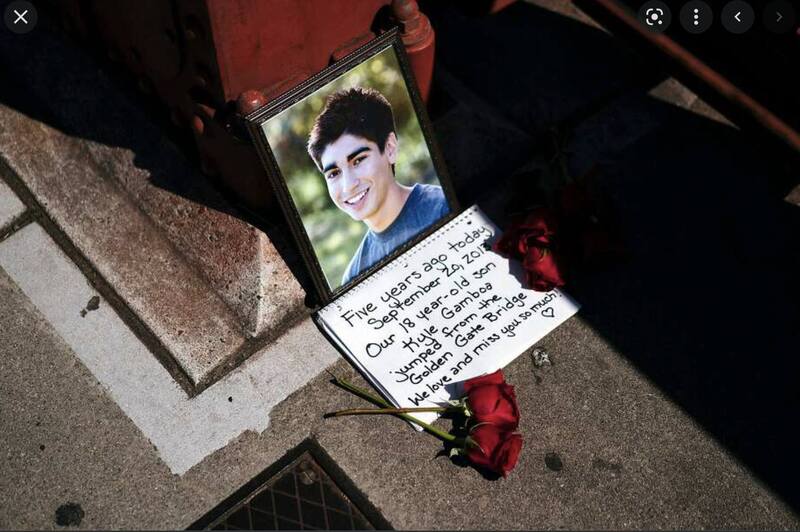
RAVING REVIEW: A board meeting gives Kymberlyrenee and Manuel Gamboa a place to talk about their son Kyle. It’s also where listeners can decide what to do about a safety problem. Kyle was eighteen when he died by suicide at the Golden Gate Bridge, and his parents became advocates for a physical barrier there. What makes those meetings matter in SAVING 4 SECONDS is the way Rachel Klein keeps both purposes in view. The Gamboas are telling strangers about someone they knew intimately, in a room with its own language for discussing risk. They have to speak plainly enough to make themselves heard in both conversations. Klein gives them enough time to make a case that begins with their son and ends with something the board can act on.
Klein begins with a rescue captured by the bridge’s security cameras. Putting it up front changes the interviews that follow. By the time a worker describes what it’s like when a call comes in, there’s already a sense of how many people an intervention can involve. The camera monitors the bridge. As the workers come into view, you have to pick up what they’re doing from an angle chosen long before they arrived. The decision to start with people successfully helping somebody gives the whole film a useful direction. We’re already thinking about what can be done before we hear from anybody who helped decide what the district would do.
Jeffrey Elmont’s use of sound changes what that first sequence does. Klein originally considered playing the surveillance footage in silence. In the edit, Elmont used sounds recorded at the bridge, including the low clunk of traffic passing overhead. An entire roadway goes about its business while a few people focus on the same person. The traffic places the footage in the middle of a working day without making us depend on hearing what the workers say. Most people crossing the bridge would have heard their cars going over the same roadway and had no idea what was happening nearby. Elmont brings that ordinary part of the bridge into a sequence where the people on camera have anything but an ordinary job.
A painter or ironworker can spend most of the day doing the job you’d expect from that title. Klein’s interviews give the workers time to explain what happens when the radio interrupts it. The documentary needs those accounts because a recording of an intervention ends when the people involved leave the frame. The employees are the ones who can tell you what it means to go back to work with another call possible at any point in the shift. They bring a particular sort of authority to the debate over the barrier. They know what it costs to keep sending people out to handle a problem one call at a time.
Cliff Traiman’s photography gives those interviews a setting that’s worth looking at in its own right. Klein and Traiman trained with bridge staff and filmed in harnesses, working beneath the roadway and inside the towers. The camera gets close enough for you to see where somebody would have to put their feet. From the usual distance, a tower is a shape you know on sight. Up close, it’s a place you have to get into and work in, no matter what kind of day it is. Some of the angles look so unfamiliar that it’s easy to see why Klein has said people assume they came from a drone. The fact that a person with a camera could get there is part of what makes the shots worth having. Somebody has to go out into that space on a day when there’s no reason for a camera to be there.
Old footage the district had stored on tape shows how many times the idea of a barrier came back for consideration. That history puts the Gamboas in a campaign that had accumulated experience long before they needed to know anything about it. A proposal can appear in the context in which people first heard it. Approval seems inevitable by the time a project is being commemorated. Older coverage restores some of the uncertainty. The archive puts us back at a point when people could reasonably expect the idea to come up and go nowhere all over again.
The engineering discussion gets down to questions with specific answers. The bridge has to handle high winds, and whatever goes on it has to be maintained by people with other work to do. The plans have to account for both. The film also raises questions about how much a landmark’s appearance should matter when people ask its operators to address a recurring danger. Hearing those arguments alongside the engineering makes it easier to distinguish a design constraint from a choice about what the district is willing to pay for. Klein and Elmont have to make room for this while keeping the people who brought the issue to the board in view. The family interviews keep the long stretches of official deliberation from feeling like time that passed in a vacuum.
One of the producers, Paolo Cosulich-Schwartz, works in public affairs for the district. That relationship helps explain how Klein got access to the surveillance material and parts of the bridge an independent crew couldn’t simply walk into. Klein has said she agreed to show the district the opening rescue sequence before locking that edit. That arrangement matters when a public agency is both a participant in the story and a source for some of its most important images. The access earns its place because the documentary has room for the district’s earlier reluctance alongside the work its employees have done. The people who run the bridge and the people who respond when someone needs help are part of the same institution, and the film lets us hear what the problem looks like from both jobs.
The gap between getting the money and getting a barrier built is its own story. In 2014, the district board approved a funding package. A continuous physical barrier was in place a decade later. In the meantime, the Gamboas kept turning up, sometimes to ask for something as plain as an updated construction schedule. It’s easy to picture the meeting where funding is approved, and it makes it onto the evening news. An update on a project that already has the go-ahead has less appeal to a producer filling a few minutes of airtime. A documentary can afford to stay with the years in between. When Klein keeps the family in the story across that stretch, it becomes easier to understand what a change on a construction calendar means to people who’ve been counting on the work getting done.
Klein has talked about discarding animated sequences that were meant to accompany some of the interviews. The finished film keeps our eyes on the people doing the talking. That choice seems particularly right for the family material. What a parent can tell us about a child comes from knowing that person in a way the documentary can only approach by listening. The camera gives the person who’s remembering some control over how that memory reaches us. It can stay with them while they find the words. The district could permit Klein to use its footage. The family had to decide how much of their lives to share. Klein’s judgment about when to leave a person in front of the camera does as much for the film as anything her crew brought back from the bridge.
After spending this much time with the people who work on the Golden Gate Bridge, an ordinary shift starts to sound like something worth getting back to. The steel needs paint whether anyone’s paying attention or not. A person should be able to get through a day of that work without being asked to do something extraordinary on a few seconds’ notice. SAVING 4 SECONDS gives the workers credit for answering those calls and follows the people who kept asking the district to make them less frequent. A quieter radio is a modest thing to wish for after a film that shows how long it took to give workers a chance at one.
If you or someone you know is in crisis in the U.S., call or text 988 to reach the Suicide & Crisis Lifeline. Support is available 24/7.
Please visit https://linktr.ee/overlyhonestr for more reviews.
Follow me on Letterboxd, Instagram, Twitter, and YouTube. You can also find my social media accounts on most platforms by searching for 'Overly Honest Reviews'.
I’m always happy to hear from my readers; please don't hesitate to say hello or send me any movie questions.
[photo courtesy of FIRE STARTER STUDIOS]
DISCLAIMER:
At Overly Honest Movie Reviews, we value honesty and transparency. Occasionally, we receive complimentary items for review, including DVDs, Blu-rays, CDs, Vinyl Records, Books, and more. We assure you these arrangements do not influence our reviews, as we are committed to unbiased, sincere evaluations. We aim to help you make informed entertainment choices regardless of our relationship with distributors or producers.
Amazon Affiliate Links:
This site also contains Amazon affiliate links. If you purchase through these links, we may receive a commission. This affiliate arrangement does not affect our commitment to honest reviews and helps support our site. We appreciate your trust and support as you navigate these links.


Happy
0 %

Sad
0 %

Excited
0 %

Sleepy
0 %

Angry
0 %

Surprise
0 %
 0
 0

Average Rating