The Boy Who Stole Billions?
Read Time:7 Minute, 30 Second
TV MINI-SERIES REVIEW
The Boy Who Stole Billions?
 –


Genre: Documentary, Crime
Year Released: 2026
Episodes: 3
Runtime: Full-season runtime unconfirmed
Director: Nanette Burstein
Where to Watch: all three episodes of the series will be available on Prime Video in more than 240 countries and territories worldwide on November 30, 2026
RAVING REVIEW: Tara Mac Aulay helped start Alameda Research with Sam Bankman-Fried, and she remembers having to tell him to slow down. At that point, somebody working alongside him could see a risk he wanted to take and argue over whether they had any business taking it. In THE BOY WHO STOLE BILLIONS?, Nanette Burstein makes room for that argument before the company’s name means anything to the average person. It’s a good way to get at what happened. There’s time to see how a company can lose people who ask difficult questions and keep doing business as though their departure settled those questions.
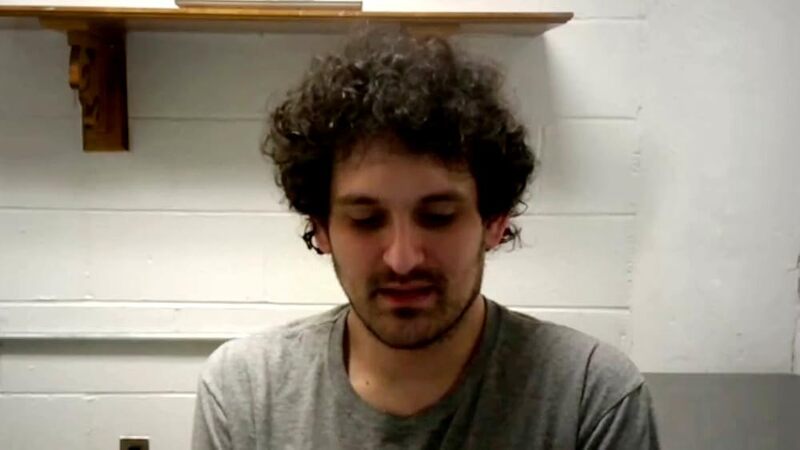
Bankman-Fried gives his own account from prison. Burstein’s access matters because so much of the FTX story was told in a voice he’d already learned how to use in public. He could talk about the math behind a decision and make it sound as though everyone else was getting worked up over something he’d already calculated. Now he has a reason to go back over what he thought he was doing. The documentary is more interesting when it gives that explanation a specific person to answer to. Mac Aulay had to decide how much she was willing to tell other people they could trust the firm to do. She remembers a different set of obligations from the ones he brings up.
Burstein goes back through the ideas that made finance seem like a good use of Bankman-Fried’s time. The interviews and footage from effective altruism events make clear what was attractive about earning to give. If you thought you could make a lot of money and direct it toward work that helped more people, there was a case for concentrating on making the money. That part of the series gives the idea enough time to make sense before it’s associated with a particular person and everything he came to represent. It also gives some context to Mac Aulay’s account. She had taken the original idea seriously enough to work alongside him. Her objections get more interesting once you understand how much common ground they started with.
The early Alameda material is valuable because an objection can be about something as ordinary as whether the people running a firm have given their investors an honest idea of the risks. You can agree on what you want to do with the profits and still have a serious disagreement about what you promised the people who put up the money. Listening to someone who was there when those questions came up gives the documentary a better explanation for how things changed than trying to locate the answer in his childhood. His parents can explain what he was like growing up. His colleagues can tell you what happened when they asked him to do something differently and had to decide whether they could live with the answer.
By the time the documentary gets to FTX, the audience has some practice listening to Bankman-Fried talk about the odds of succeeding. The exchange gives that way of thinking a public audience. FTX made money from trading fees, and getting more people to use it was something the company could spend heavily to achieve. Its name ended up on the Miami Heat’s arena. For people who’d never looked into where their deposits went, that name could become familiar just from watching a basketball game. The company’s rise is easier to understand when Burstein gives some attention to where people actually encountered it. Most customers would never have had the conversations the people who worked there were having.
The image of Bankman-Fried as somebody who didn’t care how rich he looked was particularly useful to the business. He could show up in shorts and a T-shirt and talk about what he planned to give away. The arena deal cost money now. The promise that his fortune would eventually do some good could be repeated without anybody agreeing on a date. That difference gives the documentary more to work with than another account of a young founder who got carried away with his own publicity. The story being told about him could make it easier for people to overlook a decision they’d have wanted another executive to explain.
Caroline Ellison’s position complicates that public picture. She ran Alameda Research and had a personal relationship with Bankman-Fried. The series gives space to that history, which helps explain how hard it could be to draw a line between a disagreement at work and a disagreement with somebody you were close to. It matters that Burstein gives the working relationship its own place in the story. Ellison’s job put her in a position to understand what was happening to the money. She also made decisions for which she was responsible, pleaded guilty, and cooperated with prosecutors. The relationship has enough going on without making it do all the work of explaining why two firms that were presented as separate had become so hard to disentangle.
The most useful financial detail is also one of the easiest to say out loud. Alameda held a substantial amount of a token issued by FTX. Putting a price on that token can help you arrive at a number for what Alameda’s holdings are worth. Trying to sell enough of it to cover what you owe is another matter. You need buyers willing to pay something close to the price you’ve put in the books. The balance sheet CoinDesk reported made it possible for people outside the two companies to ask whether that assumption held. The documentary’s attention to the connection between the firms helps put something concrete behind the word collapse. It also matters for a customer who put money on an exchange to trade. That person had no reason to assume that getting their money back depended on the financial health of a separate trading firm.
That’s where the question mark in the title gets in the way. It suits a series in which the founder wants to tell his side, and others remember the same events differently. It’s less useful when it makes the criminal case sound like a choice between two equally plausible descriptions of a bad week. A jury found Bankman-Fried guilty on seven counts, and a federal appeals court upheld the judgment. Risk explains some of the decisions people in his circle describe. The verdict concerns whose money was used and what people were told about where it was going. Keeping those points clear makes the interviews more worthwhile. Bankman-Fried can explain why he thought a decision made sense to him, and the documentary can give us enough information to understand why that answer falls short.
Burstein gets more out of the prison interviews by placing them in a story already being told by people who had to make a decision about him. Employees at Alameda could at least bring a problem to his attention and see what he did next. An FTX customer had a much narrower decision to make, based on what the exchange said about keeping deposits safe. There’s a great deal to learn from hearing the founder go back over what everyone trusted him to do. The person who submitted a withdrawal had a simpler question for him, and it had an answer that could be checked.
Please visit https://linktr.ee/overlyhonestr for more reviews.
Follow me on Letterboxd, Instagram, Twitter, and YouTube. You can also find my social media accounts on most platforms by searching for 'Overly Honest Reviews'.
I’m always happy to hear from my readers; please don't hesitate to say hello or send me any movie questions.
[photo courtesy of PRIME VIDEO]
DISCLAIMER:
At Overly Honest Movie Reviews, we value honesty and transparency. Occasionally, we receive complimentary items for review, including DVDs, Blu-rays, CDs, Vinyl Records, Books, and more. We assure you these arrangements do not influence our reviews, as we are committed to unbiased, sincere evaluations. We aim to help you make informed entertainment choices regardless of our relationship with distributors or producers.
Amazon Affiliate Links:
This site also contains Amazon affiliate links. If you purchase through these links, we may receive a commission. This affiliate arrangement does not affect our commitment to honest reviews and helps support our site. We appreciate your trust and support as you navigate these links.


Happy
0 %

Sad
0 %

Excited
0 %

Sleepy
0 %

Angry
0 %

Surprise
0 %
 0
 0

Average Rating