Death Becomes a Business Opportunity
Read Time:8 Minute, 52 Second
MOVIE REVIEW
The Gallerist
 –


Genre: Dark Comedy, Crime, Thriller
Year Released: 2026
Runtime: 1h 29m
Director: Cathy Yan
Writers: James Pedersen, Cathy Yan
Cast: Natalie Portman, Jenna Ortega, Sterling K. Brown, Daniel Brühl, Charli XCX, Zach Galifianakis, Da'Vine Joy Randolph, Catherine Zeta-Jones
Where to Watch: in theaters December 4, 2026
RAVING REVIEW: An art gallery might be one of the funniest places imaginable to conceal a dead body in plain sight. Put something sufficiently bizarre in the middle of a room, give it an elaborate explanation about the human condition, and there's a reasonable chance someone with more money than they know what to do with will express an interest in purchasing it. Cathy Yan's THE GALLERIST takes that admittedly ridiculous idea and builds an entire dark comedy around it. The premise lends itself to wonderfully inappropriate humor, particularly given the personalities involved, and the setting offers plenty of opportunities to ridicule an industry where an object's perceived importance can change considerably depending on who's standing next to it.
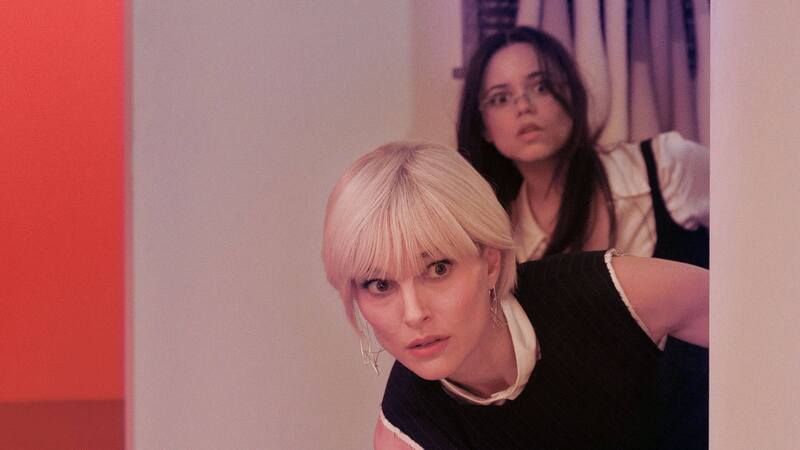
Natalie Portman plays Polina Polinski, a gallery owner whose professional ambitions have become increasingly complicated by the financial consequences of her separation. She's desperate to establish herself within the contemporary art community, where the people whose approval she seeks are accustomed to dealing with considerably more established figures. Her exhibition during Art Basel Miami represents an opportunity to change that. Unfortunately, an encounter with art influencer Dalton Hardberry (Zach Galifianakis) results in his accidental death, leaving Polina and her assistant, Kiki Gorman (Jenna Ortega), in a situation that would probably be best handled by contacting the authorities. Polina has other ideas, deciding the unfortunate circumstances present an opportunity to give her exhibition something no other gallery has.
There's an amusing distinction between committing a crime out of desperation and recognizing the commercial possibilities of an accident. Polina's decision to incorporate Dalton's body into the exhibition changes the nature of her predicament almost immediately. She's no longer simply dealing with the potential repercussions of somebody dying on her property. She's actively attempting to benefit from his death, and every subsequent decision involves protecting something that has acquired professional significance. James Pedersen and Yan's screenplay finds its comedy in the increasingly questionable decisions Polina makes once she's convinced herself that admitting what happened would be more damaging than continuing with the deception.
Portman's involvement in the production extends beyond playing Polina. She also produced the movie through MountainA, the production company she established with Sophie Mas, which makes her participation in such a story particularly interesting. Polina is attempting to establish herself as an independent businesswoman in an environment where her previous marriage has influenced how others perceive her accomplishments. Her financial circumstances help explain the intensity of her ambition without making her subsequent actions particularly admirable. There's an uncomfortable degree of entitlement in assuming professional recognition is something she's owed, especially when the lives of the people around her become increasingly affected by her attempts to obtain it.
Ortega's Kiki occupies a substantially different position within that professional relationship. Working for someone whose judgment has become increasingly compromised presents difficulties well beyond the responsibilities of a gallery assistant. Kiki becomes involved in a situation over which she has considerably less control than her employer, and the comedy benefits from the difference in their respective positions. Polina can make decisions about the direction of the business, leaving Kiki to deal with the immediate consequences. There's something particularly appropriate about using a workplace hierarchy as the basis for a criminal farce, given how often employees have to manage problems created by the people who pay them.
Adding Catherine Zeta-Jones as Marianne Gorman, Kiki's aunt and an influential figure in the art community, introduces another level of professional inequality. Ortega and Zeta-Jones previously worked together on WEDNESDAY, though their relationship here operates within an entirely different environment. Marianne has the kind of industry recognition Polina desperately wants, and her involvement shows how much influence an established individual can have on the reception of somebody else's work. An opinion expressed by the right person carries financial implications, particularly in an industry where prospective buyers may be purchasing something as much for its reputation as for their appreciation of the work itself.
Da'Vine Joy Randolph's Stella Burgess introduces what I consider one of the movie's more interesting subjects. Stella's artwork becomes inseparable from the ridiculous situation developing around the exhibition, creating a conflict between the artist's intentions and the meaning others assign to her work. The artist has considerably less authority over that interpretation once the work is made available to an audience. That's an unavoidable part of creating something for public consumption, though the circumstances here push it to an absurd extreme. It's also a reminder that the people responsible for creating the objects being bought and sold aren't necessarily the people with the greatest influence over their financial value.
The choice to make Dalton an influencer gives THE GALLERIST a contemporary subject that extends beyond its immediate setting. His professional relevance depends upon his ability to attract attention to himself through his opinions about the work of others. There's an obvious irony in someone making a career out of judging art and subsequently becoming part of an object being judged. The attention surrounding the exhibition also illustrates how quickly public interest can become disconnected from the circumstances that originally generated it. Once something becomes desirable because people are talking about it, the motivations behind that conversation can become almost irrelevant to the people benefiting from it.
As someone who's spent years working in graphic design, I find the relationship between creative work and perceived value particularly interesting. There's a considerable difference between the time someone spends developing an idea and what another person is prepared to pay for the finished product. Creative professionals regularly encounter situations in which they're expected to explain why something costs what it does, particularly when the person paying for it doesn't understand the process involved in creating it. The contemporary art market presents an unusual variation on that problem because an artist's reputation can make an object's financial value almost unrecognizable compared with the expense of its creation. THE GALLERIST exaggerates that disconnect in a way that feels entirely appropriate for a dark comedy.
Yan enlisted contemporary art dealer Robert Dimin as a consultant, involving someone with considerable experience in the business the movie is making fun of. Dimin founded his own New York gallery after spending several years as a partner at Denny Dimin Gallery, and he also joined discussions with the filmmakers and the production design department. Francesca di Mottola, whose previous work includes THE GREAT and I AM LOVE, served as production designer. A movie set within an art gallery presents an unusual assignment for that department because the objects occupying the space are themselves subjects of discussion. The artwork has to exist as something the fictional characters can respond to, with the exhibition's appearance contributing to our understanding of the social environment they've entered.
Yan's background makes her interest in this material understandable. Before becoming a filmmaker, she worked as a journalist for The Wall Street Journal, and her debut feature, DEAD PIGS, examined the lives of people affected by China's changing economic circumstances. She also directed an episode of SUCCESSION, a series frequently concerned with the behavior of wealthy individuals whose financial circumstances have insulated them from the consequences most people associate with terrible decisions. THE GALLERIST occupies related territory by depicting people whose proximity to money and influence has distorted their sense of acceptable behavior. The comedy comes from watching those expectations collide with a situation that can't be resolved through the usual professional negotiations.
The premise presents a challenge. How far the satire can develop beyond its initial joke. Once we're introduced to the idea that someone might mistake a dead man for an extraordinary work of contemporary art, the escalating complications largely focus on maintaining that misunderstanding. There's plenty of potential for physical comedy and increasingly desperate behavior in those circumstances. The subject of artistic commercialization also offers room for a more extensive examination of the people involved in that industry. Stella's relationship with her own work is particularly intriguing in that regard, given how thoroughly somebody else's ambitions interfere with it.
THE GALLERIST is an entertainingly absurd concept for a movie, and I appreciate seeing such a recognizable cast assembled for an original dark comedy with such a peculiar premise. Its depiction of a professional community obsessed with exclusivity lends itself to the kind of exaggerated behavior Yan is exploring, and there's an appropriate absurdity in watching people try to maintain their sophisticated public appearances amid circumstances that have become increasingly undignified. The unfortunate reality for Stella is that she could spend years developing her work without attracting the kind of attention Polina generates through one disastrous accident. Imagine having to explain that particular development the next time somebody asks about your artistic process.
Please visit https://linktr.ee/overlyhonestr for more reviews.
Follow me on Letterboxd, Instagram, Twitter, and YouTube. You can also find my social media accounts on most platforms by searching for 'Overly Honest Reviews'.
I’m always happy to hear from my readers; please don't hesitate to say hello or send me any movie questions.
[photo courtesy of ROADSIDE ATTRACTIONS, VERTICAL ENTERTAINMENT]
DISCLAIMER:
At Overly Honest Movie Reviews, we value honesty and transparency. Occasionally, we receive complimentary items for review, including DVDs, Blu-rays, CDs, Vinyl Records, Books, and more. We assure you these arrangements do not influence our reviews, as we are committed to unbiased, sincere evaluations. We aim to help you make informed entertainment choices regardless of our relationship with distributors or producers.
Amazon Affiliate Links:
This site also contains Amazon affiliate links. If you purchase through these links, we may receive a commission. This affiliate arrangement does not affect our commitment to honest reviews and helps support our site. We appreciate your trust and support as you navigate these links.


Happy
0 %

Sad
0 %

Excited
0 %

Sleepy
0 %

Angry
0 %

Surprise
0 %
 0
 0

Average Rating