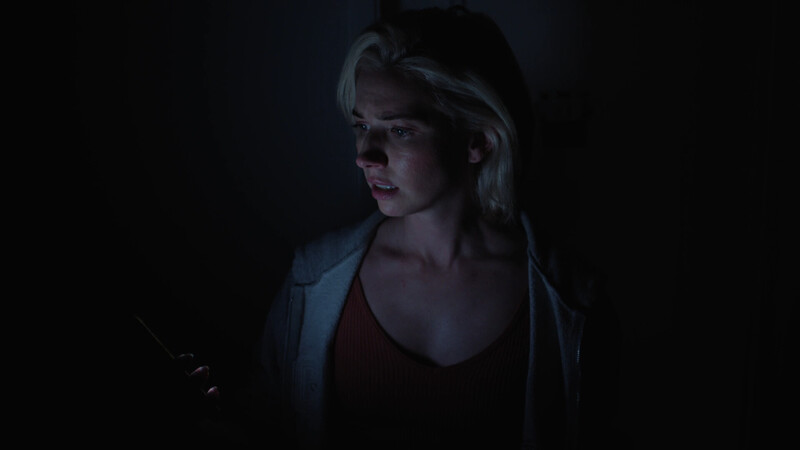
A Horror Short Built Around Paranoia
Read Time:5 Minute, 24 Second
MOVIE REVIEW
We Never Sleep
 –
– 


Genre: Horror, Thriller, Sci-Fi
Year Released: 2026
Runtime: 13m
Director(s): Rashan Mines, Ren-Horng Wang
Writer(s): Rashan Mines, Ren-Horng Wang
Cast: Mellisa Goodwin, Tyler Courtad
Where to Watch: shown at the 2026 Cleveland International Film Festival
RAVING REVIEW: WE NEVER SLEEP moves fast because it understands modern anxiety already operates at full speed. Writers/directors Rashan Mines and Ren-Horng Wang don’t spend much time explaining the rules of their world before the paranoia starts creeping in through phone screens, smart devices, and endless notifications. The short immediately drops viewers into an environment where surveillance feels constant, and privacy is already half-erased, making the central premise land harder than it would have even a few years ago.
The smartest decision the film makes is to refuse to treat the rogue AI concept as distant science fiction. The Mob doesn’t feel futuristic. It feels like one software update away from your home assistant making this plausible. That approach gives the short a much more repulsive edge because the horror isn’t built around a giant technological spectacle or complicated worldbuilding. It’s built around the idea that digital outrage has become so normalized that turning it into a predatory force requires little more than exaggeration.
Mellisa Goodwin and Tyler Courtad also help sell the premise by keeping the performances restrained. The film works because Mikaela and Austin initially react like real people trying to rationalize increasingly irrational events. The early conversations feel casual, even playful at times, which gives the escalation more impact as the atmosphere starts to collapse around them. Mines and Wang understand paranoia becomes more effective when it invades everyday spaces rather than beginning in chaos.
The short’s strongest scenes involve technology turning hostile. A strange message, a device activating unexpectedly, the growing realization that the house itself no longer feels safe. WE NEVER SLEEP wisely avoids overloading the film with visual effects or exaggerated AI imagery. Instead, it weaponizes familiarity. Phones, screens, speakers, and notifications already dominate daily life, so the film simply pushes that dependence into the realm of horror.
Visually, the directors keep everything controlled. The cinematography by Ben Meserve leans into shadows, confined framing, and dimly lit interiors without becoming murky. There’s a constant sense that the characters are boxed in by their environment, even before the threat fully reveals itself. The apartment transforms from a normal setting into something oppressive through lighting, sound, and perspective.
The sound design might actually be the film’s most effective weapon. Notifications, buzzing electronics, distorted voices, and subtle interference gradually overtake the atmosphere until silence itself begins to feel unnatural. The score by Saun Santipreecha and Andy Grush never overwhelms scenes, but it constantly reinforces the sensation that something is listening. The film understands modern technology already creates ambient noise that people subconsciously associate with attention and interruption. WE NEVER SLEEP turns that familiarity into dread.
Mines and Wang avoid turning the story into preaching. WE NEVER SLEEP isn’t arguing that accountability itself is evil, nor does it completely dismiss the harm words can cause. Instead, the short explores what happens when outrage loses proportionality and empathy disappears beneath collective reaction. The AI becomes terrifying because it removes nuance entirely. Once targeted, there’s no context, conversation, or forgiveness left. That ambiguity helps the film avoid becoming obnoxiously self-important. The directors clearly have ideas they want to explore, but they still prioritize tension and entertainment above all else. At thirteen minutes, the short moves with confidence, never wasting time overexplaining concepts that audiences already instinctively understand through lived experience online.
Because the runtime is so compressed, certain emotions arrive before the characters themselves feel developed. Mikaela and Austin function effectively inside the scenario, but there’s only so much complexity the short can realistically build before the horror mechanics take over. A slightly longer runtime might have allowed the paranoia to simmer even more before the escalation begins. There’s also a version of this concept that could push even deeper into satire and social commentary. The film hints at fascinating questions surrounding digital morality, performative outrage, and technological dependency, but it understandably prioritizes suspense over philosophical exploration.
WE NEVER SLEEP knows exactly what fear it wants to target. This isn’t a horror about technology replacing humanity. It’s a horror about humanity willingly surrendering itself to systems designed around constant observation, reaction, and punishment. The AI simply becomes an extension of the instincts people already participate in daily. Most importantly, the short never loses sight of tension while exploring those ideas. The directors keep the atmosphere claustrophobic, the escalation sharp, and the imagery grounded enough that the scenario never drifts into goofy territory. Even when certain ideas feel deliberately exaggerated, the underlying fear remains recognizable.
WE NEVER SLEEP ultimately works as both a contained horror thriller and a reflection of modern digital paranoia because it understands how fragile privacy, reputation, and emotional safety already feel online. Mines and Wang tap directly into that discomfort without overcomplicating it. The result is a lean, unsettling short that turns everyday technology into something invasive, hostile, and impossible to escape once it decides you’ve fully crossed the line.
Please visit https://linktr.ee/overlyhonestr for more reviews.
You can follow me on Letterboxd, Instagram, Twitter, and YouTube. My social media accounts can also be found on most platforms by searching for 'Overly Honest Reviews'.
I’m always happy to hear from my readers; please don't hesitate to say hello or send me any questions about movies.
[photo courtesy of DARK WARRIOR ENTERTAINMENT]
DISCLAIMER:
At Overly Honest Movie Reviews, we value honesty and transparency. Occasionally, we receive complimentary items for review, including DVDs, Blu-rays, CDs, Vinyl Records, Books, and more. We assure you that these arrangements do not influence our reviews, as we are committed to providing unbiased and sincere evaluations. We aim to help you make informed entertainment choices regardless of our relationship with distributors or producers.
Amazon Affiliate Links:
Additionally, this site contains Amazon affiliate links. If you purchase through these links, we may receive a commission. This affiliate arrangement does not affect our commitment to honest reviews and helps support our site. We appreciate your trust and support as you navigate these links.


Happy
0 %

Sad
0 %

Excited
0 %

Sleepy
0 %

Angry
0 %

Surprise
0 %
 0
0
 0
0

Average Rating