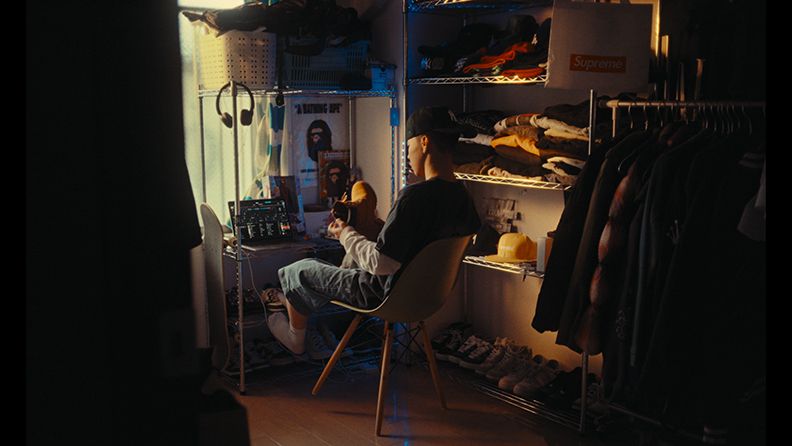
The Energy of Krump Collides With Isolation
Read Time:5 Minute, 36 Second
MOVIE REVIEW
A Quiet Storm
 –
– 

Genre: Documentary, Short, Drama
Year Released: 2025, 2026
Runtime: 29m
Director(s): Benjamin Nicolas
Where to Watch: shown at the 2026 Kraków Film Festival, Energa Camerimage, Sapporo International Short Film Festival & Market, Hot Docs, and San Francisco International Film Festival
RAVING REVIEW: A QUIET STORM opens with stillness, but it never feels calm. Benjamin Nicolas builds the documentary around the tension that sits inside ordinary moments: school hallways, apartment balconies, train rides, dance rehearsals, and silent meals. Maïto Amano moves through all of them carrying pressure that feels far heavier than what most fourteen-year-olds should already understand. The film recognizes this, and instead of turning him into an inspirational child-prodigy narrative, Nicolas approaches him with patience, curiosity, and restraint. That becomes the documentary’s greatest strength.
Maïto’s relationship with Krump (a highly energetic, expressive, and improvisational street dance style) isn’t framed like a hobby or extracurricular activity. It feels necessary. The movement carries force that the teenager himself still seems to be figuring out in real time. When he dances, especially during the more explosive Krump sequences, the documentary suddenly shifts. The observation dissolves into something volatile, physical, and personal. Every stomp, swing, chest pop, and burst of movement feels like emotional language escaping through the body before it can be filtered into words.
What makes those scenes so powerful is how sharply they contrast with the rest of Maïto’s life. Outside dance, he exists inside systems built around discipline, expectation, and control. Nicolas emphasizes how much of Japanese social structure revolves around containment, routine, and composure, making Krump feel almost radical by comparison. Maïto isn’t simply performing. He’s releasing something that otherwise has nowhere to go.
The documentary also avoids romanticizing artistic expression in simplistic ways. Krump may function as an emotional release, but A QUIET STORM never suggests it solves the pressures surrounding him. Maïto is still balancing obligations, expectations, responsibilities, and the strange emotional isolation that often comes with becoming skilled at something at a very young age. Nicolas understands talent can create its own form of loneliness.
What gives the film its emotional core, though, is the relationship between Maïto and his mother, Itsuka. The documentary rarely spells out their dynamic. Instead, Nicolas trusts glances, pauses, routines, and body language to communicate years of sacrifice and unspoken understanding. The film becomes less about dance itself and more about forms of support that rarely receive acknowledgment. Itsuka’s exhaustion, concern, patience, and protection all lie beneath the surface, never needing dramatic speeches to explain them.
That carries through the entire documentary. Nicolas refuses manipulative shortcuts. There are no forced inspirational monologues, no swelling soundtrack demanding tears, no artificial conflict manufactured for dramatic structure. A QUIET STORM earns its emotion through observation. The camera simply stays close enough for viewers to recognize what the characters themselves often leave unsaid.
Alexandre Nour’s cinematography captures Tokyo and its surroundings with an almost dreamlike softness at times, especially when Maïto appears detached from his surroundings. Nicolas frequently frames himself alone inside larger spaces, emphasizing both his youth and the emotional distance separating him from the world surrounding him. Even crowded environments often feel isolating.
There’s also something fascinating about how Nicolas captures masculinity throughout the documentary. Maïto is at an age when vulnerability often becomes complicated, particularly for boys trying to establish their identity and confidence. Krump allows him to express anger, fear, uncertainty, and confusion without verbalizing them. The documentary argues that movement itself can become a form of emotional survival when language fails.
A QUIET STORM accomplishes an impressive amount without ever feeling rushed. Nicolas structures the film more as an emotional accumulation than as a traditional progression. Rather than building toward a single climax, the documentary gradually deepens viewers’ understanding of Maïto’s internal world through repetition, routine, and observation.
If there’s a limitation, it’s that the film’s restraint occasionally keeps viewers outside Maïto’s inner life. Nicolas intentionally avoids heavy exposition or direct breakdowns, which preserves authenticity but sometimes creates distance during quieter stretches. There are moments where the documentary feels so committed to observation that it risks underdeveloping some of the larger tensions surrounding Maïto’s future, ambitions, or emotional state.
That distance also feels partially intentional. Adolescence itself often operates that way. Teenagers rarely explain themselves clearly because they’re still figuring themselves out. A QUIET STORM understands that confusion and never forces clarity where uncertainty feels more truthful.
What lingers most after the documentary is the overwhelming sense of emotional exhaustion sitting beneath Maïto’s talent. Nicolas never portrays him as broken or tragic, but he does recognize the cost of carrying such intensity at that young age. The documentary repeatedly returns to the idea that expression itself can become a survival mechanism, particularly in environments where emotional openness feels difficult or discouraged.
A QUIET STORM understands the difference between observing and understanding why somebody needs to perform in the first place. The dance sequences may initially draw viewers in, but the film’s real subject is the pressure that lies beneath them. Nicolas captures that pressure with remarkable compassion, crafting a documentary that feels intimate without becoming invasive and emotionally heavy without ever losing its grace.
Please visit https://linktr.ee/overlyhonestr for more reviews.
You can follow me on Letterboxd, Instagram, Twitter, and YouTube. My social media accounts can also be found on most platforms by searching for 'Overly Honest Reviews'.
I’m always happy to hear from my readers; please don't hesitate to say hello or send me any questions about movies.
[photo courtesy of SKEPTIC FILMS, TWIN BRAINS FILMS, EROIN CORP.]
DISCLAIMER:
At Overly Honest Movie Reviews, we value honesty and transparency. Occasionally, we receive complimentary items for review, including DVDs, Blu-rays, CDs, Vinyl Records, Books, and more. We assure you that these arrangements do not influence our reviews, as we are committed to providing unbiased and sincere evaluations. We aim to help you make informed entertainment choices regardless of our relationship with distributors or producers.
Amazon Affiliate Links:
Additionally, this site contains Amazon affiliate links. If you purchase through these links, we may receive a commission. This affiliate arrangement does not affect our commitment to honest reviews and helps support our site. We appreciate your trust and support as you navigate these links.


Happy
100 %

Sad
0 %

Excited
0 %

Sleepy
0 %

Angry
0 %

Surprise
0 %
 1
1
 0
0


Average Rating