A Predator Replaces the Gentleman
Read Time:7 Minute, 30 Second
MOVIE REVIEW
Horror of Dracula (Dracula)
 –
– 

Genre: Horror
Year Released: 1958, 2026 4K
Runtime: 1h 22m
Director: Terence Fisher
Writers: Jimmy Sangster, Bram Stoker
Cast: Peter Cushing, Christopher Lee, Michael Gough, Melissa Stribling, Carol Marsh
Where to Watch: available October 27, 2026. Pre-order your copy here: www.moviezyng.com or www.amazon.com
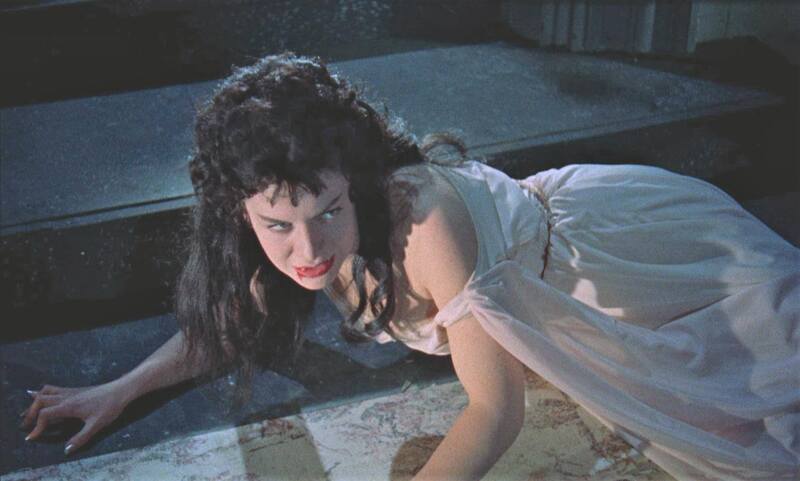
RAVING REVIEW: Some movies become important because they were first, and others because they changed what everyone expected afterward. HORROR OF DRACULA belongs firmly in that second category. By 1958, Dracula was already one of horror’s most recognizable figures, with Bela Lugosi’s performance casting an enormous shadow over the character. Hammer Films didn’t try to recreate that version. Instead, director Terence Fisher, Christopher Lee, and Peter Cushing pushed the material into something faster, bloodier, more physical, and noticeably more dangerous. Even now, it’s easy to understand why that approach landed so hard.
This was an easy home run for me because I’ve always loved the classic monsters, and HORROR OF DRACULA feels like one of those rare moments where something familiar is genuinely reborn. Hammer didn’t simply dust off Dracula and send him back out for another round. They looked at what made the character work, kept the Gothic foundation intact, and then pushed everything forward with more color, more movement, more blood, and a completely different kind of energy. There’s something special about watching a studio take such an established piece of horror history and realize there was still another way to tell it. That confidence runs through the movie, and it’s a huge part of why it still feels so alive.
The story takes plenty of liberties with Bram Stoker’s novel, beginning with Jonathan Harker arriving at Dracula’s castle under pretenses rather than as an unsuspecting visitor. He already knows what Dracula is, and his mission is far more aggressive than audiences might expect. That decision immediately gives HORROR OF DRACULA a different kind of momentum because the movie isn’t interested in spending much time convincing anyone that vampires exist. Dracula is real, Harker knows it, and Van Helsing knows exactly what to do.
That efficiency helps the movie tremendously. At just 82 minutes, HORROR OF DRACULA doesn’t spend much time wandering through unnecessary subplots. It strips the story down, rearranges several familiar pieces, and keeps moving toward the inevitable confrontation between Dracula and Van Helsing. In the process, the film loses some of the broader texture of Stoker’s story, but it's replaced with a leaner horror movie with a stronger sense of urgency. Christopher Lee’s Dracula is the obvious turning point.
Lee doesn’t need lengthy speeches or constant screen time to establish control over the movie. His Dracula feels almost animalistic when threatened, moving with a speed and aggression that separates him sharply from Lugosi’s slower, more hypnotic interpretation. The performance still has elegance, particularly in his earliest appearance, but once the mask drops, Lee becomes far more violent. The bared teeth, bloodshot eyes, and sudden physical movements make him feel like a predator rather than simply a mysterious aristocrat.
That approach also makes his limited dialogue surprisingly effective. Lee disappears for stretches of the film, and there are certainly moments when I wanted more of him, but the scarcity gives his appearances additional weight. Dracula doesn’t need to dominate every scene because the threat of his return hangs over nearly everything happening around him. Peter Cushing is just as important to the film's success.
His Van Helsing isn’t a passive scholar waiting for everyone else to understand the supernatural. Cushing plays him with intelligence, calm authority, and enough physical confidence that the movie eventually becomes almost as much an adventure story as a traditional Gothic horror film. He investigates, tests theories, confronts danger directly, and eventually turns the final confrontation into something far more kinetic than many earlier horror audiences would have expected.
Cushing and Lee also understand exactly how different their characters need to feel. Dracula is instinctive and explosive, while Van Helsing is controlled and deliberate. That opposition gives the film an energy that becomes especially noticeable whenever the two finally occupy the same space.
The climax remains one of the movie’s strongest accomplishments. Instead of relying entirely on dialogue, spells, or someone quietly driving a stake through a coffin, Fisher stages the confrontation with movement. Furniture becomes part of the fight. Curtains become weapons. Sunlight becomes something Van Helsing has to reach rather than simply wait for. The sequence’s physical desperation makes it feel surprisingly modern compared with many horror films from the same period. Color is equally important.
HORROR OF DRACULA embraces bright, rich Technicolor instead of attempting to recreate the heavy black-and-white shadows associated with earlier Universal horror. That can occasionally make the movie feel less mysterious, particularly during daylight scenes, but it also allows Hammer to do something those earlier films couldn’t. Blood is suddenly very red. Costumes become more pronounced. Castle interiors, bedrooms, crypts, and graveyards take on their own personalities rather than disappearing into darkness.
For audiences in 1958, those flashes of blood must have felt considerably stronger than they do today. Modern horror has obviously pushed violence far beyond anything happening here, yet the filmmaking understands that restraint can make a small amount of blood feel significant. Fisher rarely overwhelms the movie with gore. Instead, he knows exactly when that burst of color will have the greatest effect. Not everything has aged equally well.
Some stretches between Dracula’s appearances can become talk-heavy, and the condensed screenplay occasionally makes characters feel more functional than fully developed. Michael Gough’s Arthur Holmwood becomes an important part of Van Helsing’s pursuit, but several supporting characters exist mainly to move the investigation forward or become Dracula’s next target. Removing characters such as Renfield also makes the film feel noticeably different from several other versions of the story.
There’s also the unavoidable feeling that Lee should simply be in the movie more. His Dracula is so commanding that every absence becomes noticeable, particularly once the film establishes how effective his interpretation is. That doesn’t damage the movie significantly, but it does create the strange situation where one of horror cinema’s most influential Dracula performances occupies less of the film than its reputation might suggest. HORROR OF DRACULA understands something fundamental about adapting familiar material. Repeating the same story isn’t enough if you don’t bring something new to it. Hammer brought something new.
The upcoming Warner Archive 4K UHD edition makes that history particularly interesting to revisit. The two-disc release includes the original uncut and theatrical versions, U.S. and U.K. aspect ratios, five feature commentaries, several featurettes, and theatrical trailers. For a film whose history includes different edits and presentations over the decades, having multiple versions preserved together feels especially appropriate. More importantly, however, the movie itself earns the attention.
Christopher Lee didn’t erase Bela Lugosi’s Dracula, nor should he have. He created another interpretation powerful enough to stand beside it. Peter Cushing similarly transformed Van Helsing into someone who could match Dracula physically and intellectually. Terence Fisher then wrapped both performances inside a movie that helped establish the visual identity and attitude Hammer horror would continue developing for years.
Nearly seven decades later, HORROR OF DRACULA isn’t frightening in quite the same way it would have been in 1958. It doesn’t need to be. Its importance comes from how confidently it broke from what Dracula had been on film and showed audiences what he could become.
Please visit https://linktr.ee/overlyhonestr for more reviews.
You can follow me on Letterboxd, Instagram, Twitter, and YouTube. You can also find my social media accounts on most platforms by searching for 'Overly Honest Reviews'.
I’m always happy to hear from my readers; please don't hesitate to say hello or send me any questions about movies.
[photo courtesy of MOVIE ZYNG, WARNER ARCHIVE]
DISCLAIMER:
At Overly Honest Movie Reviews, we value honesty and transparency. Occasionally, we receive complimentary items for review, including DVDs, Blu-rays, CDs, Vinyl Records, Books, and more. We assure you these arrangements do not influence our reviews, as we are committed to unbiased, sincere evaluations. We aim to help you make informed entertainment choices regardless of our relationship with distributors or producers.
Amazon Affiliate Links:
This site also contains Amazon affiliate links. If you purchase through these links, we may receive a commission. This affiliate arrangement does not affect our commitment to honest reviews and helps support our site. We appreciate your trust and support as you navigate these links.


Happy
0 %

Sad
0 %

Excited
0 %

Sleepy
0 %

Angry
0 %

Surprise
0 %
 0
0
 0
0
![Morbid Pleasures: a Compendium of Grand Guignol & the Grand Guignolesque [LE 12-Disc Blu-Ray Box Set] – Pre-Order](https://mailnewsgroup.com/img/0367/0367857.jpg "Morbid Pleasures: a Compendium of Grand Guignol & the Grand Guignolesque [LE 12-Disc Blu-Ray Box Set] – Pre-Order")

Average Rating