Forty Years Later, the Excuses Haven’t Changed
Read Time:15 Minute, 18 Second
MOVIE REVIEW
Rate It X
 –


Genre: Documentary
Year Released: 1986, 2026 4K restoration
Runtime: 1h 33m
Directors: Lucy Winer, Paula de Koenigsberg
Where to Watch: new 4K restoration opening theatrically November 20, 2026, with a Blu-ray and DVD release scheduled for December 1
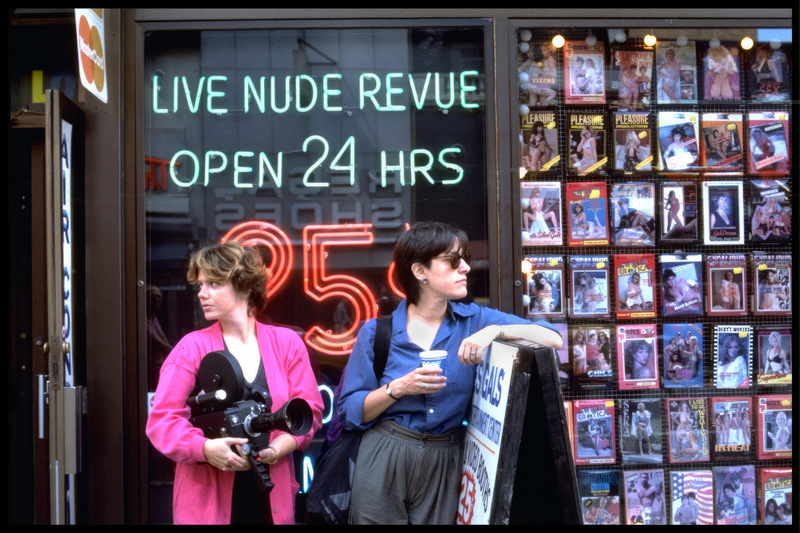
RAVING REVIEW: RATE IT X was made roughly forty years ago, yet some of the men interviewed in this documentary could probably repeat their exact arguments today without realizing anything was wrong with them. Directors Lucy Winer and Paula de Koenigsberg traveled across America, asking men about women, sexuality, advertising, and how their businesses profited from particular ideas about gender. They encountered remarkably comfortable people explaining why women should be treated differently, frequently presenting their opinions as perfectly reasonable. What makes the documentary so effective is how little effort it takes to expose those attitudes. The filmmakers don't need to deliver lengthy arguments or repeatedly correct their subjects. They ask questions, allow the men to answer, and leave viewers to consider what those responses reveal.
The documentary emerged during a period when the women's movement had already achieved substantial political and cultural victories, yet sexist assumptions remained deeply established throughout American society. Equal opportunity legislation and changing expectations about women's roles hadn't magically eliminated the attitudes that made those reforms necessary. Winer and de Koenigsberg approached the issue by examining the people who continued reinforcing those beliefs, particularly men working in industries where exploiting women could be financially rewarding. Rather than building their argument around women describing discrimination, they concentrated entirely on male interviewees, allowing those responsible for perpetuating certain attitudes to explain themselves.
That decision gives RATE IT X a distinctive approach compared with documentaries that rely heavily on narration or expert commentary. Winer conducts interviews while remaining almost entirely outside the frame, occasionally represented by a gloved hand holding a microphone. It's a clever visual choice because her physical absence keeps attention on the person answering the questions. The audience isn't watching two personalities compete for control of a conversation. Instead, the men are given considerable room to talk, sometimes appearing unaware of how their explanations might sound to someone who doesn't already share their assumptions.
The approach also introduces an interesting form of comedy. There's something almost unbelievable about hearing someone confidently justify an opinion that grows increasingly ridiculous the longer he explains it. Several interviewees seem convinced they're offering thoughtful explanations for ordinary business practices or longstanding social customs. The filmmakers recognize that challenging every statement would interrupt the effect. Sometimes letting someone keep talking reveals far more than a confrontational exchange ever could. The result can be funny, but the humor comes with the uncomfortable realization that these attitudes have genuine consequences.
Advertising provides some of the documentary's clearest examples of sexism being treated as a routine business decision. Executives discuss the use of women's bodies and physical attractiveness to sell products, explaining the strategies behind imagery that presents women primarily as objects of male desire. Their comments reveal how easily commercial interests can become an excuse for reinforcing stereotypes. If an image generates attention or increases sales, those responsible can frame their decisions as practical marketing rather than acknowledge what those images communicate about women.
The distinction matters because advertising doesn't operate separately from the society consuming it. Commercials and promotional imagery draw on existing cultural expectations, but they also reinforce those expectations through repetition. When women are consistently presented according to narrow standards of beauty or sexual availability, the resulting imagery influences how audiences understand femininity. The documentary recognizes that the issue extends beyond whether a particular advertisement is offensive. It's about the larger collection of messages being repeated across industries that benefit from making those assumptions appear normal.
The film also examines more openly exploitative businesses, including adult entertainment and pornography. These subjects introduce complicated questions about sexual expression, consent, and the financial interests of people controlling the material being produced. Winer and de Koenigsberg aren't interested in pretending that every sexual image carries the same implications. Their attention is directed toward the men who decide how women will be presented and the assumptions guiding those choices. That distinction keeps the documentary's central criticism focused on power rather than treating sexuality itself as inherently objectionable.
Ugly George, the New York public-access television personality, is among the more memorable examples of how exploitation can be packaged as entertainment. Known for approaching women on the street and attempting to persuade them to undress for his camera, he represents a particularly shameless version of the attitudes the filmmakers are investigating. His flamboyant appearance and confrontational approach make him an unusual personality, but the underlying concept of his program is much less amusing. The entertainment depends on turning women into spectacles for an audience, with the man controlling the camera determining the terms of the encounter.
George's inclusion also illustrates something that remains recognizable in contemporary media. The technology has changed considerably, but the idea that embarrassing or exposing someone can qualify as entertainment has hardly disappeared. Cameras are smaller, distribution is instantaneous, and audiences have access to material through platforms that didn't exist when the documentary was made. Those changes haven't eliminated the questions surrounding consent and the motivations of people producing provocative content. In some respects, the ability to circulate footage so easily makes those questions even more important.
Another disturbing subject is Dwaine Tinsley, the cartoonist responsible for Hustler magazine's "Chester the Molester" character. The cartoons depicted sexual predation against children through a grotesque attempt at humor, making Tinsley's participation especially unsettling. The documentary examines how someone could create such material and defend it as entertainment. This isn't simply another example of an advertiser using an attractive woman to sell something. The subject moves into the sexualization of children and the willingness of certain people to dismiss the seriousness of exploitation when it appears in a supposedly comedic format.
That material remains particularly difficult because the distinction between satirizing abusive behavior and making the abuse itself into a joke isn't always acknowledged by the people creating it. Tinsley's explanations are revealing because they demonstrate how easily artistic freedom or humor can be invoked to avoid examining the implications of a particular choice. The filmmakers don't need to reproduce an extensive history of the publication or provide a complete biography of its contributors. The material under discussion and the attitude surrounding it are enough to establish why his participation matters.
Joel M. Reed, the director of BLOODSUCKING FREAKS, provides another connection to exploitation entertainment. His film became notorious for its depictions of torture and sexual violence, making his appearance relevant to a documentary examining how women are represented for commercial consumption. There's an important distinction between fictional violence and actual abuse, but that doesn't mean depictions of violence exist outside cultural criticism. The questions concern the intentions behind those images, the audience they're designed to attract, and the assumptions about women that influence their presentation.
As someone who appreciates exploitation cinema, I think that distinction matters. A movie can deliberately use offensive material without every viewer being required to approve of what it depicts. At the same time, calling something exploitation doesn't automatically exempt it from criticism. The people creating these productions choose whose suffering becomes entertainment and how that suffering is presented. RATE IT X offers an opportunity to examine those decisions without reducing the entire history of exploitation filmmaking to one simple argument.
What makes the documentary broader than an examination of pornography or advertising is its willingness to look at sexism in comparatively ordinary environments. Funeral services, commercial products, and conversations about household responsibilities become opportunities to investigate assumptions that might otherwise go unnoticed. These aren't necessarily industries that immediately come to mind when discussing the sexual exploitation of women, but they reveal how gender expectations can influence decisions that appear completely unrelated to sexuality.
The conversations with military veterans are especially relevant to understanding how traditional expectations about masculinity become established. Questions about whether boys should play with dolls, or why certain activities are considered appropriate for one gender, reveal assumptions that often begin in childhood. The issue isn't whether every child needs to enjoy the same activities. It's why certain interests are treated as acceptable for girls but embarrassing or inappropriate for boys. Those restrictions ultimately reinforce the same narrow definitions of masculinity and femininity that the documentary examines elsewhere.
Religion provides another source of justification for traditional gender roles. A fundamentalist minister discusses the biblical story of Adam and Eve in a way that places responsibility for humanity's downfall within a familiar argument about male authority and female disobedience. His interpretation demonstrates how religious traditions can be used to defend contemporary expectations about relationships between men and women. The film isn't attempting to provide a comprehensive examination of theology. It concentrates on how an individual uses religious belief to explain why men should exercise authority over women.
These different examples help establish that sexism isn't limited to men who openly dislike women. Some of the most revealing attitudes come from people who see themselves as perfectly reasonable, even respectful. They may admire women while defending practices that restrict their opportunities or reduce their value to physical appearance. That contradiction is one of the documentary's strongest observations. Discrimination doesn't always require someone to identify as prejudiced. It can survive through habits that people have learned to regard as ordinary.
The film's editing is essential to making those connections. Rather than treating each interview as an isolated conversation, the filmmakers arrange the material so similar attitudes appear across different professional and social settings. A comment from someone selling a product can take on additional significance when considered alongside a religious argument or a conversation about gender expectations. This structure turns the individual interviews into a larger examination of American culture without requiring Winer to explain every comparison through narration.
This approach has limitations, especially given how deliberately the interview subjects were selected. RATE IT X isn't a statistically representative survey of American men's attitudes. The filmmakers concentrate on individuals whose businesses or beliefs provide material relevant to their argument. Some viewers may object that the documentary doesn't spend enough time presenting alternative male perspectives, but that criticism assumes the filmmakers were attempting to measure public opinion. Their stated objective was to investigate the men and institutions helping perpetuate sexism. The selection of subjects serves that purpose, rather than being an accidental omission.
A clearly defined perspective doesn't automatically eliminate every limitation. The most outrageous personalities can attract attention precisely because their behavior is so extreme. Audiences may dismiss those individuals as exceptions and reassure themselves that ordinary people don't behave that way. The documentary becomes more valuable when its less theatrical interviews reveal similar assumptions in environments that appear respectable. Those connections prevent the material from becoming nothing more than a collection of unusually unpleasant men saying offensive things.
The documentary also reflects the feminist discussions taking place during its original production. Debates about pornography, censorship, sexuality, and the representation of women were particularly contentious, including disagreements among feminists themselves. RATE IT X doesn't attempt to resolve every aspect of those arguments. Its perspective is firmly concerned with male control over female imagery and the social consequences of treating women as products. That historical context is important because contemporary viewers may approach some subjects with different assumptions about sexual expression and individual agency.
The filmmakers have acknowledged that the film's reception was complicated even when it first appeared. Winer and de Koenigsberg faced criticism for excluding women from the interviews, even though that decision was central to their approach. In a later conversation with Sundance, they explained that they wanted to understand the values and motivations of men who occupied positions of influence. That explanation reinforces the distinction between documenting women's experiences of sexism and investigating the attitudes of people helping sustain it. Both approaches have value, but they aren't interchangeable.
RATE IT X also deserves recognition within the history of independent documentary filmmaking. Winer and de Koenigsberg worked at a time when two women, particularly openly lesbian filmmakers, faced considerable obstacles to completing and distributing independent projects. The directors have said they weren't sure the finished documentary would reach an audience. The fact that it received theatrical attention, appeared at major festivals, and eventually aired on PBS demonstrates how independent filmmaking could create opportunities for perspectives that weren't necessarily welcomed by mainstream institutions.
Its appearance at the 1986 Sundance Film Festival is an important part of that history, as is its later broadcast through PBS's POV series in 1988. Those opportunities helped the documentary reach audiences beyond the specialized screenings where politically confrontational independent films might otherwise remain. They also established a place for the project within a larger tradition of filmmakers using relatively modest resources to investigate subjects that major studios had little incentive to address.
The restoration adds another dimension to the film's significance. IndieCollect worked in association with the UCLA Film & Television Archive to preserve and restore RATE IT X in 4K, with support from organizations committed to independent cinema and women's filmmaking history. The project represents more than preparing an older documentary for another theatrical engagement. Independent films are especially vulnerable to disappearing when original materials deteriorate, or distributors no longer consider them commercially valuable. Preservation keeps these works accessible as historical documents and as examples of filmmaking that challenged established institutions.
Kino Lorber's Blu-ray release also includes an audio commentary featuring Winer and de Koenigsberg, along with the theatrical rerelease trailer. Having both filmmakers contribute commentary is a meaningful addition for a documentary whose production circumstances and original reception are so closely connected to its subject. Their perspectives give viewers interested in filmmaking history a chance to understand better the decisions behind the interviews and the experience of creating such a confrontational project.
Perhaps the most frustrating aspect of revisiting RATE IT X is recognizing how many of its underlying questions remain unresolved. Women have achieved substantial progress in professional opportunities and legal protections since the film was made. Public conversations about harassment, sexual abuse, and workplace discrimination have also changed, particularly following the rise of the #MeToo movement. Those developments shouldn't be dismissed simply because sexism hasn't disappeared. Progress has occurred, but the persistence of certain attitudes demonstrates why legal and cultural changes don't always happen at the same pace.
Modern advertising has become more varied in its representation of women, yet commercial exploitation of appearance remains enormously profitable. Online personalities can build entire audiences around the same assumptions about gender that earlier generations expressed through magazines or public-access television. Political debates continue to question women's autonomy, and arguments about supposedly natural gender roles remain familiar. The technology and language may change, but the belief that women should occupy positions determined by men hasn't vanished.
That contemporary relevance doesn't require pretending every interview from the documentary could have been recorded yesterday. Some of the personalities and businesses are unmistakable products of their era. The methods used to sell provocative imagery have changed, and modern audiences may interpret certain subjects differently from viewers who saw them at the time of release. Those differences are part of what makes the film historically valuable. It captures not just individual prejudices, but the specific ways those prejudices were expressed and defended within American culture at the time.
RATE IT X is effective because Winer and de Koenigsberg understand that exposing an attitude can sometimes accomplish more than explaining why it's objectionable. Their subjects are often given enough space to show the contradictions in their own arguments. The documentary is funny in places, disturbing in others, and consistently interested in the relationship between cultural assumptions and the people who benefit from maintaining them. Its perspective is unmistakable, and the selection of interviewees limits how broadly its findings can be applied. Nevertheless, the film's directness gives it considerable force.
Four decades later, the most revealing element of RATE IT X isn't necessarily how willing these men were to be shocking on camera. It's how ordinary they appeared to consider their own statements. Many weren't speaking as though they were confessing something shameful. They explained what they believed, confident the logic would make sense to anyone listening. Winer and de Koenigsberg understood the value of letting them finish their answers, and that's why the documentary still deserves attention. The interviewees had every opportunity to explain themselves. What they chose to say remains the film's strongest argument.
Please visit https://linktr.ee/overlyhonestr for more reviews.
Follow me on Letterboxd, Instagram, Twitter, and YouTube. You can also find my social media accounts on most platforms by searching for 'Overly Honest Reviews'.
I’m always happy to hear from my readers; please don't hesitate to say hello or send me any movie questions.
[photo courtesy of KINO LORBER]
DISCLAIMER:
At Overly Honest Movie Reviews, we value honesty and transparency. Occasionally, we receive complimentary items for review, including DVDs, Blu-rays, CDs, Vinyl Records, Books, and more. We assure you these arrangements do not influence our reviews, as we are committed to unbiased, sincere evaluations. We aim to help you make informed entertainment choices regardless of our relationship with distributors or producers.
Amazon Affiliate Links:
This site also contains Amazon affiliate links. If you purchase through these links, we may receive a commission. This affiliate arrangement does not affect our commitment to honest reviews and helps support our site. We appreciate your trust and support as you navigate these links.


Happy
0 %

Sad
0 %

Excited
0 %

Sleepy
0 %

Angry
0 %

Surprise
0 %
 0
 0



Average Rating