One of These Films Became Immortal for a Reason
Read Time:7 Minute, 55 Second
MOVIE REVIEW
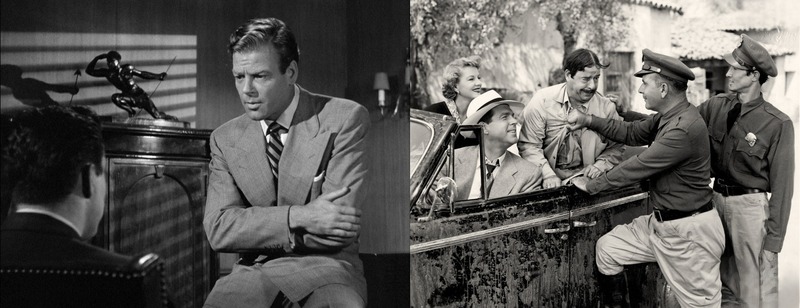
Film Noir Classics Double Feature: Borderline (1950) & D.O.A. (1949)
 –
– 


Genre: Film Noir, Crime, Thriller
Year Released: 1949 / 1950, 2026 VCI Entertainment Blu-ray
Runtime: 1h 23m / 1h 28m
Director(s): Rudolph Maté / William A. Seiter
Writer(s): Russell Rouse, Clarence Greene / Devery Freeman
Cast: Edmond O’Brien, Pamela Britton, Luther Adler, Neville Brand / Fred MacMurray, Claire Trevor, Raymond Burr
Where to Watch: available now, order your copy here: www.mvdshop.com or www.amazon.com
RAVING REVIEW: Film noir has always carried a strange relationship with exhaustion. These are movies filled with people who look like they haven’t slept in days, trapped inside systems that stopped caring about them long ago. Everyone lies. Everyone walks into rooms already doomed by choices they haven’t made yet. Even when the stories drift toward romance or procedural vibes, there’s usually a quiet understanding beneath it all that fate has already made its decision before the first scene even starts. That feeling hangs heavily over D.O.A., and it’s the reason the film still feels alive more than seventy-five years later.
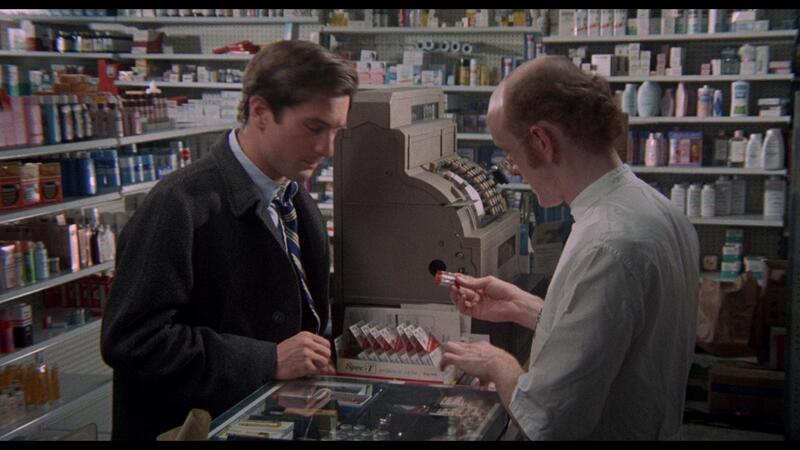
A man walks into a police station to report a murder. His own. It’s such an effective premise that lesser films could survive almost entirely on the concept itself, but D.O.A. understands how to weaponize urgency beyond the gimmick. The movie moves like someone sprinting toward an inevitable ending they already know they can’t escape.
Edmond O’Brien gives the film its pulse. Frank Bigelow isn’t a traditional noir antihero in the Humphrey Bogart mold. He’s not cool enough for that. He’s anxious, sweaty, frantic, occasionally almost woeful, and increasingly overwhelmed as the walls close around him. That choice makes the film feel physically unstable. Bigelow doesn’t glide through danger with detached confidence. He crashes into it. The panic becomes contagious.
Rudolph Maté’s direction keeps the momentum going. There’s very little wasted motion once the story locks in. The film barrels through nightclubs, alleyways, cheap hotel rooms, office buildings, and crowded streets with escalating desperation. Even viewers who’ve seen decades of thrillers built on ticking-clock structures can still feel how influential D.O.A. became. So many later noir thrillers, conspiracy films, paranoid mysteries, and neo-noirs owe something to this framework.
What makes the movie especially compelling now is how physical it feels compared to modern thrillers. The on-location shooting gives everything texture. You can practically feel the grime and cigarette smoke clinging to the city. There’s an immediacy to the photography that works perfectly with the story’s anxiety. One sequence of O’Brien charging through crowded streets after learning he’s been poisoned still carries genuine intrigue because Maté stages it with an urgency instead of a refined setup.
The film also benefits from understanding that noir thrives on moral decay more than on simple mystery. The actual conspiracy isn’t even the most interesting part of D.O.A. What matters is the sensation of a man realizing how little control he ever had over his own life. Frank spends most of the movie trying to understand why he’s dying, but the deeper horror comes from recognizing how casually destruction can enter an ordinary existence. It’s bleak without becoming self-important about it.
Neville Brand deserves special mention because every scene he appears in immediately sharpens the experience. His presence feels dangerous in a way many classic noirs don’t. Luther Adler also brings an intelligence to Majak, making the underworld elements feel threatening rather than theatrical. Even Pamela Britton’s softer presence works because the movie never lets sentimentality overwhelm the larger sense of doom hanging over everything.
Not everything has aged perfectly. Some of the choices surrounding Frank’s early interactions with women feel awkwardly cartoonish now, particularly the bizarre wolf-whistle that repeatedly interrupts scenes. They clash with the film's otherwise grounded paranoia. Still, D.O.A. survives those moments because the central focus remains so effective. Then there’s BORDERLINE, which ends up becoming the more fascinating oddity of the pairing.
Where D.O.A. feels laser-focused, BORDERLINE feels constantly caught between multiple identities. Crime thriller, undercover procedural, romance, comedy (at times), border smuggling drama, noir-adjacent adventure, all of it collides together at once. Sometimes that instability works in the film’s favor, creating an unpredictability that more polished noirs often lack. Other times, it leaves the movie feeling uncertain about its own tone. Fred MacMurray and Claire Trevor do a lot of heavy lifting to keep the film engaging.
MacMurray had already proven how effective he could be in darker material through DOUBLE INDEMNITY, but BORDERLINE gives him a looser, more playful energy. Claire Trevor, meanwhile, understands exactly how to operate inside this heightened world. She brings humor, intelligence, toughness, and charm into scenes that otherwise might’ve collapsed under the uneven writing. The chemistry between the leads keeps the movie watchable even during stretches where the pacing drifts.
Raymond Burr also delivers exactly what viewers want from a noir antagonist. Before Perry Mason permanently reshaped his public image, Burr specialized in playing physically imposing threats, with a menace simmering beneath the surface. The biggest issue is that the movie never commits to either danger or absurdity. There are pieces of a genuinely tense noir buried in it, particularly whenever the undercover deception starts to tighten around the characters. Yet, the comedic detours repeatedly soften the impact. William A. Seiter directs the material competently, though there’s a lingering sense that the film could’ve been pushed into something far more memorable. Even so, it remains an entertaining watch because of how strange the balancing act becomes.
Modern audiences may actually appreciate BORDERLINE more now than some contemporary critics did because genre blending has become far more normalized. Watching the film bounce between romance, awkward humor, and noir can be bizarrely charming at times. It doesn’t always work, but it never gets boring either.
That makes this VCI double feature a surprisingly strong pairing overall because the films unintentionally highlight two completely different paths noir took during that era. D.O.A. represents stripped down to existential panic and fatalism. BORDERLINE represents Hollywood experimenting with how flexible the genre could be while still clinging to the crime-storytelling structure. The restoration work also deserves recognition. Both films look significantly cleaner than many public-domain presentations that have circulated for years, especially D.O.A., which benefits enormously from improved contrast and image stability. Noir lives and dies on atmosphere, shadows, lighting, and facial detail, and these transfers preserve enough texture to remind viewers why these films mattered visually in the first place.
The bonus material adds historical context, too, particularly the featurettes surrounding the careers of Edmond O’Brien, Rudolph Maté, Fred MacMurray, and Claire Trevor. Releases like this work best when they treat catalog titles as living film history instead of disposable filler, and VCI clearly understands the audience they’re targeting.
D.O.A. remains the crown jewel here by a considerable margin. It’s one of the defining low-budget noirs ever made, driven by a killer premise and relentless momentum that still holds up remarkably well. BORDERLINE doesn’t reach those heights, but it offers enough personality, strong performances, and tonal curiosity to justify its inclusion. Together, they form a compelling snapshot of noir at a crossroads, with one film staring directly into death, the other trying to smuggle a little romance and comedy through the darkness before the shadows close in.
Bonus Materials:
D.O.A. Video Essay: Edmond O’Brien: The Man Who Made Every Second Count
D.O.A. Video Essay: Rudolph Maté: The Eye Behind the Shadows
D.O.A. Video Essay: Forgotten Stardust: The Short, Shining Life of Pamela Britton
Borderline Video Essay: Fred MacMurray: From Noir Shadows to Disney Light
Borderline Video Essay: Claire Trevor: The Toughest Dame with a Heart of Gold
Borderline Video Essay: William A. Seiter: Hollywood’s Hidden Craftsman
Please visit https://linktr.ee/overlyhonestr for more reviews.
You can follow me on Letterboxd, Instagram, Twitter, and YouTube. My social media accounts can also be found on most platforms by searching for 'Overly Honest Reviews'.
I’m always happy to hear from my readers; please don't hesitate to say hello or send me any questions about movies.
[photo courtesy of VCI ENTERTAINMENT, MVD ENTERTAINMENT]
DISCLAIMER:
At Overly Honest Movie Reviews, we value honesty and transparency. Occasionally, we receive complimentary items for review, including DVDs, Blu-rays, CDs, Vinyl Records, Books, and more. We assure you that these arrangements do not influence our reviews, as we are committed to providing unbiased and sincere evaluations. We aim to help you make informed entertainment choices regardless of our relationship with distributors or producers.
Amazon Affiliate Links:
Additionally, this site contains Amazon affiliate links. If you purchase through these links, we may receive a commission. This affiliate arrangement does not affect our commitment to honest reviews and helps support our site. We appreciate your trust and support as you navigate these links.


Happy
100 %

Sad
0 %

Excited
0 %

Sleepy
0 %

Angry
0 %

Surprise
0 %
 1
1
 0
0

Average Rating