A Satire Spiraling Toward Total Collapse
Read Time:6 Minute, 57 Second
MOVIE REVIEW
Hi, Mom! [4K UHD + Blu-ray]
 –
– 


Genre: Comedy, Drama, Satire
Year Released: 1970, 2026 Radiance Films 4K
Runtime: 1h 27m
Director(s): Brian De Palma
Writer(s): Brian De Palma, Charles Hirsch
Cast: Robert De Niro, Allen Garfield, Jennifer Salt, Charles Durning
Where to Watch: available now, order your copy here: www.radiancefilms.co.uk, www.mvdshop.com, or www.amazon.com
RAVING REVIEW: Some filmmakers spend years learning how to smooth out what makes a legend. Brian De Palma spent the beginning of his career throwing everything he could at the screen. HI, MOM! feels less like a carefully assembled studio production and more like a filmmaker testing every boundary he can before someone tells him to stop. That gives the film a strange kind of durability. Even when the movie struggles, and it absolutely does, it never feels cautious. More than fifty years later, that recklessness still carries a charge.
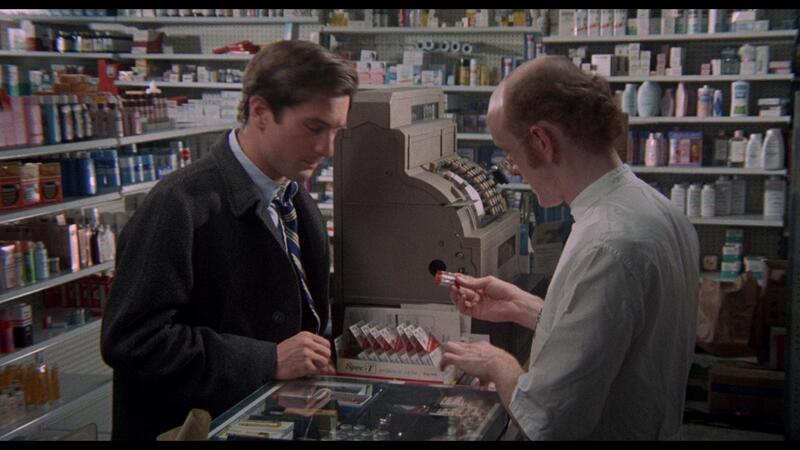
Reuniting with Robert De Niro, De Palma constructs something that barely resembles a traditional sequel. Jon Rubin returns from Vietnam, rents a ragged New York apartment, and begins spying on his neighbors through windows and camera lenses while chasing ambitions involving filmmaking, pornography, politics, and eventually outright chaos. The story constantly mutates into different forms, shifting from an uncomfortable form of comedy into social satire, counterculture critique, media commentary, and surreal urban paranoia without ever settling into one mode for very long. The lack of stability can be frustrating at times, but it also makes the film a fascinating snapshot of a filmmaker discovering his voice in real time.
That discovery process is visible in nearly every frame. The camera feels restless; scenes often play with loose, improvisational timing, and the editing jumps between tones and visual styles with little concern for maintaining a rhythm. You can already see the early foundations of De Palma’s later obsessions with voyeurism, performance, fractured perspective, and media manipulation. Here, those ideas exist in a much scrappier, more unpredictable form. HI, MOM! doesn’t have the sleek conviction of his later work because the film still feels driven by instinct rather than precision.
That works surprisingly well during the film’s funniest material. Jon Rubin isn’t framed as an admirable antihero or misunderstood loner. He’s awkward, invasive, selfish, immature, and frequently pathetic, but De Niro gives him just enough charisma to remain compelling. Watching this performance now feels particularly interesting because fragments of future De Niro characters are already visible beneath the surface. There are moments where Jon’s detached social behavior and obsessive tendencies feel like an early sketch of the alienation that would later define Travis Bickle, except here the energy is filtered through satire and absurdity rather than psychological collapse.
The voyeurism sections remain among the film’s strongest because they reveal how De Palma already understood the relationship among media, performance, and spectatorship. Jon watches strangers through windows the same way audiences consume television. He turns their private lives into entertainment, attempts to commercialize the footage, and slowly begins to transform himself into another piece of the performance. The film keeps blurring the line between observer and participant until nobody seems capable of existing outside some kind of constructed image. For a movie released in 1970, it feels remarkably ahead of its time without becoming overly self-conscious about its themes.
The New York setting contributes enormously to the atmosphere. This version of the city feels grimy, cramped, loud, and exhausted in a way that most versions rarely capture. Apartments look miserable, streets feel overcrowded, and public interactions carry an undercurrent of irritation, making the environment itself seem unstable. De Palma doesn’t romanticize the counterculture movement or the era's supposed liberation. The film presents nearly everyone as performative in one way or another, whether they’re artists, activists, intellectuals, aspiring revolutionaries, or middle-class spectators pretending to understand social change from a safe distance.
That cynicism gives the satire much of its bite, particularly once the film moves into its most infamous sequence. Even now, that section remains deeply uncomfortable because of how aggressively it weaponizes audience participation. The pseudo-documentary approach strips away much of the earlier comedy, replacing it with something more confrontational. The sequence critiques racial exploitation, guilt, performative activism, and theatrical sensationalism all at once while intentionally refusing to offer viewers a comfortable emotional distance. It’s easy to see why this portion of the film remains the most discussed, as it represents both the movie’s greatest strength and one of its biggest risks. De Palma pushes so aggressively toward provocation that some viewers will see daring social commentary while others will see an unfocused exercise in shock value.
HI, MOM! is loaded with strong ideas, but not all of them receive enough development to hit their intended mark. The fragmented structure can also make the narrative feel distant at times since the film constantly abandons one direction to sprint toward another. There’s a version of this that probably could’ve been shaped into something more cohesive. At the same time, doing so might have destroyed the very thing that makes it memorable. HI, MOM! thrives on unpredictability. De Palma jumps between styles, fake broadcasts, documentary exploration, theatrical staging, handheld realism, and satire with almost reckless confidence. Some transitions work better than others, but the refusal to settle into something gives the movie a personality that still feels alive.
De Niro remains the anchor that keeps the movie from collapsing under its own ambitions. There’s an emptiness to the character that grows increasingly unsettling as the film progresses. Jon drifts through relationships and experiences without ever appearing grounded in any of them. His obsession with cameras and performance starts feeling less like artistic ambition and more like a symptom of someone unable to connect with reality unless it’s filtered through an image first. That idea ultimately becomes one of the film’s most lasting observations about media culture and self-documentation.
HI, MOM! is disheveled, abrasive, funny, uncomfortable, occasionally exhausting, and often fascinating all at once. Some viewers will completely reject its structure and confrontational tone, while others will connect with the rawness of its filmmaking and the unpredictability of its ideas. Either reaction feels understandable because this is the kind of movie that practically demands a personal response rather than passive consumption.
Bonus Materials:
New 4K restoration from the original camera negative, presented in Dolby Vision HDR
4K UHD and Blu-ray presentation of the feature; world premiere on 4K UHD
Uncompressed mono audio
Audio commentary by writer Travis Woods (2026)
Interview with critic Ellen E. Jones (2026)
Dionysus in ‘69 – an experimental theater production of Euripides' 'The Bacchae', filmed by Brian de Palma (1970, 85 mins)
Archival interview with co-writer Charles Hirsch (2018)
Trailer
Optional English SDH subtitle track
Reversible sleeve featuring artwork based on original posters
Limited edition booklet featuring new writing by Matt Zoller Seitz
Limited edition of 5000 copies, presented in full-height Scanavo packaging with removable OBI strip, leaving packaging free of certificates and markings
Please visit https://linktr.ee/overlyhonestr for more reviews.
You can follow me on Letterboxd, Instagram, Twitter, and YouTube. My social media accounts can also be found on most platforms by searching for 'Overly Honest Reviews'.
I’m always happy to hear from my readers; please don't hesitate to say hello or send me any questions about movies.
[photo courtesy of RADIANCE FILMS, MVD ENTERTAINMENT]
DISCLAIMER:
At Overly Honest Movie Reviews, we value honesty and transparency. Occasionally, we receive complimentary items for review, including DVDs, Blu-rays, CDs, Vinyl Records, Books, and more. We assure you that these arrangements do not influence our reviews, as we are committed to providing unbiased and sincere evaluations. We aim to help you make informed entertainment choices regardless of our relationship with distributors or producers.
Amazon Affiliate Links:
Additionally, this site contains Amazon affiliate links. If you purchase through these links, we may receive a commission. This affiliate arrangement does not affect our commitment to honest reviews and helps support our site. We appreciate your trust and support as you navigate these links.


Happy
0 %

Sad
0 %

Excited
50 %

Sleepy
0 %

Angry
0 %

Surprise
50 %
 2
2
 0
0

Average Rating